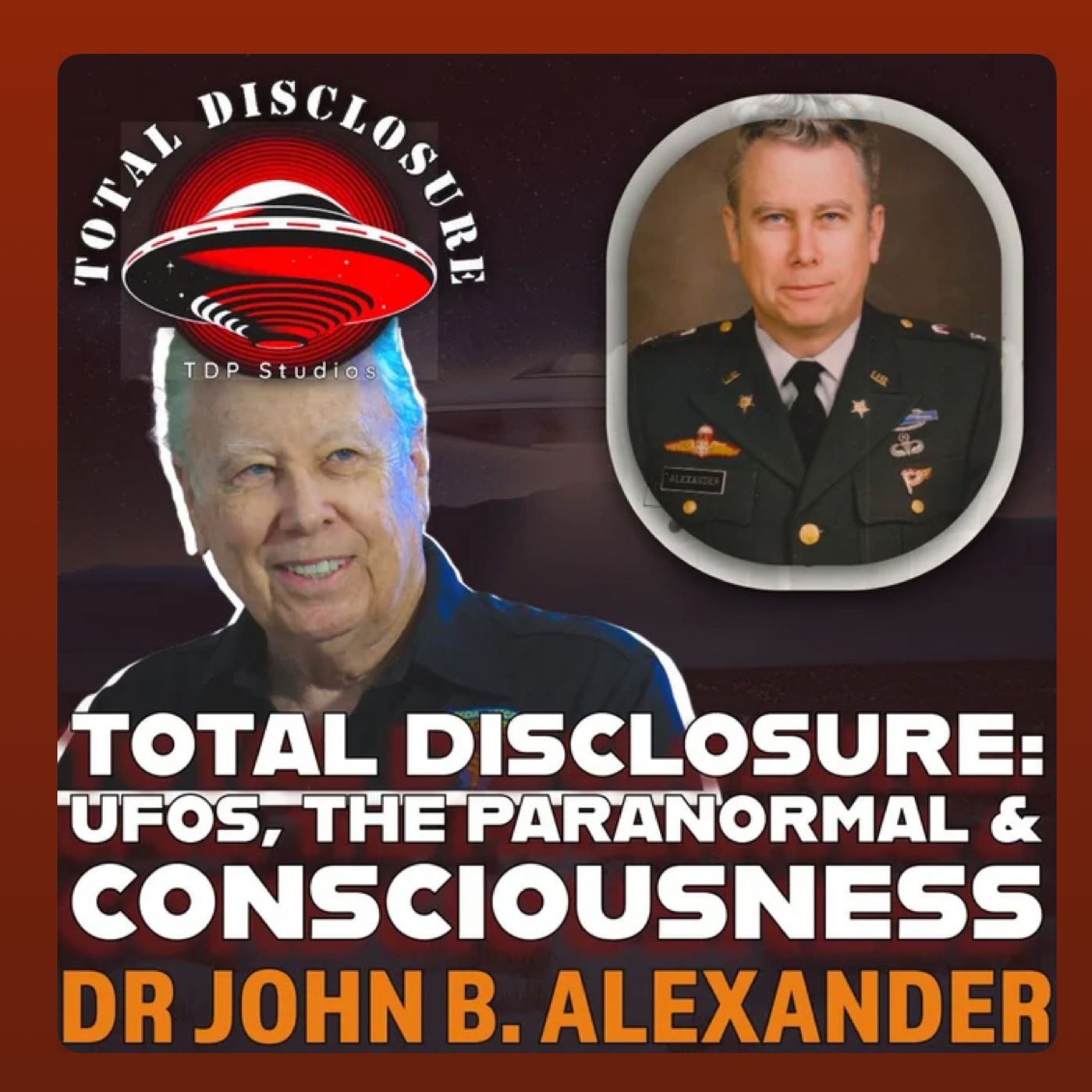
Col. John B. Alexander on UFOs, Psychic Spies & Forbidden Truths| The INVISIBLE WAR!
In this mind-opening conversation, Colonel John B. Alexander—a legendary figure in the world of military intelligence and black projects—joins host Tyler Roberts to pull back the veil on UFOs, remote viewing, psychic warfare, and the unexplained. Col. Alexander, a central player in the now-declassified Stargate Project, discusses:
- His personal encounters with the UFO phenomenon
- Why the government keeps UAP knowledge compartmentalized
- The real story behind remote viewing and psychic espionage
- His interactions with Robert Bigelow, Skinwalker Ranch, and the intelligence community
- Thoughts on non-human intelligence (NHI) and what might be watching us
- This episode is a must-listen for anyone fascinated by: 🛸 UFO disclosure
- 👁 Remote viewing & consciousness research
- 🪖 Military insiders and secret programs
- 🧠 The intersection of the paranormal and national security 🔗 For exclusive early access, bonus content, and behind-the-scenes of our upcoming projects Join Our Exclusive Member community on Youtube or On Patreon.
💬 Leave us a review — your voice helps expose the truth
LINK TREE—https://allmylinks.com/total-disclosure
Subscribe to the channel on YouTube—— www.youtube.com/@totaldisclosure
Support TY and TDP Studios directly VIA PayPal (No FEES)— https://www.paypal.me/TDPstudios767?locale.x=en_US
YOUTUBE MEMBER—-https://www.youtube.com/channel/UCy2Cra7aLAAMVxkA9rSYCxg/join
Patreon MEMBER—https://www.patreon.com/Total_Disclosure?fan_landing=true&view_as=public
GET YOUR “TOTAL DISCLOSURE” UFO/ALIEN INSPIRED MERCH, OR A GIFT FOR YOUR FAMILY MEMBER, FRIEND, OR TREAT YOURSELF!—- https://pop-culture-corner-store.creator-spring.com/?
Follow On X—- Www.X.com/@DisclosurePod
Instagram—- www.instagram.com/DisclosurePod
Facebook----Facebook.com/@ty.totaldisclosure
CHAPTERS;
Become a supporter of this podcast: <a...
Introduction & Background of Col. John Alexander
Speaker 1: On total disclosure, UFOs, cover ups, and conspiracies. We sit down with a man whose resume reads like a classified science fiction retired US Army colonel, a pioneer of non lethal weaponry, and one of the few people to ever straddle the line between black budget military ops and the deepest rabbit holes of the phenomena. You've heard of Stargate, you've heard a Skinwalker Ranch, but you haven't really heard the full story from the man who was there when the veil was dinnist. Joining us is legendary doctor John B. Alexander, military insider, NIDS investigator, and close collaborator with the likes of Robert Bigelow, and someone who's been neck deep in remote viewing, consciousness exploration, the UFO phenomena, and things that quite frankly defy explanation.
Speaker 1: So buckle in tonight. We're not just exploring the unknown. We're talking to a person who's tried to weaponize it. Today is a special day to record. Today is the day before Easter, and it's fitting for me to have come so far with the podcast, given that my mother was a huge proponent to the success of not just myself in this sphere, but the success of myself as a person. She died on April third, twenty twenty one, so I dedicate this episode to her. Thank you very much, mom for being there for all the years that you were.
Speaker 1: With that being said, let's introduce the man of the hour, John Alexander. John. How are we doing? Brother?
Speaker 2: Oh? Pretty good? How are you?
Speaker 1: Oh fantastic. I'm so this is actually try number two. We did an episode a while back and the corrupt the file was was so corrupted that moultiple what I would call like tech geeks, could not even extrapolate the contents.
Speaker 2: So just because they were in there and what didn't want it out.
Speaker 1: I didn't want to say it. You know, I'll I'll let you say it. But uh, yeah, it was very weird because you know that the episode was edited, Uh, it was essentially ready, and it just I've never had something like that happen before. So we're gonna we're gonna try to do this again. Uh and I want to start I kind of want to do this episode in a in a in a linear way, so you've operated in a space that few really ever get close to, you know, where where military doctrine meets the mystical What first pulled you into these unconventional areas of research?
Speaker 2: Well, that's a little difficult question, you say, research have been interested as long as I can remember. A lot of the stories I tell this will date me quite a bit. But I was ten years old in nineteen forty seven when all of the UFO phenomenon started getting discussed. I went to a very unusual grade school which was actually part of a college which is now the University of Wisconsin at Lacrosse. We were grade school students. We were actually guinea pigs. It was a teacher's college at that time, and so they needed, you know, folks to practice teaching, and that was us.
Speaker 2: Well, we had an internal radio system and the students were encouraged and allowed to give broadcasts on pick your topic, and my topic in nineteen forty seven was UFOs. So that's when we were still they were blaming it on skyhook. That was going to be the answer to sure, right?
Speaker 1: Right? Right? How was so? What were when you got on that first time, or I mean, even if you could generalize it, what were you saying about? What was the feeling at the time, what was what were you thinking about? Roswell at the time.
Speaker 2: I'm not talking about Roswelt. This is when the remember forty seven, yesked Roswell, did it happened, But we were just, you know, just the whole topic of UFOs was just breaking into public consciousness. Obviously they've been around for millennia, but this was just on news there and what was it you also most remember and because before you were born, probably most of your audience, we had just come out of World War Two, the Soviet Union was just becoming a major adversary, and this would be soon into the beginnings of the Cold War.
Speaker 2: So you had a public consciousness it was very, very different from what you might have today, but it was so it was a bit of a diversion. The idea that it might be Ich or something was the prevalent that actually came along a bit later. Again, from a public consciousness perspective, it was a few things flying around.
Speaker 1: Okay, So were you guys, were you more keen to believe that the military was eventually going to come out and say, hey, guys, this is ours And.
Speaker 2: I'm ten years old at the time, so the thing about putting into the broader context was not Yeah, not something I really thought about. Right, here's an unusual topic. They had some pictures and things like that in the newspaper. Also, remember, and I think this was a critical element, is that the information ecosystem was very, very different. You know, our thing was you know, TV was just barely coming along, but print media, you know, the evening newspaper was the prime means.
Speaker 1: Of information, right right, right, So you have a kind of a connected not a not a people think of the world right now, and you know, they it's it's hard for them to believe that, you know, newspapers and radio where the the only means of communication. Given all the things that we have right now, it's hard for people to take that all out. But you're absolutely right. So, and especially in forty seven as well. You know, I don't know how it seemed to you as a kid, but you know, I wonder what your parents and what their what their thoughts because so much was going on at the time.
Speaker 1: Obviously, you know, Hitler had just been defeated, and World War Two ends, and we kind of roll into the Cold War just as quick as we get out, and you know, there's there's a lot to pay attention to. So, you know, was this notion of UFOs or whatever they were. Was it a bit of escapism, almost allowing.
Speaker 2: Yourself it may be, And certainly shortly thereafter from in
Personal Encounters with the UFO Phenomenon
Speaker 2: the movie field it became just that, an escape ism sort of thing, and very wild, and I think many people are. You can see them still see the movies on TV. But you know just how pony, you know, floating in and that sort of thing. But no, I would not say that it was a big gal. It would have little lapse and that has continued from time to time, but that really doesn't come along.
Speaker 3: Until a bit later, right, right, And so so as a as a child or as a young young lad,
Speaker 3: when did you decide or did you get Did you decide early that you wanted to go into the military and that, you know, when did you kind of decide your path?
Speaker 2: I'm not sure I did, And that may sound strange, but throughout my life a whole series of sinquous incidents of this sort of happened. Trying the military was almost our indepitous. An article had just been published for the first time about special forces, and I heard rather a lot of that. We're talking nineteen fifty fifty six. I had completed my freshman year of school with college. I had gone there on the scholarship but didn't find that terribly interesting. But the stuff on you know what was now the early Green Berets was sounded reallyant.
Speaker 2: So I went down to the recruiter out of the blue during the summer I was scheduled to go back for the sophomore year. This was at Bloit College in Wisconsin. But went down and said, yeah, I want to join these Special Forces. And they go down on you know, sign up for airborne. Uh, you know, go jump out of airplanes. That sounded different, you know, And if you want to go to the Special Forces after that, all you got to do is sign the paper and they'll send you. And I was naive enough to believe that at the time, so signed up, went to jump school, and ended up a short time later in a hundred first airport.
Speaker 1: And so it really was. I mean, it probably happened so quick for you that that you signed that contract. How quick? How quick before you sign the contract that and you're shipping off.
Speaker 2: Maybe a week.
Speaker 1: Really it was just a few days.
Speaker 2: And they had picked the date of the poor basic training and then on to Fort Campbell. It was very really Yeah, the bad thing is I went home. My mother had no idea that I had done any of this.
Speaker 1: Oh god.
Speaker 2: And so they're gearing out and I'm going by the way tomorrow morning.
Speaker 1: Right. Well, yeah, it's quite the quite the the that's quite the update to get from from your son, especially at the time. You know, So the Air Force was was now I'm making sure I'm getting my dates right here, but I mean the Air Force had to be fairly new, right well, I.
Speaker 2: Was in the Army. Yes, the Air Force had well it was about a decade old at that point. Before that, it was the Army or the Air Corps, and then the Air Force came along forty seven. But no, I decided to go jump out an airplane. Thought that'd be me.
Speaker 1: So and you so, I guess my question being is so when you jump out of airplanes with the Army, it's different than obviously jumping out and being in the Navy. I'm not the Navy the Air Force. Right, So you made the distinction to, you know, go into the Army rather than the Air Force. Was there a reason?
Speaker 2: Very different units? And of course I was at I said, one hundred and first Airborne, which was a unit the division sized unit in the eighty second that were designed specifically as warfighting elements that we dropped in and again, what's happening now is really interesting. This is going to bleed over other things. But the notion of warfare at the time was very, very different. Remember remember forty five was the first nuclear weapon, and so the idea of atomic warfare what that might look was just in the embryonic stage.
Speaker 2: In fact, she was the one hundred and first was what they called the pantomic Division. That was the first division in the army that was kind of designed specifically for nuclear warfare as it was at the time, maybe you should say atomic, but we had five basically five elements, major elements who battle groups. At the time, we were also the first ones to get something called Davy Crockett, which was, if you believe it, it was a four point two inch mortar with a super caliber weapon in other words, the weapon itself outside the thing that went down and propelled it.
Speaker 2: But we actually had nuclear weapons that we were looking at using on relatively small scales. Yeah, this is you know, the whole concept of how war might be bought in a traditional sense, and that it was interesting watching that develop. You though I was very low on the Totem poll. Remember I went into the private Yeah, moved up the food Shaan. It became a sergerant jump school instructor, but it was it's more looking back now and understanding you know what that development might have been. The whole concepts of warfare has changed dramatically.
Speaker 1: Oh my god, Yes, I mean drastically has changed. And it's it's you know, kind of ever since the atomic ever since Hiroshima and Nagasaki. I feel like warfare has been in you know, a constant flux of this you know, ever advancing landscape, if you will. And you know, as as someone who's in you know, as someone who is a part of now the world's most powerful military like period, hands down period. How you know, the red threat, the red scare? You know how prevalent was that in the country when you when you enlisted.
Speaker 2: Before that it had become what you know what duck and cover means. Yes, but yeah, that was something we were taught as grade school kids. Was the idea that you you know, we believe you would not have done any get under your desk and cover if a nuclear weapons that It was interesting. I mentioned I was in Lacrosse, Wisconsin, right, and even going back because I do remember bits of World War two and blackouts, uh that were there, and this is one where you had a national enterprise. I mean, everybody was concerned.
Speaker 2: Lacrosse, Wisconsin is in a place where no aircraft at the time could possibly have reached many places in the world, you know, you know this idea of Soviets coming in, but that was still mindset. And well even World War two it was good Germans fly in and roped that. Interestingly, we had a German pow camp. Uh, not that many miles from the cost Wisconsin. Germans were actually brought in and they kept in the US as POWs really, and that was you know, again from the mindset we were still aware of worried could there be a breakout?
Speaker 2: Good German prisoners escape from the camp.
Speaker 1: No, No, these are separate warfare So yeah, these are separate Germans than obviously the scientists that came over in paper clip. These are more just like war criminals that are in this the camp.
Speaker 2: No, the prisoners of prisoners of war. Remember this is during the war itself. If people were captured were actually brought back, someone brought back to the US right, right, So it was just like if you were shot down over Germany you went into a German pow camp. We had people as have been captured and they just didn't keep them in theater.
Speaker 1: Wow, that's that's And to end up in of all places in Wisconsin, you know, not just kind of, I mean, I guess it makes sense though in the long scheme, so.
Speaker 2: How Longthically, that area of Wisconsin was very German. My first Sabellian job was the g Heilman Brewing Company, German Brewing Company of it.
Speaker 1: Oh, my god, of course it is, of course it would be uh that my god. And yeah, I mean I just you know, for for me, for someone like me, you know, obviously, living in the time we live in right now, it's hard to understand, you know, if it's ever really been this bad, right, have tensions ever? You know, seemed like this geopolitically, and I think you know, it's if we don't learn from our past, we're doomed to repeat it. And you know, it seems like we didn't, we haven't learned from the past, because here we are today, you know, on the brink of some sort of war, and it's scary.
Speaker 2: Well, I might mention and this is pass forward many decades now, twenty two thousand and six or something like that. I was then a senior fellow at the Joint Special Operations University. I wrote the first monograph and it was titled the Changing Nature of War and took a lot of heat on that because philosophically, they're saying, the nature of war doesn't change, only how you prosecute it does. And my argument was, no, it's the whole nature of war has changed, and I think we're going through a lot of that now trying to evolve.
Speaker 2: If you watch you know Russian by the way, you have to watch because I sometimes interpose or juxtapose Soviet and Russian. I grew up in the subject. But yeah, they're invasion and the things that have changed certainly tactically, if not strategically because of Ukraine, and military to day is going through considerable gyrations trying to figure out just what does that look like, particularly when you add the information component to it, as well as electronic warfare and all of those sorts of things.
Speaker 1: Now. Space great, great point, great point, because you know
Remote Viewing and Psychic Espionage
Speaker 1: that's something you know, I would say that's probably the frontier right now. Right, is these space based weapons or these hypersonic weapons, they're.
Speaker 2: A different The hypersonic has to do with the speed of delivery. Yes, space space weapons. Well, we got to the point where you basically almost can't operate without space. The downside was, when I was a young troop, one thing you had to do is learn how to read a map, and you don't figure out where you go and PLoP from point A to point B in that right. And now, of course, as all everybody's got a car of GPS, that's amazing, but we didn't have GPS or even as a concept. And one of the things that just happened there's one that was taken away if on uh, I am young troops don't know how to navigate without the space based system.
Speaker 2: But lord, what all the intel they provide and everything like that. The current conflict is, you know, do you have anti satellite systems for instance?
Speaker 1: Right? Yeah, And some of this will.
Speaker 2: Actually bleed into what you want to talk about UFOs and that, Yeah, how do you tell at difference.
Speaker 1: Right on a like on a radar? How do you tell?
Speaker 2: You know?
Speaker 1: And that sometimes kind of scares me. I mean we look at things like you know, the nineteen sixty seven Malmstream incident, or the incident that took place in what is now Ukraine but the former Soviet Union, where instead of the nuclear weapons being turned off, they were allegedly turned on.
Speaker 3: And you know.
Speaker 1: When when a situation like that, you know, it just takes one mistake, one miscalculation, and you fire on your enemy and you know it.
Speaker 2: But that's all of these things are automated, the decision making process. If you read Annie Jacobson's new book Nuclear Warfare. Yeah, and just as the president has six minutes of notification to make a decision.
Speaker 1: That's not enough time.
Speaker 2: And after that everything is automated. And that's why a single mistake or miscalculation is so absolutely critical. Yeah, her comment on seventy two seconds to the end of the world.
Speaker 1: Correct. And we have this like very weird policy that no one seems to bat an eye at. It's you use it, the use it or lose it kind of deal. So you know, she she really that book is quite haunting. Like reading it, I had anxiety. I had a real big I had anxiety because who in the world, I mean, you're saying, you know, let's play hypothetical, right, now, and okay, you're Donald Trump, right, this guy is already a wild card in my opinion, right, you know he's a wild card. To just leave it at that. So what happens if he is put in a situation where he has six minutes?
Speaker 1: Right, and that's being generous, right, because two of the minutes maybe you know, people's hair on fire and it takes a minute to get you know, situated, because you know, the situation is really really dire, and you know, maybe he doesn't have the right people in the right places, so they're unprepared. All right, let's keep going down the line. Now he's given a taco bell menu of places to it, and he's got to choose which was the hit, like he's ordering.
Speaker 2: That's all automated, has to be. People cannot think question enough to respond.
Speaker 1: Do you do you have any insight to what? So if it did go down? What is the nuclear football? What what is it meant to represent? What does it do? If it is automated?
Speaker 2: Basically a go no go switch? Really, after that everything would take over and move very quickly. Now where I see a more critical problem. I didn't know this is the area we're going to be too into me my view, one of the greatest dangers that Trump has brought along was the degradation of NATO. NY all exists because of trust and confidence in the United States and our nuclear umbrella. Should Russia do something bad, all of NATAL response, But they're reliant on the US. Although you know, France and Britain are both nuclear declared states.
Speaker 2: It's the American arsenal. And now he's saying maybe we will, maybe we won't. What does that tell them? Tells everybody let's go see and develop nuclear weapons. I don't know if you're familiar with the guy the name of a Hugh Khan who was from Pakistan. He's the one who developed the Pakistan nuclear weapon but then went on the open market. He overtly assisted North Korea development. But this means that the ability, the information about how to do this has been spread to many other countries. Uh.
Speaker 2: That's in my view, very very dangerous and particularly if you've got people, well, there's a lot more thinking that goes into this than just you know, how do you use it? And the whole deterrent issues are terribly terribly complex. Well, what happens if some third world country or God forbid, you know, a terrorist organization gets.
Speaker 1: Ahead and and pops on it like a state bad actor.
Speaker 2: Yeah, it gets terribly complex and very bad, very fast.
Speaker 1: Yeah, and you know, I don't wanna, I don't wanna. I know we have a we kind of deviated. But it's okay because this conversation is when I you know, it's one that I think it's important to have, and you know, you're just a very versatile person to talk to. But one of the things that scares me is the fact that, you know, like the New Jersey drone situation that just occurred. Uh, you know, the UFO community kind of takes it and they run with it as as you know, potential UAP sightings. And that's all well and good, but you also had members of Congress saying that there was an Iranian mothership off the coast and there was a dirty nuclear bomb that was snuck into a New Jersey port.
Speaker 1: And you know, I had members of Congress. I won't say who because I don't want to do that, but I had members of Congress telling me that I live in Boston. You know, if something goes off in New York, New Jersey, I have just as much to lose you know. I mean it's not it's we're very close so that the first.
Speaker 2: When the first one goes off and retaliation starts training, you just don't put the toothpaste back in the tube.
Speaker 1: Correct. And it seems that you know, the these this politicization of not just warfare, but the politics that that that contribute in and conflate warfare. Uh, it's it's this, it's this us or me, it's you or me, it's one or the other, left or right, red or blue. And it's like, oh, guys, pump the brakes, pump the breaks, because you know, we we are all human beings here and we need to coexist. Like there is nothing that we can't do if we are our minds are are, if we're striving towards one goal as a human race, there's nothing we couldn't do.
Speaker 1: But we're so divided, down to the down to the group, down to the how long your hair is? We love to to subject ourselves to these these these groups and and and divide each other, divide ourselves. So does that ever do that? Does that ever? You know, does that ever bother.
Speaker 2: Constantly? That bother me? No? I think we have you know, tremendous problems right now. And that's why, uh. One of Trump's big thing this went back to the first one, is that I like to be uh uh you know, we can't figure out what I'm going to do, yuh. And that is the antithesis of what is needed for stability. You have to have assurance that if A then be and follow that set of rules. And and that's why the destabilization of failure to actively support NATO, for instance, uh, actively support Ukraine.
Speaker 2: I think what we're doing there at the moment is that's internal, that's quite UFO's political situation. But I think our position on that is just totally irresponsible. And the switching side, and particularly again it's back then. My whole military career was the Soviets of the big bad guys that are out there, and now we seem to be sighting with what happened. It was the former Soviet Union Russia. And our reliability is just not it's not trustworthy. The United States is not no longer trustworthy.
Speaker 1: Right, And I mean, you got you got countries doing You've got countries really like signing up and really wanting to, you know, because while we've been at war you know, or at least spending. You know, our military budget is you know, I think it combined out ranks you know, most countries. And you know, while we've been doing that, China has been you know, building themselves up and you know, say what you want about you know, whether you agree with them or not. But now they're you know, they got their Belton Road Initiative where they're you know building, Uh, they're developing other the countries that we won't do business with because you know they don't meet certain criteria.
Speaker 1: Well China doesn't care. Let us build your highways so we can land you know, military outfits on them if need be, you know, and uh that's minor.
Speaker 2: But the whole view, the Belton Road Initiative was brilliant policy. As you may know, I have been an overall hundred countries, have been all over north southeast West Africa. Every place you go in Africa you find China. You find by their influence and the big two big advantages they have one because they were a strategic approach to it, and they batists for decades. And yes there are problems there. It's not just cut and dried, but they've got a brand. They have continuity and we have these dramatic plops.
Speaker 2: And you know, I guess the one of the things that they're discussing now is quote a golden Dome, like we're going to build a multi multiplex issue of the Iron Dome. Yeah. Sorry, that sounds to me like Star Wars two point zero. And remember Edward Teller was a personal friend.
Speaker 1: The guys who designed that, well, yeah, I'd love to get into Yeah.
Speaker 2: No, I thought the Belton Road was brilliant. It was actually stood when we're still being built. But the road between Beijing and Lahas and Tibet, and I studied. I was in Tibet, but standing on the railroad bed that was going in there and the length that it goes there have now traveled all through the various stands. Kazakhstan, by the way, was just amazing to me. When I thought we were going to a third world country, most people would the infrastructure was better than the US in many areas, and the roads and whatnots huge.
Speaker 2: And now where the stands are are advancing. They have lots of natural resources gas oil in particular, and that's how China is precuring now stands. The various countries there are advancing because of the money is made available from China. But the back to the bulk road building railroads from well east goas but basically Beijing all the way into Europe is just rounut. And from the amerit of time.
Speaker 1: Issues, I absolutely agree. I absolutely agree, And I like I said, and and and I don't mean to I didn't mean to go on that like like tangent, but I think it was. I think it's appropriate, and uh, you know, it's it's definitely prevalent. And and it's something that I think a lot of Americans are thinking about. You know, just every single weekend. Uh in Boston there are now gatherings let's let's say that. And uh so people you know, uh, people want to talk about it. But you know, obviously I want to talk to you.
Speaker 1: I want to shift gears a little bit. I want to dive right into Stargate in in the in in that area of things. So what was the atmosphere like
Government Compartmentalization of UAP Knowledge
Speaker 1: inside of a program that was literally training soldiers to see through space and time?
Speaker 2: Right now, Formally, I was not involved in Stargate. I was working under a general stubble Bind who we were doing some other things like psychokinesis and advances and NLP studies and things like that. But yeah, that was a remote viewing program and of course the Soviets had a system similar. Now, our question really was initially do you go out and find people with the nacial ability or do you train? And of course because of the work of Ingo Swan, who came up with the concept of the matrix, made this a teachable skill course.
Speaker 2: There's a number of people out there now teaching it. I do want to advise anybody listening caveat emter in other words,
Speaker 2: be careful on you know who you're training with and that because there's an awful lot of just pure bullshit.
Speaker 2: The people who I was in the secret program and all this know you weren't The people know each other now. I was involved with the creation of IRVA, which is probably a reasonable place to go from it. That's an International Remote Viewing Association and that was created Good Homes coming up on twenty five years ago or something like that. But it's a good starting point if people want to look. If I can, there's only two people that I actually recommend per se anting, and one's Paul Smith and the other is the legendary Joel mcmonagall.
Speaker 1: Of course, right, Monroe Institute.
Speaker 2: Yeah, that.
Speaker 1: So do you think that remote viewing with that being said, you said it became a teachable skill. Now would that imply or what is your thought on is consciousness? Is it something that the brain develops or instigates or the
Speaker 1: right is the brain receiver?
Speaker 2: The brain does not create consciousness. And my view is the other The conscious is fundamental and the physical arises from confidence. This is not new. This goes back to Max Plank. Yeah, you know the people saying that, And that would be my view. The consciousness is one of the things that's related to what we were discussing, this issue of globalization. Uh, in my view, if you're thinking globally, you're thinking too small. Yeah, this is far bigger than just you know, a global issue.
Speaker 1: Right and and you know, I think it's again I'm on the same boat as you. I definitely think that you know consciousness. I think there there's no way that I think it comes from you know, the human brain or the brain in general, right right, right, And and and that's why we have words like you know, the muse and and the and the root word for music and amusement, and you know all these things, right is is you see that? And and and then we look if we zoom out a little bit and we talk about people like Ed Taylor, if we talk about people like Einstein, Nikola, Tesla, a lot of these great minds have said that they it seems like the universe was working through them as a tool, and they're simply the third party, if you will, right, and it's coming from the oneness.
Speaker 1: Obviously you know it's not exactly proven, but a lot of these people sound like Tesla and Einstein, sound like they were doing remote viewing, but they just weren't putting that label on it.
Speaker 2: Well, whereas information comes from yeah, well other way. I was having a discussion with the financial advisor just yesterday on this and he was talking about China stealing our ip. Certainly there's an aggressive effort there. My point was, if you thought of it, its exists. You know, the information out there and can be extracted by others.
Speaker 1: Right, it's the what is it? Now? Forgive me if I if I miss speaking this, but I forget what the researcher, who the researcher was, But it's like the hundredth ape or something like hundred yeah shell Drake, yes, thank you. So once it's it's almost like and then it's like, you know, they always thought that we couldn't break the mile with like within a certain amount of minutes. But as soon as it was broken that you know, the running or how quick someone can do a mile. As soon as it was broken, then it starts getting broken again and again and again.
Speaker 1: Right because once it's done, like you said, once the information's there or the abilities there, it seems to be able to be pulled from the ether.
Speaker 2: Yeah, the model is terribly important. Then you believe they can't be done then or then it has been done. And I've seen many people who devolved things and said, well I didn't know you couldn't do it, which is kind of a critical issue. So developing a model, and I might say, one of the things we do, I mentioned earlier psychokinesis, and we used to teach that the middle bending, and part of what we did in the teaching of it holding up spoons by the way, there's some on the wall behind me there, and the thing was proving to people that it was in fact quite possible.
Speaker 2: And you know that's a critical issue, is Okay, it can be done if you want a warfare. Thing that I thought was terribly dangerous was struck. Next, this idea of this had to do with the Iranians who were you know, enhancing uranium and there was a process that was going into the computers. It was very sophisticated. But the idea that you could go in and spend up their computers and have them those computers be sending information and everything is you know, running as it is supposed to be when you're actually destroying the substrateuges.
Speaker 2: Okay, you can do that once. Once you've done that, you've now put the model out and told people all over the world. By the way, here's the kinds of things that can be done.
Speaker 1: Uh.
Speaker 2: And it as we were discussing, you know, then it's available and out there. Yeah, yeah, you know that's you know, I've lost your sounds.
Speaker 1: That's a notion that you know, I think you know, people people like have incorporated it into their lives, but maybe not knowingly. You know, this this idea of like making a willing something into existence or you know writing it down, like writing a goal down, and you know, focusing on it for five to ten seconds every morning, right, like, I will do this, and you know more people are doing that, but they're just not realizing, you know what they're what they're doing kind of is related to this whole idea of consciousness and right and and and you know, these these these very these science let's call them the the scientists that are are are public facing, right, Neil deGrasse Tyson h All those guys, uh, you know, you could you could ask them, are there UFOs?
Speaker 1: They'll give you some stupid line about you know, proving a negative, disproving a negative or whatever whatever whatever, and they'll say, you know, get me evidence, and the the goalpost always moves for what constitutes evidence. But then you ask them about consciousness and they won't say a goddamn word. Why is that?
Speaker 2: Well, the fundamental belief systems here, and you start you get to eventually to the economy between materialism and potentially spiritualism or a non material world and the importance of consciousness. But you're back to the issue of is consciousness a product of brain or is something more fundamental? And basically they grew up in an educational system that's totally invested in materialism. A you know, we'll find we can divide things down on the smaller and smaller things will eventually get to the god particle higgs boson.
Speaker 2: And the problem is we got to the higgs bosons, but then you had pedaquarks and so wait a minute, doesn't word even hypothia. It got smaller and smaller. But it also does not accommodate the issues of when you get into time and space or I think you've mentioned it. The notion of time as a linear process I think is totally wrong. And how you correlate and think about that this is it extraordinarily difficult.
Speaker 1: Yeah, I mean so just the other night, now I want you to, I really want to. I wanted to talk to you about this because there is something that I've been thinking about and it's kind of been a thought experiment of mind. I'm writing a script, like a YouTube script, like a narration about this, an episode about this. But given what you've seen with you know, remote viewing, with you know, all of all of that uh information that you that you have, I mean, if you think about it, if our consciousness and let's work off the notion that our consciousness is not based like you know, it's not something that derived from our brain.
Speaker 1: It's something else. Right, Let's let's keep that notion and let's say, okay, we talk about time travel my consciousness. You know, I can think back, you know, a smell will hit me, a song will play, something will come on that will remind me of a memory, and my consciousness in real time can bring me back to that moment and also experience the now at almost the same time. And also we can think ahead about possible futures, almost like a quantum computer that we can, you know, think about a meeting that is a week from now and how it might play out.
Speaker 1: So, you know, they say that we can't time travel, but are we always time traveling? What is timing?
Speaker 2: Well, the issue is terribly complex, but a lot of work, some work has been done what we call retro causation, in other words, changing things in the past. I mean, give you get the guy's name, but this is kind of critical. What they did is they took medical files on I forget what the disease was, but they are maybe a series of them. And this was an intervention of prayer. And what they did is they prayed for a subset and not the other. Now, remember, in conventional wisdom, this has already occurred.
Speaker 2: So you're looking at medical records of things that should have occurred. And when you went back and examine it, find that the ones who were prayed over, although the prayer took place from a time perspective, much after all of the medical interventions had occurred, and you found out there was a significant change. You know, does that mean you somehow subconsciously selected the files that I mean right? Does look like you can change the past?
Speaker 3: Right?
Speaker 1: And that would you know? Because people talk about like something like these paradoxes, right, And that's why that's why that time travel, or at least reverse you know, backwards time travel couldn't be possible. And I'm saying, you know, to myself, I'm saying, well, what what is now?
Speaker 2: But?
Speaker 1: Or what is the present? Except I mean, what is the present if not just a bunch of now is compiling upon each other?
Speaker 2: Right.
Speaker 1: It's a bunch of right now, right now, right now? You know, And we obviously we've socially agreed to something called you know, the time, so that we could meet and farm and do all these things. It's really just a social construct. It's a social agreement. And I feel like we might also have that kind of consensus reality when it comes to UFOs, right, we have the whole world is not decided that UFOs are real. Some people have, but some people have it, and we're still working off the notion that there is no such thing.
Speaker 2: My notion there is that UFOs must be real, because all that means is there are things that are flying that you cannot identify. It doesn't say anything about the origin or anything like that. I also in my UFO presentations, I usually start out with a slide that says, we what do you mean, how do you describe a UFO?
Involvement with Robert Bigelow and Skinwalker Ranch
Speaker 2: I got little balls of light, and I've got craft miles across hard craft and thousands and thousands of variations in between. So what's your cutoff or what you expect? You know, the whole discussion on orbs is one of the things now that has gained quite a bit of U is an orb a UFO. Well, certainly something is flying, it's often unidentified and as you know there wrote with Chris Bledsoe, who did a lot of you know, he does calls in UFO is on a continuous That's another issue of mental interaction between humans and orbs that do appear, and he does it on a routine basis.
Speaker 2: I might mention, I'm getting more and more people just call or email saying GEO on outside and call and these things are happening. And these are are not the Chris Bledsoe's who have this innate and the monstrability, just average people going out and trying it and if it doesn't work.
Speaker 1: Right And and Chris is a good friend of mine, and I'm going to be seeing him at Contact in the Desert uh in about a month. I'm really looking forward to that as well as you know, a bunch of a bunch of amazing speakers and stuff like that.
Speaker 1: But but beside that, yeah, I mean, and and the thing about these orbs, I want to I want to get your opinion on it, because you know, Chris obviously assigns a bit of a meaning to them, and he you know, subscribes that they're angelic. And you know, he talks about the woman in white in your in your career, have you heard of of of any other experiences that were, you know, maybe be similar to this.
Speaker 2: Oh, these are very new. Now again what you said,
Speaker 2: this issue of he ascribes certain values to that right, that is angelic. I'm not sure how to wrap your head around that. Having said that, you know, look forward for his book. Yeah, this, amazing things do happen. And I think there's a natural tendency to try to come up with some kind of rational explanation, right, although it may well exceed our ability to comprehend now.
Speaker 1: And and you know what's I really think it's you know, I've been doing a lot of studying on on on Chris Bloodzone and what he talks about, because you know, Diana Pasoka another she's a religious scholar. I'm sure you're familiar. Yeah, I mean she you know, she's talked about how what he describes as you know, what we talk about his orbs. Uh, you know that is actually more that is a more accurate description of angels in in the texts than you know, the cherub that we we often see. Oh and and and I find that fascinating.
Speaker 1: I find that fascinating because other people have said that's you know, something similar or along the similar lines. You know, Jacques Valais and and his Passport to Magonia. You know, he says that, uh, you know, the name is simply changed throughout time from fairies to gods to what is now UFOs and aliens. Uh, you know what is your take on that?
Speaker 2: Oh? Of course your friend yea, he wrote, he wrote a forward for my UFO books. I appreciate it. Uh, yeah, is exactly right.
Speaker 1: Now.
Speaker 2: There's also there's interactions with beings, and we talk about ET. I come down, by the way, against what's called the et hypothesis, extraterrestrial hypothesis that little great guys from Zeta reticular,
Speaker 2: not because these events do happen, they absolutely do, but because that answer is too simple. And I think now the discussion on ultraterrestrials, for instance, are we talking about something as interdimensional or temporal distortion that you send a time travel or things of this, And as you know my background and your death experiences where we are talking about discarnate entities and work with the mediumship, that all of these things seem to have some validity, and my views are all tied together in ways that's almost incomprehensible to us to explain.
Speaker 1: I would agree, I would agree. I think then I think the ultraterrestrial hypothesis, like now that we're we're starting to open up the things like that, and it's not just you know, like you said, little gray guys or little green guys or whatever from the star system. This it's it's it's now we started to think about we're starting to broaden our horizons.
Speaker 2: Well, e remember that there are reports of interactions between humans and sentient non humans throughout the entirety of human history. Absolutely, that they happen to fly in a little ten cans as a fairly new wrinkle compared to these other interactions that have taken place. And all cultures out.
Speaker 1: The world, right and and and and cultures that we are taught in school, they would have no way of ever communicating with each other. That's what we're taught. And we're told that they all just decided I mean they were I mean you could argue what we talked about earlier could be, you know, the solution to the pyramid problem. You know, once it's done, then the knowledge is there to grab. And that's how all these cultures have pyramids. But how are all these pyramids, you know, so advanced not only mathematically, but they're placed in astrological perfection down to you know, a couple of degrees and account for procession.
Speaker 1: All of a sudden, things start lining up to Oryan's belt, and you know, it's we're taught. I think we're taught. The world is very black and white, and it's not until we get out and experience.
Speaker 2: The didactic world, and uh, pointing out doesn't hold up. You're familiar with Ayahuasco.
Speaker 1: Absolutely, my friend, absolutely.
Speaker 2: I now admit that I've done is not my cup of tea. But my wife is sort of a devotee. But having said that, you know, the symbology thought used to be that they couldn't possibly have known about, you know, a pyramids and that. And yet if you get into the visions that occur, I found them, you know pretty much from things that you would see around the world. So therefore the ancient Shamans did not have to uh, you know, have direct access to it. And that's the information. How do you build a pyramid or do you place it in?
Speaker 2: That is, you know, can be transported instantaneously, so you don't have to have physical contact between cultures who have that occur.
Speaker 1: Bingo, bingo. Do you now in the program working with nids? And we'll talk about nids in a minute, but working in the program, did you guys ever try to solve for how the pyramids were built. No, No, now, okay, that's.
Speaker 2: A huge You're talking about huge things, and the books and the whole schools of thought on both the information and the alignment and all the things that you mentioned before.
Speaker 1: I wonder because you know, obviously, like you know, I've talked to the estate of Ingo Swan. I've had the I think it's the niece's I think it's the niece on the show I've had. And then I've talked to other remote viewers and stuff, and you know, the the the the famous r V sessions of like Mars and the moon and beings that may have inhabited Mars at the time. And then you know, I'm also having these pyramidal uh and then obelisk type structures uh. And and you know, do you think there's any possibility that a cataclysm happened on Mars and maybe that's why and they left Mars and came here.
Speaker 2: Well, there's several questions in that. It's not one simple one, right predict When you say is there any possibility, you almost have to say yes, is there ability? You know, that's a totally different question. And I think, however, it made the whole noise spend permia that this you know, life has been sent out throughout the universe and created in parallel by the way I might mention. One of the early questions that always comes up is there life elsewhere in the universe? And the answer to that question is yes.
Speaker 2: And you don't have to believe in any of these concepts. It's just pure mathematics. With the number of inhabitable planets we now know exist, I mean, it gets into the Sceptelians, that's what twenty one zeros.
Speaker 1: Yeah, it's a ridiculous number.
Speaker 2: If you're a pure materialist. The probability that you know, the materials came together, the electrical storm or whatever occurred, and life evolved from that from single cellular to multicellular light up to an including setio being probability is almost a certainty that that would.
Speaker 1: Have happened, and absolutely and if you think about it, you know, the notion of the thing, you know, what we were talking about earlier is if something works, If it works, then it's out there in the ether. Now, who's to say that biology and the universe doesn't work. You know, we look from the micro to the macro and we see very similar so you know, obviously biology the human form that you know, the head, two arms, to two legs, that form seems to work. So once it works one place, does does it start popping up in another?
Speaker 2: So?
Speaker 1: I don't know, it's something that I find interesting.
Speaker 2: Well, the answer is almost certainly yes, right, and that's why. And that's again just a pure materialist.
Speaker 1: Approach, right, and and and so, and that's you know, one of the things that I find fascinating is that is the idea that you know, these these UFOs they may not be just like you said, they may not just be coming from you know, another star system. It's actually more likely that there are infinite earths and infinite you know, universe is an infinite you know this, this and this, So they might be coming here from you know, not just a different a different uh planet, but they may be coming from Earth in a different universe.
Speaker 1: Who knows? Like that the possibility they're endless here.
Speaker 2: Well, the question that all those arises initially is where do they come from? And I don't think that's even a valid question right now.
Speaker 1: Yeah, well it doesn't. What matters is it is?
Speaker 2: It?
Speaker 1: Is it happening? And I want to talk about KNIDS and how did you get involved with NIDS because I want to talk about Skinwalker Ranch and Robert Bigelow. Uh, how did that all come and how did you get involved in that after your military career?
Speaker 2: Well, I had another career in between there, and that was I was at Soluble Special Laboratory and that's for the whole issue on unlethal weapons and all of that came up. Having said that this is one of those inexplicable,
Speaker 2: certaindefinite events that can't happen. But did I had first met Bob at mi T. There was a conference that John Mack and Dave Fritcher were handling and it was on the abduction's phenomenon. I had the misfortunes were fortunate as well to actually have to give a presentation right after John Mack, which is a tough, tough fact to follow.
Speaker 1: Yeah.
Speaker 2: Yeah, correlation between near death experiences and UFOs. This was just being discussing. We're talking eighty two at the time I had met him there, just a quick handshake and that fast forward a few months, maybe you're that must have been actually years because I was having a small gathering at my husband was living in Santa Fe working up at the lab, and a number of the people you mentioned were there. I think Shock was there, held put Off, and a number of others, and just kind
Thoughts on Non-Human Intelligence (NHI)
Speaker 2: of a generic discussion of where do we go with all of this? It was a follow on to the work I've done with the Interagency Group on UFOs before. It's Sunday morning and we're about to split up, going to take people back to Albuquerque to the aircraft, airplanes and phone rings, and this guy says, Hi, I'm Robert Bigelow. I've heard about you. You know, have you got any interesting projects with something that might need funding? I said, well, standing in my house in the kitchens at this moment, of the people who might do that.
Speaker 2: So that was the first interaction. He then we talked about the Santa Fe Institute. It was still the main feature. There was Murray Gilmant theoretical physicis and that, and so he taught about buying Santa Fe Institute and their big thing was chaos theory, and said this was probably not a good fit just because you got huge egos on both sides. But anyway, so he decided to create an organization and they brought me over. I was the first one Indians. But this started when I was at Santa Fe. But he wanted to We talked about doing it there, he said no, he's kind of a hands eye guy, like to have physical control.
Speaker 2: Said they had to be here. So this is n obviously ninety five now, because that's when we came over here and set up NIDS. And the rest is as they.
Speaker 1: Say, So, what was nid's goal and what was your first assignment with NIDS? How do we get to skinwalk a rant?
Speaker 2: Well, that again multiple stories. When NIS was set up, what Bob wanted to do was to look at two specific areas and he's now done both. Well, one was UFO's generically and the other was continuation of consciousness or life after death issues, and we're going to look at both. And one of the things I did, I said, well, look, let's not set up an organizational structure or anything what we owdered. Let's collect a lot of data and then assuming the form follows function from that, we will decide, you know what, how the sub elements might break out, and we bring in that.
Speaker 2: He's an engineer. The first he did is went up to the board and said, okay, well we got you know here's the two boxes and started drawing. You got you know, under UFOs we have abductions at cantemulations blah blah blah. No, uh, that's the way he thinks. We had also done some work and unlesser known actually had conference on the continuation of conscience brought in, you know, lots of people involved in indies, all kinds of associated fields with that. And then what happened was that somehow he'd had gotten worried about Terry Sherman han Skinwalker ranch and decided, you know, this would be interesting but became a laboratory, if you will.
Speaker 2: So he agreed to buy the ranch. And the fact I was with him the day that he went up to buy it was the first one from NIDS to spend the night there. Well, I say the most this concerting thing that happened, a lot of mosquito whites, things like that. It wasn't I did not have any esoteric events that happened at that time.
Speaker 1: No skin walkers popped out, sorry, no skin walkers popping out at you that night.
Speaker 2: Well, I must tell you that even the term skinwalker ranch did not appear until I think after NIDS was dissolved. We just called it the ranch.
Speaker 1: The ranch.
Speaker 2: Oh, it was not Skinwalker Rand that came along later. It was the popular popular literature came along and right right, totally evolved from that.
Speaker 1: Right, that's so, that's that's ironic. Actually, so at Skinwalker Ranch, or let's say, at the Ranch, I mean you stay there, you're you're you're with Bob when he buys the property, he keeps Terry on as the manager, the manager of the property. Did you have any reservations about the property and the story that was being told to Bob.
Speaker 2: Well, initially we were certainly concerned. I don't know, these are pretty far bet stories. But has just evolved and these events started happening, particularly with our people. By the way, I think Terry is absolutely straight arrow. I tend to believe the things they told us, no matter how outlandis they may seem, really happened. This is a restrange place, as we know now as the popular series as come along under a Brandon Fugel and they put in more resources and different sensor systems. Yeah, these things really happen there.
Speaker 1: Wow.
Speaker 2: Wow, quite dramatic.
Speaker 1: So you think it was a justified purchase in it because it seems to be one of these places that you know, dare I say, it seems to be one of these places on Earth that the veil seems to become either thinner or you know, I don't know, maybe the geological formation of the area. Maybe it was an impact spot.
Speaker 2: Well, what you're saying is there are certain places around the Earth that seem to have more of these events, and then that happens to be one of them. But you have like Sodona, Arizona, and these places exist around the world world, but it's not yah to you asked her to Utah or anything yet. So right, they are there, and why these emails have a propensity that happened in the area.
Speaker 1: Very hard to turn them, right, It's super hard to nail down because I mean we look at you know, we look at uh the northern tip of you know, like Catalina Island, uh in the in the Pacific, and you know, the two thousand and four of the Knimits event happened out there, and and a lot of stuff has happened out there, uh, you know, and and like you said, you said, Sidona, that's a that's a very bizarre place. And and and you know, obviously Phoenix had the you know Phoenix lights incident. Uh in ninety five, you guys were up and operating, uh in that in that time frame, you know, were you guys ever, you know, interested in in cases that were happen like that in real time like the phoenix Yes.
Speaker 2: Well real time. Of course you don't hear about them. But we did meet with lin Ka Tai, who is kind of the expert in the area. Happened to believe her by the ways of the witnesses. The other thing about the Phoenix lights, because remember they stopped here, I'm in Vegas. The first sightings were here in Henderson, Nevada, and as time regnized over kingmin Arizona to you know, phoenixed onto Tucson back. So is that well, there were areas that were activity that was concentrated there. It was no only it means exclusive.
Speaker 2: And I would also when has gone on and recommend her work and book on it that you know, these it wasn't a singular event. The events still she lives a little above the city and actually takes photos looking down across the valley a thing flying around here?
Speaker 1: Have you seen because I'm sure you have, because you know you've talked to her. I doctor Kathie is someone I've that I should be having on the show very very soon. And when I was talking to her, she sent me pictures for multiple different years the same day or in that same time period. It seems to be recurring.
Speaker 2: Another person I should have mentioned though, it was Jim Dollsoso and he was doing the photographic analysis and we met with him as well. And that was particularly of quote the Phoenix light. That was the stuff that was shocked and now that that wasn't you know, Merrilyn, that Air National.
Speaker 1: Guard, no way, no way, and they and they tried to demonstrate it two different times. Two different times they tried to do an exercise that would show the public. It was flares both times. I mean flares. I mean if I had if, I mean, it's you honestly, sometimes think like how stupid does the does the military or government think that the populace is? I mean, there are, there are, of course, things that you can get by us, right like this drone situation, but the Phoenix lights being you know, a giant craft that was videoed for more than than five or six minutes, we know flares.
Speaker 1: They would not be able to remain in that constant level. It's just it's not a feasible excuse. Do you think that the Phoenix lights was an incident of you know, these unknown species or do you think it could have been a reverse engineered craft?
Speaker 2: No? Well second one is no, it's not a reverse engineered craft. Well. One of the things I would take a mild objection to when you say the government or the military, as you may know, when my presentations, I have pictures of the Pentagon, says the next slide is the Pentagon says nothing. It's a big stone building with twenty nine Yeah, yeah, right, thirty thousand opinions.
Speaker 1: Right right, that's you know, and that's you know, that's something that the UFO community I think needs to hear again and again and again. It's like, you know, because one, you know, with one narrative they'll say, oh, you know, the government's lying to us, and then in another narrative, in the same sentence, they'll say, yeah, well the government has come out and confirm that. And it's like, all right, which way are we going here? Are they do we trust or do we not? And it's like come on, guys, like get it, get your act together a little bit here.
Speaker 1: One or the other.
Speaker 2: Well, we now have arrow, of course, and I don't think they're doing themselves any favors. I was interviewed by them and they came away certainly less less than enthusiastic, and I think there are stretches on trying to explain things has been bad. The other thing that's happened, of course, is all the main anomalies, well things like you know, the Chinese balloon and all of that get thrown in, which is something they can deal with, come up with the solution. But that too became very political, of course, very well, Yeah, they supposedly speaking on the problem as they've been caught coming out with kind of some ridiculous answers that you know, you get so much counter evidence that yeah, kind of hard enough, but they that is officially like the D O D position or things like that, right.
Speaker 1: But.
Speaker 2: Venturing into the political arena again. But the corrects hit the fan. Uh, you know, the issue of U UH and the the gag Alan gang and how the defense or the intelligence community put out a memo that said there's that they do not work for Maduro and UH Venezuela and that and that's being used as an example of you know, the rationale for booking the war Powers.
Speaker 1: Act right, right, and then and then that's a whole situation. You know that I I'm hesitant to touch just because but I think it's it's a I mean, it just shows you how again it just it goes to say that we need to be we need to hold our government and our military and our intelligence community, we need to hold them accountable, and we need to hold them not all accountable.
Speaker 2: Where it does come together as incredibility, Yes, we're going to have this is the source or whatnot? And yeah, problem.
Speaker 1: Agree, I agree, I agree, and and and see again, look and and and you know, this is a case study in how how the operation goes because everybody's p in the finger at each other right now.
The Intersection of Consciousness and the Paranormal
Speaker 1: It's like the Spider Man meme where there's three Spider Man They're all pointing at each other. It's like, you know, everyone's putting the blame on on the other side, and you know, ultimately nothing's getting done, Like at the end of the day, nothing is actually getting done.
Speaker 2: And it'smen. Yeah, but we can go off here for hours for days.
Speaker 1: You're right, you're right. And with with that being said, though, I think people give the government or the military. I think they give them a little bit too much credit for being a little bit more organized than they actually are. I mean, there could be these you know, obviously we talk about uh secret programs and black money, and you know the New York Times article glowing money and black aura or glowing auras in black money. And you know, a lot of people think that there are UFOs that are reverse engineered.
Speaker 1: And whether you believe that or not, you know, it's up to you, right to it.
Speaker 2: Let's be clear, and it was a toll pable for years. Do not be surprised if strange things fly in the desert. Yes, we do develop craft and stealth, which is basically you know, signature control and various domains. Those things do exist. But you know my problem. You had mentioned Typson before, and he goes, well, it wears a good clear picture, and I haven't seen this or that. You go, let's go back. One of my favorite ones is how about Mack fifty in eighteen forty seven, right, yeah, or I'm sorry, mock five hundred.
Speaker 2: No, we did not have anything approaching that sort of speed at that time.
Speaker 1: No, no, no, we did not. And you know, if someone were to see the and and they probably did. I mean, it probably did happen. So you know, if if someone were to see the the black as SR seventy one or uh with what the other one, I'm blanking you, the you two, if they were if they saw that before the it was announced, well, I mean you.
Speaker 2: Thought that thing was remember I think with the yeah, with the U two, that was you know, actually part of the cover story because they were nobody. They did not know that anybody could fly at ninety thousand feet and so you had commercial pilot saying, we're seeing things up there. So to describe that UFOs was good, That was us. Yeah, must be a UFO, And.
Speaker 1: They probably leaned into it, right like okay, well you know they're they're called at a UFO. Guys, they're they're not They're they're not getting it right that it's unidentified to them. So let them keep thinking that, right, that it might be aliens. So you know, we that's the thing, right is, is we want to know how far we've advanced, and uh, you know, we want to know what's ours, what's not ours. Do you think that the tic TAC or or these these you know craft that that are very prevalent today.
Speaker 1: Another video just came out from Jeremy Corbel and George Knapp of a you know the USS jack USS Jackson twenty twenty three, a sighting of for tiktac craft craft that looked like tiktacs flying in formation and you know, showing instantaneous velocity. Is these craft have been seen for a long time. I'm I'm very hesitant to think it's Lockheed or Northrop.
Speaker 2: No. No. Things that bothers me is you know they hear these things and talk about something that's currently going on, and then you go back to they bought. Look at the history, stuff's kind of always been there, right, not to say they're not or you know now well, but the problem is you have multisensory data. I was going to say it could have been hallucinogenic or something generated or that. Yeah, c G. I can generate lots of stuff, but the full of multiple sensors. I was gonna mention the offs AT program.
Speaker 2: Uh, yeah, I love the guys and all of that, but there there are major findings of you know, the instantaneous and rapid acceleration, et cetera, et cetera, all of those things we knew back when I was doing the the program in the eighties that that stuff was not new. What what us that brought to the table and and HF programs and probably the follow up. You have new sensors, some interesting new cases, some better ways to capture data. But all of the things that they were describing, you know, uh, even the transdimensional issues coming out of the wood.
Speaker 2: One of the most interesting things I think was from Brandon Fugel uh in their program where they see the things coming down and going through and then coming back out again. Though. Yeah, but that's all that, particularly coming in and out of water has been reported for decades.
Speaker 1: Right right, and and and like you said, you know, I think we're just now, you know, at a level where you know, they because Kevin Day, who the chief radar operator UH on the on the Princeton in the Nimitz Battle group, he said that they had just upgraded their their their system. Yeah, and then all of a sudden, you know, they start seeing all these contacts start raining down and that's when favor in them get vectored out there and see the and see the craft. So, like you said, you know, I think we're just getting to that point in two thousand and four, where maybe we did the technolog technology caught up.
Speaker 1: Now we're seeing them with our eyes. It's not just eyewitness testimony, but now we have censor data to back it up. Obviously, in twenty twenty three, you know, we've come even further sous the board.
Speaker 2: The censor systems are ubiquitous, right, you know, from my ring thing out of the door here to uh, you know people and every everybody with a cell phone, uh who take taking pictures. We have satellite systems that are constantly u during the earth.
Speaker 1: So do you I mean, do you think yeah? I mean so that I mean just begs the question, right, I mean after a SAP A SAP was was you know, I think the New York Times article when it came out, I mean, it did a lot of good, it really did. It brought the topic into the mainstream.
Speaker 2: But it's the main thing was not that. It was that the New York Times printed it as a serious story as opposed to.
Speaker 1: A ha you know, right, little green men in X files music, the Halloween story or something. Right, they focused on a tip and Alessando rather than I mean, that's obviously because Alexondo is the one that came to Leslie Keane. But why do you think that Osapp was left out? And Jim Lekatski and all those like the Real Program? Why do you think that was left out of the New York Times.
Speaker 2: I'm sorry it was what was left out of Times.
Speaker 1: The correct program name being as App and the lead being Jim Lakatski not Elizondo.
Speaker 2: Uh can't address that. That has more to do, I think with the personal contacts with the reporters themselves, right with Leslie and fair fair enough that came about obviously there was a personal relationship where people knew the reporters and then took a lot of convincing to get the New York Times to accept the story.
Speaker 1: And then it was one political Yeah, it was political, Bryan Bender.
Speaker 2: The question then is who gets the first story? And then they had to work out to get them released, and that's in the news media politics of that mostly how did occur? I think most of that was again, somebody knew reporters, and Leslie was known.
Speaker 1: And very well then was Ralph Blumenthal and.
Speaker 2: Bhal but he was better known in the New York Times and able to convince them. But even then had to go to the editors and showed them stuff.
Speaker 1: Yeah, Cooper, I think what broke the camel's back for that story was when Alene Cooper, she reached out to Senator Harry Reid, who had allocated the twenty million for Ausapp to begin with, right, he had he had talked to Senator Anyway and a couple another member of the Gang of Eight. And for anyone who doesn't know the Gang of Eight, uh, they're they're like the congressmen that are let's call them the VIP congressman. They're the ones that handle the black budget, right, so they're read into a little bit more than your average congressman or congresswoman.
Speaker 1: So Senator Harry Reid then confirms to Helene Cooper that the program absolutely existed, and that's really when boom the firestorm came right and that that I think that sold the story right there. But you know, Jim Lekatski, he kind of stays unknown for a while. He's since come out and now he's talked to guys like Jeremy Corbel and George Knapp. Uh and he says, and again this is what he said. He said that the CIA had a craft. They tried to unload it to ASAPP, but it was or no. Lockheed had a craft, tried to law give it to us APP because they weren't getting anywhere with it, and the c i A blocked the effort.
Speaker 1: They blocked the transfer of the craft. Now, whether it was alien or not is a different question, but you know, it's it's it's weird to hear about it. Did you ever hear about that?
Speaker 3: Oh?
Speaker 2: Not until after the fact. But you got to remember there's a lot of political stuff involved here, and personal reputations online and things of that nature. By the way, one of these concerns me. I just saw yesterday a list by for Luna. Yes, say, you know, here's the list of wins. Certain things are going to come forward and be released.
Speaker 1: Mhm.
Speaker 2: In my view, that's disastrous. Why and I said told that to Steve Bassett. Why I think it's going to be used to cover a multitude of sins, of real crimes that are that are ongoing. Because it will, you know, we'll get some play and certainly a distraction from far more serious things like the funding medicare head sharp It's other real world problems today, right right, it's a way too again distract from what's going on.
Speaker 1: Yeah, and for anyone who didn't see it, I want to pull it up. So obviously we know that Luna uh you know, has has been granted at a committee essentially a task force, and they're calling it the Secrets you know whatever, the Secrets task Force. But April twenty ninth, they're expected or and this is what they're saying obviously that you know, they're going to be going into a skiff and then there's going to be a hearing, and that's what you said, that's this is you know, this is it's almost like here's the left hand, don't look at the right hand.
Speaker 2: So terrible timing. And this is where you get the mix between you really would like to understand the phenomena. What I think we can. I think all the best you're going to get are probably some new data on uh phenomena that are occurring as opposed to here solutions. You mentioned the thing with Lukowski he claims to have a craft and just can't get into it sort of thing. Right, Okay, what I'm looking for in all of these is what's useful other than just saying, wow, things happened to know that's Okay, how does this advance humanity today?
Speaker 2: Right?
Speaker 1: I agree? I mean I agree, and that you know, I have a couple more questions and then you know, we can we we can definitely do another episode in the future as well, because I I could. I can talk to you for hours, because you're so I mean, you're just as smart. You're very intelligent, and you've done so much with your career and it blows me away. Yeah, right, and we have now, but I do want to I have two questions or a member's only section that I'd like to do after we wrap up in a couple of minutes.
Speaker 1: So it's a new thing I'm doing so that everyone there will never be an episode that's behind a paywall. I don't think that's fair to anybody. But you know, there's gonna be bonus segment for the members of the show that only they get to see, you know, and it's only a couple of questions, and I don't think that's you know, I don't think it's too crazy
Reflections on Disclosure and Future Outlook
Speaker 1: to do. I wanted to talk to you so after. I mean, you said it before. I mean, you've said it before. I love seeing you on Skinwalker Ranch that TV show as well. I love that their Brandon has been bringing you in to, you know, kind of supplement and inform the investigation because I do think that what's going on at Skinwalker Ranch right now with Fugel, I think it's one of the biggest investigations, the most expensive endeavors into actually researching and getting data for the phenomenon. And I really think that more civilians are going to start doing this and that's how we'll get results.
Speaker 1: But you've said before that disclosure has already happened in bits and pieces. What do you believe the public still isn't ready to hear or perhaps something that's not being told.
Speaker 1: So so, what do you think that there's some thing about the phenomena that the public won't isn't ready to hear.
Speaker 2: I think the question is different. And remember I have talked about what I call precognitive sentient phenomena at the Ranch, and the difference you're money you're ready to hear is what is the phenomena ready to reveal?
Speaker 1: That's a good answer, quite quite different.
Speaker 2: And what I said was, you know, the reason I called the PSP it seemed to know how we were going to respond to an event before it had occurred. And the classic that I used here is there was a inflamus one with a cattle, was during cabin season, and Terry went out, drives across the thing and he finds a newborn cap He tags it and waves it, and then drives on and finds another newborn, tags it and wags it, and he comes back and cap one is dead. Not only is he dead, it's been eviscerated and exanguinated.
Speaker 2: There's bone missing and make ears sliced off, there's about you know it buries on the number of forty to fifty pounds of stuff that's just missing from it.
Speaker 2: And so during exanguination they said, oh, the blood just flowed into the ground in the area.
Speaker 1: Yeah, right, So well, we had.
Speaker 2: Georgia o'nette, who was a DMB who was there, and there was a slaughterhouse nearby, so I suggested, he said, go to the slaughterhouse and get blood, which he had got a couple of courts of maybe a couple of gallons of blood. Come back in your port on the ground and an areinear there, but a different place. And when you came back, you know, weeks later you say the blood was poured down there and there's no blood over here with this cap was exangminated, so obviously the blood didn't just go with a ground.
Speaker 2: Well again, I think the intelligence of controlling this knew that we were going to do that sort of thing. And as I said, there's a it and I do not know how to describe it, but it is in control. So you know what you say, what do we need to know or what are we willing to know? It's what's it willing to tell us? Because they kept morphing. This was the key thing. The phenomena kept morphing. It was always one step ahead, you know, you know lots of time, the cameras were set out. Now what Brandon had is much more sophisticated than we did at a time, but we had the cameras on twenty four to seven and would end up reviewing them.
Speaker 2: What would happen when something would happen just off camera? Oh yeah, oh you like this, tried this, something is just different. So again it's in control. And I think that has to do with also whatever messages are going to be made available.
Speaker 1: So with with your thought being that the phenomena of course, now now now that you now that you phrase it like that. I mean, it's it's I mean, it's pretty easy to think about that. Okay, obviously the phenomena is in control. Ultimately, do you think that there are some humans or maybe a faction or or someone that is representing the human race to the phenomena and maybe is.
Speaker 2: In on it. Well, I think the question again is a little different. There's a gallon hole that was taking place a couple decades ago, and that had to do with basically, is ech here? And I used this in the range of phenomena, but there was on a global poll of twenty percent of the people believe that E T is here and walking among us.
Speaker 1: Robert one of those.
Speaker 2: But is it here? You certainly hear some interesting stories. I've got friends who say I met ET. I actually had one guy I do not know who called me yesterday, maybe somebody watching the program eventually that I just called me out of the blue and says, oh, by the way, I'm an interdimensional time traveler.
Speaker 1: Oh my god.
Speaker 2: So I mean there are crazy people, there are. I've got some of those responding as well.
Speaker 1: So someone told someone called you out of the blue and told you they were an interdimensional time traveler. Wow, Okay, that's that's an odd call to take. You know, what do you even say to that, like, uh, okay, like what do you want me to do?
Speaker 2: What they're usually doing? And I've had a couple of this this week, and it is phrenomenantly people who have had unusual experiences trying to explain it or if you're made with sgs and spiritual transational experiences and trying to integrate, you know, some of these very unusual circumstances into everyday life. Right, one call explaining that he had had a Kundalini experience. That's probably probably another topic, but all saying this is one who was one of the ones that I mentioned earlier who just went outside and said, well, I'd read Christmas Book and thought i'd try it and went out and all of a sudden, yeah, orbs responding.
Speaker 2: And the issue for them, I think, is how do I integrate that into consensus reality where I have to live.
Speaker 1: On a day to day basis exactly. That's that's a very very good point, because of course, you know, all right, well,
Speaker 1: how put off right? And I'm sure you know how Yeah, he's he said on the record at the Soul Foundation conference as well as multiple other platforms. He had said that he was part of a think tank, and this think tank, you know, had had private citizens, it had people in government, had military, you know, the a whole plethora of people from community, if you will, and ultimately the think tank came to the conclusion that disclosure is it's unsustainable in a societal capacity, meaning that markets would crash, ontological shock, you know, mental health.
Speaker 1: Uh is that is that? Is that something you would agree with?
Speaker 2: I I have heard a lot of that. I think I know what when, and who was running it, and all of that short answer would be known. Again, I think we're and I don't think there's any control this again. I think us back to who's in control. I don't think given any phenomenon, the phenomena are in control. If you want a really wild one, and I was. I won't mention the professor that I was talking to, and it was just Wednesday. As a matter of fact, this week, I'm sorry it was Thursday. We're supposed to talk Wednesday had to move to Thursday.
Speaker 2: But his point was because this had more to do with all the social political nonsense that's going on, and he raised the issue he believes it, but said, what if Gaya, the world as we know it is in a self protectment of the those consternation that's going up, that the world is protecting itself from those parasites us, that it is a conscious there's a conscious entity knows that it needs to do something. And this this gets a little climate change issues and the damage that we're doing ecologically around the world right.
Speaker 1: Well, want to think about that is a very trippy thing to think about, because, I mean, it seems, you know, we are the only species on this planet that takes way more than we give right every other creature or or specimen or animal on this planet, you know, it serves either an ecological or a really like fundamental uh service to the world. Know, bees pollinate and they have a very specific job that they do in the in the on the on the earth. But humans, it seems that we we don't and we're just like we're in this perpetual like we need to keep creating the next iPhone and the next this and the next this, and we take so much from the earth and we give nothing that you know, not nothing, because there are people that are like planting trees and stuff like that.
Speaker 1: But in totality, the human race is absolutely taken more than it's given.
Speaker 2: Back, so parasite advisedly.
Speaker 1: So well, my point being, you know, look at what happened in the dinosaurs, right, how long till Mother Nature winds up and throws the rock at us and says no more?
Speaker 2: You know?
Speaker 1: That's it scares me.
Speaker 2: Well, like I said, this, this is the micro issue of those guys that have consciousness, I think.
Speaker 1: So, I mean, if we're talking about I mean, if you and I have already you know, agreed together that consciousness does not arise from it is something that is there, you know, the Earth, that would essentially, you know, lead us down the path that maybe every atom you know, just like because what is the difference between the atoms that make up a bowling ball and the ones that make us up. There's no difference right in the atoms themselves. It's how they're constructed. So if each atom is a conscious thing, right, then we really start having to ask ourselves questions we may not really be ready for the answer for because if the Earth is conscious, I think a lot of people are going to you know, that would that that would fundamentally change people how they think, how we view ourselves.
Speaker 2: The problem here is where we live in the post truth world, the acceptance of these sorts of things that are obvious. There's a book that I recommend frequently, and that is the myth of the rational voter, and that is people will do things this is in their own best interest. And we, you know, are definitely living in an area where many things are not in our best interest and we're doing it. And the rules on climate change is just a classic example, and I think potentially catastrophic.
Speaker 1: I agree, I agree, I really do. And you know, if there was okay, so to wrap the episode, the public episode up, you know there are well maybe I'll skip that because that's a little bit vague and that'll probably be a really, really long endeavor. So after a lifetime of investigation, you know, military service and consciousness research, what's your biggest takeaway about the nature of reality itself?
Speaker 2: Oh, nature of reality?
Speaker 1: Yeah, what's your biggest takeaway given everything you've learned in your many amazing years of service.
Speaker 2: Yeah, I'd really have to think about that. They can't give a quick right, that's terribly interesting and complex question.
Speaker 2: I think it gets back to the whole idea of consciousness arises and the issue of what we were just discussing on the give and take and hey, generic balance
Closing Remarks and Resources
Speaker 2: that eventually occurs and if you get too far out of balance that that, yeah, it something occurs that that brings balance back. Right now, I've said that Einstein's approach is you know it is but it's a very persistent uh reality, if you.
Speaker 1: Will right right and and and that's absolutely I I that's I understand where you're going. I do. And it is a very complex question.
Speaker 2: Well, the issue of maya, you know, all is maya well, but there are things that you know, if somebody punches you in the nose, it hurts. That's a very as eInsight would say, a very persistent reality. What you know, if it's an illusion, it has it's good.
Speaker 1: So those that are demonstrable, absolutely, and that that's a great that's a great uh sending off point. So obviously you know the I want to say thank you so much for doing today's episode, especially day before Easter. I have a couple more questions for you, So stick stick around for just a couple more minutes. They'll be you know, we'll do the members only section and we'll get you we'll get you out of here. And uh again, I you are such a legend in this field, you know, are you Are you going to be doing any talks or anything coming up that people should know about?
Speaker 2: No, actually not. I tell to go to the Isles conference.
Speaker 1: Uh.
Speaker 2: There is one thing I will be attending in uh really August. And there's something kind of up called the Side Games that it's going to be. Well, it's a whole new concept. It's going to be in Charlottesfield. But this is with people and what they're looking for the young folks who are unknown, basically a kind of like an Olympics competition in these areas. Guys like Paul Smith, Jeffrey miss Love is going to be there. There's a host of people WHOA there's a PI P s I Games and there is a website up that has all the people who are scheduled so far.
Speaker 2: It's quite quite an interesting list of people.
Speaker 1: Yeah. No, that's that's an incredible idea as well. You know, obviously Robert Bigelow did the you know, the Diet, the Grand Yeah. There we had people write the essays on uh, surviving consciousness, surviving death, and I think Jeffrey Mischel have won that, right, Yeah, so he he was just on I think Danny Jones. Fantastic episode, Yeah, fantastic.
Speaker 2: That a tremendous advantage in that he's been doing interviews for thirty or forty years, right, and so what he had a bailable to him was just absolutely amazing. He did a great job with that.
Speaker 1: Essay, absolutely absolutely, And I really loved that, you know, Robert did something like that because you know, it just goes to show you that, you know, when when entrepreneurs are people that have a lot of money, you know, if they you know, run these you know, run these things and give back to the community and you know, try to be when we do things for the betterment of humanity, look at the things that we can accomplish, right, And it's and it's it's frustrating because then you see how how things play out on the world stage and it's like, guys, come on, like, let's work together.
Speaker 2: Amazing, very interesting approach. The idea that people can say, you know, I want to try they're gonna be the ones in remote viewing and PK. There's a whole number of games if you will competition.
Speaker 1: So that wraps up the public episode everybody, Thank you so much for being here. I've been taking a little break where we're moving into the new place. We're kind of settled in, but I'm still doing Uh I'm doing this episode from our living room because the studio won't be ready until after I get back from contact in the Desert in June. So you know, play it, play play it by year with me.
Speaker 2: And uh.
Speaker 1: You know, I'm definitely gonna be doing a lot more in person episodes. I find that those are the most fulfilling. Uh. You know, I watched your episode with Sean Ryan. It was so good, so well done. And uh, I mean that's a five hour blast to listen to if anyone wants to do that. So you can follow and you can find uh John Alexander. Uh, he's on Facebook as well as he's done a tremendous amount of interviews. And and thank you for your service to our country, John,
Speaker 1: and
Speaker 3: And and a
 Apple Podcasts
 Castbox
 Castro
 Goodpods
 Moon FM
 Overcast
 Pocket Casts
 Podbean
 Podcast Addict
 Podcast Republic
 Spotify