The Monetization of the Pursuit of Truth| FT. Eric Hecker & Gene Sticco
ERIC HECKER On 'X' --- https://x.com/DecipheringTV
GENE STICCO on 'X'--- https://x.com/InfinityDisclsd
TDP Website: www.TotalDisclosure.Co
🛒 Good Feels Cannabis Seltzer Get 20% OFF with code: DISCLOSURE https://shop.getgoodfeels.com/discount/DISCLOSURE
🛒 Strong Coffee Company - Protein Coffee 💰 Get 20% OFF | Promo Code: DISCLOSURE https://strongcoffeecompany.com/discount/DISCLOSURE
🔗 All Links & Platforms: https://allmylinks.com/total-disclosure
Become a supporter of this podcast: https://www.spreaker.com/podcast/total-disclosure-podcast--5975113/support.
CONTACT TDP DIRECTLY For Collaboration, Use of Segments/clips, or any other media produced by “TDP” —[email protected]
Special Thank you to all of our PODCAST/YouTube Channel Members for your continued support, and dedication to seeking the truth, together. We can’t do this WITHOUT YOU!
-COPYRIGHT-2020-
Copyright Disclaimer: Under Section 107 of the Copyright Act 1976, allowance is made for "fair use" for purposes such as criticism, commenting, news reporting, teaching, scholarship, and research. Fair use is a use permitted by copyright statute that might otherwise be infringing. Non-profit, educational or personal use tips the balance in favor of fair use. Total Disclosure Podcast Copyright 2020 and … segments, early access to interviews, and a yearly gift autographed by yours truly!thank you in advance now, Let's explore the unknown together!
Speaker 1: Thank you.
Speaker 2: All right, welcome back to Total Disclosure Live. Every Thursday, we are getting so much better at it. It excites me that this is something that is continuing to Consistency is one of my favorite things, schedules, building routines. And today is an actual special kind of special occasion, if you will, because not only do I have or am I joined by my producer, Jean, but we brought someone from super far away. And that is.
Speaker 1: Eric Hecker.
Speaker 2: Eric, how are you doing, boss?
Speaker 1: I'm doing fantastic. Glad to be here.
Speaker 2: I am so happy to have you here in the studio tonight. We're not really talking about your story. We're filming your episode on the side. This is just us. We do this live show every week and we're kind of talking about, you know, current topics, things that you're talking about in your Intel briefs every day and different stuff like that. And just kind of generally given either praise or constructive feedback to the, to the community as a whole. So just want to say, thank you everyone for tuning in, make sure you like, make sure you share, make sure you subscribe.
Speaker 2: It's the number one way that you can help this show grow. And if you're listening later on, on one of the great podcast platforms, truly, truly it, it, you don't even know how much it helps when you leave a rating and a review and follow the show. That's all non-monetary. If you want to get access to perks like early access and ad-free videos, join the membership. That's all I got for you tonight. Let's get right into it. Boys, some news hit the fan today. Should we just kind of throw it over to Gene right now?
Speaker 2: Gene, you sent me this thing this morning. You sent me this.
Speaker 1: Filing.
Speaker 2: Can you Can you kind of introduce what we're talking about here? Because this is going to, I think, bridge where we go for this entire conversation.
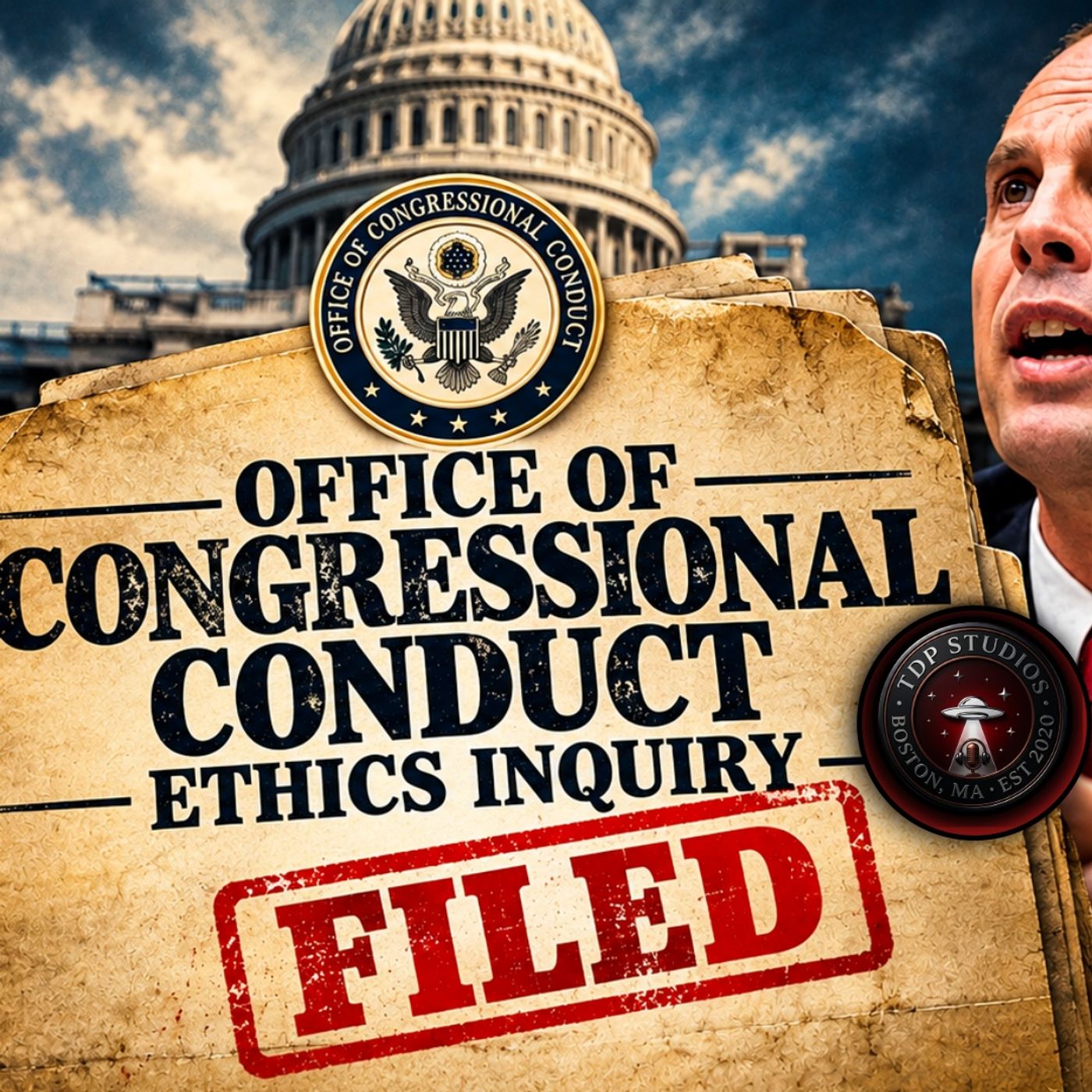
Speaker 1: Right. So this is, let's say, a formal citizen watchdog filing with the Office of Congressional Conduct. So this is the first step. in an establishing cause for a formal inquiry into whether or not David Grush's actions were a violation of the House rules. And there's three in particular. I don't know if you have the document there and you want to bring that up. But essentially, it lays out the foundation that while serving as a special advisor to Representative Burleson, that during that time period, particularly one month before the Capitol Hill event, he was registered as a federal contractor within the Systems for Awards Management.
Speaker 1: under the company Stardust X Materials. So Stardust X Materials, originally his CEO was Carl Nell. He's no longer listed as CEO. It's another guy named John DiDonato who comes out of the community but hasn't been a figure. In that filing, Grush is listed as the, yeah, that's the wrong document. Maybe the one that starts with conflict of interest. Yeah, David is listed as the government point of contact for any contracts that would be awarded. So there have not been any contracts awarded as of this date.
Speaker 1: But the filing is there, the registration is there. The corporate registrations, which originally were done in Delaware... And then the corporate filing for Colorado lists David Grush as the COO, Chief Operations Officer of Stardust X Materials, right?
Speaker 2: Okay.
Speaker 1: So you have a situation where, because again, I think there's a lot of confusion or misunderstanding, you know, people say, well, you know, what's wrong with somebody trying to, you know, get a job or trying to have a company or stuff. Absolutely nothing.
Speaker 3: Right.
Speaker 1: That is not in and of itself problematic.
Speaker 2: Right.
Speaker 1: Right.
Speaker 2: What what is problematic, in my opinion, like, for instance, and I don't mean to cut you off here. I can't use the Internet excuse. We're all in house today. We're all in house today. So I can't really use that that excuse that. But I interrupt you because it reminds me a lot about like insider trading.
Speaker 3: Right.
Speaker 2: Like Nancy Pelosi. People get on her about like if you're OK with insider trading.
Speaker 1: Right. Trump, Trump, you know, Trump's companies. Yeah. Right. Right. All that stuff. All those things that everybody complains about. Right. And all of those things that, you know, again, you get different levels of scrutiny, you know, both publicly and within Congress and within the government itself.
Speaker 2: Right.
Speaker 1: This is one of those exact same situations. So you, you know, and, and it's actually for me, one degree worse because we were introduced to David as a champion and advocate of disclosure that he has described his knowledge of everything right up to and including the alien bodies, life forms, biologics, you know, crash recoveries, materials sitting there in government. And the narrative we were sold was, I quit my job so I could focus on bringing this information out to the public, right? And that has been what everybody has been standing behind him for.
Speaker 1: That's what we were sold. I'm going to be working and dedicating myself to, or he was going to be working and dedicating himself to bringing all this forward. Now we see this situation where right before this big Capitol Hill event, which included Burleson standing there, Burchette, Luna, James Fox, a number of other people, right? And in that specific forum, he talks about the contractor slush funds that he goes after the contractors who are alleged to be holding these materials. And Carl Nell has even talked about, even prior to, I think, even Grush getting in the space, Carl Nell has talked about you know, these materials being held by contractors and we need to get them out of that and that that's all part of this sort of secrecy.
Speaker 1: However, what's happened is we have now the only thing we have documentation of, if we're being honest, right? A commercial interest by somebody working within and advising the congressional representative who is bringing forward the exact legislation with the exact provisions that would benefit this type of commercial enterprise. right? And none of that language touches on the core secrecy and structures that have allowed any of this to happen in the first place. So, you know, it doesn't say we're going to, you know, as part of the UAPDA, what we want to do is declassify these materials, We want to take them out of the hands of the sole contractors.
Speaker 1: We want to broaden the scope and study. It says, we just want to take them out of the hands of the sole contractors. So even in a scenario where these materials are taken out of whatever contractor they sit in now and companies put in a bid to do whatever engineering and studies of these materials are, that secrecy is, still exists right that's that core structure that i think all of this was supposed to be initially focused on is is still there and and so the second part of meaning is then when when you have somebody like that and and again you know david isn't the only one you know with a company there's a number of other people who've done the same thing but he's the only one sitting in Congress and potentially having a direct hand in the writing of the legislation, which makes it a violation of several of the House rules.
Speaker 2: So what you're saying is that by his position, inherently what he is doing is conflicting interests.
Speaker 1: It's a conflict of interest. And so the question becomes, How, you know, was Burleson aware? If he wasn't aware, why wasn't he aware? You know, were they, was Burleson, you know, was it several members of the House of Representatives sort of manipulated into going down a path for commercial purposes where, because what happens now is if, you know, you leave a company, you generally don't try and go back to work for that company.
Speaker 2: Generally, right.
Speaker 1: Because you were so disturbed by whatever it was you saw, I don't want to go back to work for that company. Now it's like, oh, I might want to go back to work as a contractor and I might want to do some other stuff. So now, how does that affect your advocacy role for the biologics and the photos how much are you now willing to push as an advocate when oh if i push too far i might not get that contract and and so and again this not just being a grush issue but being an issue with with several of them and and and the ones you know and again, all of the, all, all of the relationships from Jay Stratton and Travis Taylor with radiance, you've got Eric Davis sitting as the chief science officer with a Georgia tech company.
Speaker 1: You've got Sean Kirkpatrick, you know, consulting, you've got all of this stuff going on. So these people who are trying to be the advocates and say, you know, the government needs to release these files. Right. And, and, but, They're only going to push so far to get what they want.
Speaker 2: Agreed.
Speaker 1: And even that is forgivable if you're just transparent about it. Right. And the last thing, you know, I'll say, Eric, I'm sorry. I know you've been waiting there a moment. Oh, no worries.
Speaker 2: But you could even trace this back to like we chatted about last night in a different, you know, privately. You could trace this back to even TTSA, what they were trying to do. They were going to leverage the disclosure pipeline, work directly with the administration to come up with the legislation that would in turn benefit their company.
Speaker 1: Right.
Speaker 2: This has been happening.
Speaker 3: Right.
Speaker 2: And it's the usual suspects that are always part of the companies.
Speaker 3: Right.
Speaker 1: And people say, well, that's what happens within government. Yes, great. None of it makes it right. right? And again, we're dealing with a, you know, we are dealing with a different set of circumstances that I think are, you know, are unique to the UAP talk because people are, you know, emotionally, you know, vested in this idea of, you know, what disclosure means to them in coming forward. So, you know, it's, and again, it speaks to my criticism of George Knapp and his testimony where, you know, the question is, how are the members, you know, in the George Knapp case, how are the members who are not intimately familiar with your story and the stories of, you know, in the history of all of this, how are they supposed to differentiate when you are testify, your testimony as an investigative journalist, Versus your testimony about people with whom you have a financial entanglement, right?
Speaker 1: So as we go back and, you know, we look at things like the, you know, the June 9th event and sitting there and calling out the evils of the contractor slush funds and this and that. Well, now this is a new lens on that. right because because well hold on you want to be one of these people so so are we just are we part of you know are we part of the marketing strategy.
Speaker 2: Yeah where's the benefit to the the people it seems that the right the general public is always the gets the shaft right shaft shafted i should say is this works.
Speaker 3: For me yeah i mean that's what i'm seeing is that it's It's all about the tech. It's the haves and the have-nots. It's the disparity. What I was getting at before, a little bit back, was when you were talking about David Grush and the slush fund. To me, that right there in and of itself, how much is the slush fund? Is something that simply the target? How much can I bilk out of this account that I happen to know is there? It happens in so many of the circumstances where you know, there's grant writers and things like that.
Speaker 3: It just like, you know, I happen to know if you fill out this form, you.
Speaker 1: Get X amount of dollars.
Speaker 2: Right.
Speaker 1: You know, right.
Speaker 3: And we got guys talking about slush funds to what extent it begs the question.
Speaker 1: Exactly. I mean, and, and, and some people, you know, I guess trying to be apologists or put a positive spin on it and say, well, then it must mean what he's talking about is real. Because, you know, they're taking these steps. And I'm like, yes, okay, it means a real. What it doesn't mean is that you're going to know anything about it. And again, you know, maybe I'm wrong, but I thought the idea was... And that's if they're operating nobly.
Speaker 4: Right.
Speaker 3: Which I don't default to that position. Like, that blows my mind that people default to that position.
Speaker 1: Like, I don't know this total stranger. Right.
Speaker 3: I'm going to presume they must be the most noble person acting in the best interest.
Speaker 1: They can't possibly have any greed whatsoever. This stranger. Well, and you know, and so that I guess speaks to the, the, the final part of, you know, what's included in the, in the filing with the office of congressional conduct that, you know, I brought out this information, um, initially and you know was slammed for you know like it was a doxing attempt again people miss the entire point right whatever whatever information is in that public database is information that was allowed to enter that public database if you are a career intelligence official who you know has been living under uh threats and risks and you have these concerns then you've exercised a grossly negligent level of personal you know security to put your name or allow your name to be put all over these filings right um and and so instead of responding to that and instead of providing an explanation or justification or to to let's face it to man up and say, yes, and this is my intent and, and, and dah, dah, dah.
Speaker 1: And it's going to be a great opportunity. And this is where I intend on it going or any of those things. They just went and changed the registration and took them off of it. So what is, so, so, so if we're talking about, you know, transparency, um, That's probably one of the most untransparent moves you can make.
Speaker 2: So what prompted this? Now, was something submitted? What's going on there? Why are we talking about this specifically?
Speaker 1: Well, because it's the only way to get action on the issue.
Speaker 2: Did someone file something?
Speaker 1: Yeah, I filed it.
Speaker 3: As you're bringing this up, I wanted to jump in and almost just for clarification, we got folks listening in multiple different venues and people pop in and out, right? in a concise way, right? What's the headline here, right? What has changed in the past couple.
Speaker 1: Of days now?
Speaker 3: What would you title the action, the activity that was taken so that people understand what's going on here?
Speaker 1: What's occurred? Yeah, so the initial filing was made for the Office of Congressional Conduct to assess whether there is probable cause of a violation of to make an inquiry to the House Ethics Committee for a full investigation. Gotcha. This is the first step in that process.
Speaker 3: Who is implicated in this, for lack of a better term than I know, this implication, this charge? Is there one person, more than one person?
Speaker 1: Yeah, so it is David Grush as a staff advisor. and inherently Eric Burleson as the house member who, who as the house member is supposed to be providing oversight of his staff. Got you. Okay.
Speaker 3: With that being said, as you see it for everybody to listen to, what are you seeing as implications to this type of activity? Um, albeit possibilities and probabilities. So, I mean, I understand there's that for which we can hope for, which may or may not occur, but can you express the list of what we're looking at here? What can we hope for? What do you think may occur? Everything, please.
Speaker 1: Yeah, so in the purest sense of the process itself, This non-partisan or bipartisan, I think it's three-member committee, reviews
Speaker 1: the description, the facts that have been presented to them. They review the evidence that's been attached to that.
Speaker 3: So this is not just simply you writing an email saying, I'm Gene.
Speaker 1: I'm angry. Right.
Speaker 3: Take a look at these guys. You have provided supporting evidence to your gripe.
Speaker 1: Correct. Along with the text, so to say. Correct. Got you.
Speaker 4: With the receipts.
Speaker 1: So it lays out the complete timeline and chain of events.
Speaker 1: It requires you to specify the specific house rules, which may have been violated. And it asked for additional witnesses or others who could provide more insight, let's say, and any supporting documentation. So the supporting documentation included the original SAM filing, which Adam listed, the filing that was done after this came public and he was removed, and then the Delaware state corporate filing and the Colorado state foreign entity filing that lays out how long the engagement in the company was as long as specifies the positions within that company.
Speaker 1: Other things like the statements during the July Capitol event were quoted, and they certainly have the capacity to pull up C-SPAN and watch those statements and watch that entire presentation themselves. So back to the process of it, if they find that there is probable cause, it will be then referred to the House Ethics Committee for the full-scale investigation. And, you know, any number of outcomes can come from that. What do I hope or what do I imagine, right? A couple of things. So number one, we're within the 45-day window prior to the midterm elections where the committee itself actually won't release anything about this.
Speaker 1: That's sort of, you know, the policy statement from government, they won't, they won't release anything about this. Now, any number of the, you know, the Missouri, um, local papers and news outlets might pick up on it. Um, and, you know, or his, uh, the, the, the people running against him in this campaign and he can, he can, since he didn't want to answer for it in the, you know, social media space. And I think we've all seen in the past, They do answer things. They do engage. So this one's one.
Speaker 1: So if he didn't want to do it there, he's got 45 days, I guess, to talk about it on the campaign trail or 44 days to talk about it on the campaign trail and for people to ask questions about it.
Speaker 2: I don't think I don't think I think some people are taking this the wrong way. Well, I hear or in the chat, I keep seeing nothing burger, yada, yada.
Speaker 1: Right.
Speaker 2: So, and it's like, okay, let's start at that.
Speaker 1: Yeah.
Speaker 2: Again, it's not an email. It's not a presidential fucking investigatory body, but what's everyone else doing? Well, where's everyone else?
Speaker 1: Yeah.
Speaker 3: Like when some random person or 12 random people call something a nothing burger it doesn't make it so right it's literally just that simple so they can they can scream it from the mountaintops as you pointed out they're accomplishing nothing i mean at any point in time one up what gene is doing Pulling up what I'm doing. Pulling up what anyone is doing that these people are criticizing.
Speaker 1: The basic fundamental thing here, this is the process that we have. We sit in spaces and we talk all this shit about what should be done. There are processes available to it. You can say it's a nothing burger. You can want it to be a nothing burger. Very well, the congressional committee may come back and say, it's a nothing burger. But I have taken action to use the processes that are available, the democratic processes that are available to us, to resolve the issue. It'll be resolved one way or another.
Speaker 3: And at the very least, you accomplished firing some shots across the bow of someone that you have no problem doing that to.
Speaker 1: Which there's value to that as well. Again, there's messages to be sent as well. So that's my next thing. And one of those messages, very well, sorry, I'm screwing up the switching. It's a hard.
Speaker 2: Thing to do, talking and switching at the same time.
Speaker 1: I know, I try. Again, one of those messages is, that there are members of the community who are willing to stand up and do something besides file a FOIA request to hold somebody accountable. Please tell us the truth someday. Right. Please. Yeah. And so to just go on, what are the consequences? So even if it's a nothing burger in the sense that there's no public admonishment or You know, there's clarifying statements that have to come out. I bet you we're going to see much more discipline around the talking.
Speaker 1: What I hope we see are more of everybody who's listening when they get an opportunity to question any of these figures. Take a shot. Take a shot.
Speaker 3: Right.
Speaker 1: Ask them. I have a question to ask you before I ask you that question. Can you just clarify, do you have any financial entanglements that are potentially coloring the information that you're providing us today?
Speaker 3: Right.
Speaker 1: Yep. And, and, you know, I'll just, it makes, it makes me think of standard fighting stuff.
Speaker 3: You don't necessarily land every shot you take, but you've got to take shots. You're never going to win a fight if you never take any shots. Certainly not every shot you take is going to land, but you've got to keep swinging.
Speaker 1: Somebody misconstrued my involvement with Whistling Mike. And Mike's October event that he's doing and Mike, you know, trying to pursue a contract with the government. And I said, you know, so number one, I have no financial entanglement with Mike at all. I'm not a business partner. I don't have an interest in that company. I am providing him pro bono, my, my expertise to, to do the intelligence briefing for that event.
Speaker 2: Right.
Speaker 1: So, I don't have any dog in that fight. Um, what Mike is produced and what Mike is doing is a, is a finished product, um, that he's trying to bring to market. He's not positioning himself to seed something that he has insider knowledge of. He is, you know, Already there, already has the company, is already doing his thing. So, you know, and number three, from the beginning, he's talked about it that I, you know, that actually what Mike says has nothing to do with UAPs. He's not trying to give anybody false hope that aliens are going to come down because of the work that he's done.
Speaker 1: He's not talking about alien species from day one. He's like, I'm trying to do business with the government. So that's what I think. There's nothing wrong with it.
Speaker 2: But be transparent.
Speaker 1: But be transparent. Exactly.
Speaker 2: And that's the, you know what I mean? Again, hate it or love it, but be transparent.
Speaker 1: And when you're confronted with it, don't insult the intelligence of the public by just going in and changing the data.
Speaker 3: Right.
Speaker 1: Right? I mean, you know, did they think the public stupid? Did they, you know, did they think I was stupid? And, you know, I didn't download the things before, you know, right. I did again, you know, the obviously not listening that I've done this for 30 years that in European nations, I have, you know, I have used the political system to get prime ministers who were not friendly to To the things we were doing to get them out of their prime minister roles.
Speaker 2: To literally primary them?
Speaker 1: To literally cause the government to fail so that a new government needed to be formed with a new prime minister. Oh, shit. This is what they do. This is how European politics work.
Speaker 2: Yeah, I'm not as familiar. So that's what you... Okay, that makes total sense, actually.
Speaker 1: So I did it three times in Europe.
Speaker 2: Right. Right?
Speaker 1: Because it's like... Because you need the.
Speaker 2: Oil and gas laws to be in your favor.
Speaker 1: This isn't going our way. We need something changed. Right? And the politicians did... One used his private passport to go on a vacation to Sharm el-Sheikh in Egypt with his girlfriend while his wife was at home, right?
Speaker 2: Ooh, bad luck.
Speaker 1: Somebody said, you know, now again, you're a prime minister. You can't travel on your private passport anymore. You are the head of the nation, you know, in the parliament and all of that, right? A couple of phone calls, you know, a couple of phone calls, next thing you know, you know, reporters were knocking on his door with pictures of, you know, him and his girlfriend on the beach and Sean Rochette going, do you know where your husband is? That was the end of.
Speaker 2: His, his political career minister.
Speaker 1: I think he came back a few years later, but they all do. What I'm saying is, you know, I've, I've, I've had people be, you know, somebody sent me a, a, a UAP figure. When I first posted this stuff, sent me a thing saying, you don't know what you've just done. No, I fucking know exactly what I'm doing. I had an entire career. I've had an entire career doing this. And, you know, again, it's the, and it's not about that. It's acting as a watchdog. It's being a citizen and engaging the process that's available to us as citizens to ask questions or get, you know, to get questions answered of our representatives when our representatives will not, you know, talk to us directly or use the many outlets that they have available to them, right?
Speaker 1: And how many times have we said it? There needs to be accountability of these people running around making the claim, and we need to have clarity. And if you're a transparency advocate, right, changing data and hoping nobody sees it is... somewhat contrarian to your claim of being a transparency advocate right and and and you know the last part of it i'm sorry i've been going on and i'll turn over to you guys to go back and forth for a little bit but we do have a question from the the the last part.
Speaker 2: Of it is this idea that um this is the guy that yells at me i know before every show.
Speaker 1: Turn your phones off make sure your phones are off look at.
Speaker 4: Me um where was i on that one no one remembered.
Speaker 1: About being transparent you know about transparency being contrarian um to the to the whole thing um Well, I guess I... Oh, but this idea that I'm somehow the bad guy.
Speaker 2: Oh, you're a fed, I heard.
Speaker 1: Yeah, right.
Speaker 2: Did you hear that he's a fed?
Speaker 1: I heard Gene's a fed.
Speaker 2: He's a fucking fed.
Speaker 1: He's the miracle fed. You know what? I got to tell you.
Speaker 2: You fed.
Speaker 1: So there's a part of me that takes that as a compliment because, number one, if you think what I'm doing or what I've done... seems to be backed by a secret organization. Good on me. I guess I haven't lost the skill sets.
Speaker 2: By the way, I'm pissed if you're a Fed and I'm not getting some of that money.
Speaker 1: Well, you know, there's no money in government anyway. You know, the second part of it is that you're not as smart or savvy as you think you are about intelligence, counterintelligence, and all of these things that people spout off about. And I think that's the hardest pill in all of this to swallow, is the idea that for so long, and this is my public service message, right? If you are having a visceral reaction to this, congratulations, you have been psyoped. You have been a victim of narrative control.
Speaker 1: that they have led you to feel as though you have an emotional stake in this, that no amount of logic and reason and law will counter your feelings about the individuals. That is narrative control. That is narrative management. You are a victim of that if you're having this visceral reaction. So, you know, it's a triple hit on people. They're going to have to deal with the idea that they're not going to get disclosure that they hope they were going to get. That the people who are going to bring it to them are not transparent actors and had ulterior motives.
Speaker 1: And you got to get over the fact that you've bought a narrative control. You know, you have fallen into a narrative control.
Speaker 3: Yeah.
Speaker 1: So, Eric, I know there was somebody online there. Oh, yeah.
Speaker 3: So just so everybody knows, we're here at a Total Disclosure podcast. We're streaming from the YouTube page, but we're also simulcasting on the X Spaces platform with Hey Ocean here. And we have a whole bunch of folks listening over there. And I see Ocean has her hand up. So I imagine we have a question coming from the audience over there. And I guess, Ocean, if you want to give it to me and then I'll relay it over here because the folks in studio can't hear. But if you want to hit me with it and then I'll let them have it.
Speaker 1: Next time.
Speaker 2: Plug it in.
Speaker 1: So.
Speaker 2: Everyone watching on YouTube is like, what the fuck?
Speaker 1: They can hear you.
Speaker 2: It's ironic.
Speaker 3: Do you guys know if David Grush ever mentioned before... if he had a personal interest?
Speaker 1: So the only public disclosure that I was able to find was prior to his 2023 appearance. And at that time there, in submitting the paperwork they need to, did not disclose anything that was potentially a conflict of interest. Okay.
Speaker 2: So inherently, are these companies, are they NGOs? Are they 501c3s? Does that make a difference if something is a nonprofit?
Speaker 1: Yeah, absolutely.
Speaker 2: So there's different layers to this. What is Grush a part of?
Speaker 1: So there's something called NAICS codes, which are industry codes that essentially says, you know, what type of business are you in? And so he, all the other ones, they're all science and materials, research, consulting, things that are high level categories. You can go to the websites and on the websites you'll see you know they specifically talk about uap reverse engineering metamaterial studies um you know they get they get a little more you know.
Speaker 3: Kind of an interesting place to start getting your feet wet when it comes to starting a business and entering industry yeah you know if that wasn't really the way that you worked your way up in the world.
Speaker 2: Seems like they hopped a few steps there yeah.
Speaker 3: It's like Jumping out of nowhere with like, hey, I've never manufactured jack squat in my whole life or done anything like this before ever.
Speaker 1: But lo and behold, I'm going to incorporate and look what I do now. Right. It stinks of that to me. And that's why I like Gary Nolan is part of many of these companies, you know, never mind having his own portfolio. And again, he's somebody. From the beginning, he's always... Holy, least common denominators, Batman. Yeah, he's always been engaged in business startups and the different areas that he explores and things like that. But, you know, if you look at a company like Radiance Technologies, right, that we've, you know, Jay Stratton's famously been associated to as a consultant, I think Travis Taylor as well.
Speaker 1: You know, when you look at that company, what you'll see... is somewhat a similar strategy, but they're doing it as a company. So they have like six or seven radiance technologies, you know, registered under different variants of the name. Each one of those variants is registered to and headed up by somebody who will fit some category within the government's programs of set aside. So Service disabled, veteran owned business, veteran owned business, women in minority owned business. You know, there's ones depending on where your zip code is, the HUD districts and things like that.
Speaker 1: And what happens is when there's a contract to be bid on, right, each one of those entities bids on the same contract.
Speaker 2: Yeah.
Speaker 1: Offering essentially the same personnel and everything, but the headquarters is different because the person at the top who's the owner of the company fits this category and they may very well wind up subcontracting to one another, you know, within the same organization, right? Interesting. And, you know, and again, none of this is new. Like I used to see things like 123 Main Street LLC, right? And they would have these massive government contracts for stuff. You know, as I dove into it, it was like, well, what the hell is 123 Main Street, LSA?
Speaker 1: Oh, you know, that is a, you know, a virtual office address. The president of that company is a former Xerox executive, right? Who happened to be service disabled, right? Service disabled veteran. got a grant for he was set up as a services owned service disabled veteran owned company when Xerox was bidding on jobs he was his company was always the company that was the connected service disabled veteran company right so that they they're they're able to you know be more competitive be more competitive on those on those contracts.
Speaker 3: Right interesting choice of words that's what we call be be more competitive more competitive right it's.
Speaker 2: Almost like, you know, the, if you guys have been seeing that kid, um, what's his name? Nick Shirley.
Speaker 5: Yeah.
Speaker 2: You know, he's investigating the fraud in like daycare shit.
Speaker 4: Right.
Speaker 2: It's almost like that. It sounds like where it's like these, these companies that are essentially created overnight, uh, And then are all of a sudden getting federal money in the tunes of millions of dollars.
Speaker 1: Yeah. And this same system that, you know, you're registered in, the systems for awards management, this is also where you find grant money to study things. And, you know, the government comes out and says, you know, this is what we want studied. And you put in for those grants. So this was the issue with the National UFO Historic Reporting Center and the sole source contract Arrow posted where Arrow was saying the National UFO Historic Reporting Center is the only resource, you know, the only database and they have a digitalized collection and we want a subscription to We are putting in this sole source award.
Speaker 1: We are subscribing to this digital database. The problem with that is that there is no digital database that even by the National UFO Historic Reporting Center's own website says they hardly have anything digitalized, right? Now, somebody who reported this who responded to my report on that, said, well, the UFO community, nobody gives us money. So how are we supposed to get money to digitize things without getting it from the government? And Arrow wants to give us money to digitize it. And it's like, that's great, but that's not what the award is, right?
Speaker 1: The award is... a subscription for something that already exists, which means what happened was, so Arrow did a clever workaround, right? Because they would have otherwise had to have established a grant fund and put out for, you know, across the nation and across the world, anyone who's registered, and said, we are looking for sources of historic UFO data that is already digitized.
Speaker 2: So, so some move on could have been a, Hey, we have one.
Speaker 1: Correct.
Speaker 2: Right.
Speaker 1: Right.
Speaker 2: But they didn't want the competition.
Speaker 1: They didn't want the competition. So that would tell you there's something specific in there that they probably, that they probably want. And, and, and so, and what they could have done is they could have had a $ 5 million fund and said, okay, national UFO reporting center, you're going to get a million move on. You're going to get a million. Eric Hecker, We're going to give you $ 250, 000. Ty Roberts, oh, you have a collection you're going to digitize. We're going to give you $ 10, 000. We're going to give UAP Reporting Center $ 5, 000.
Speaker 1: They could have divvied it out in any number of ways. Instead, they massaged the language in order to justify a sole source contract for something that doesn't exist in order to get it to exist.
Speaker 2: Yeah. Which you could argue, I mean, then you could, that's just the, and again, this is kind of like unsexy stuff, but it's the reality of how the world truly works and what the disclosure movement that every one of us is involved in. This is the shit that's going on behind the scenes. Are you okay with that?
Speaker 1: This is what I posted about the other day. And again, I get crucified for it, but it's the fact That, you know, the Gallup polling shows, right, we don't have more of the public believing. We have more of the public unsure.
Speaker 3: Unsure.
Speaker 1: There's actually fewer people who are certain, but more people who are unsure than the last time that they did the survey.
Speaker 2: And in that time.
Speaker 1: Oh, sorry. Let me do this first. The only thing that has increased, right, when you compare. the amount of information that has become available, the only thing that's increased is the entertainment ecosystem.
Speaker 5: The number documentaries podcasts documentaries conferences that's increased exponentially.
Speaker 1: But are we any closer to disclosure because of any of it right that's that's the question and could we be further yeah we could be further right we could be How many people are doing the calculations? Everybody, all I hear all the time is.
Speaker 3: Like, well, at least they're moving the ball.
Speaker 1: Right. By what criteria?
Speaker 3: Right.
Speaker 1: And in what direction? Right. In what direction are they moving it?
Speaker 3: Yeah, the coach doesn't like when you run the ball 50 yards the wrong way. He doesn't go, well, at least he moved the ball, that sticko guy.
Speaker 4: Right.
Speaker 2: No, you ran towards the wrong end zone. You actually... You actually gave them a set of points.
Speaker 1: Right, yeah.
Speaker 3: So it's wild to me when I hear people say like, well, at least they moved the ball.
Speaker 1: And it's like, whoa. Yeah, it's like you're- So that's what I'm saying. This isn't about attacking anybody. And again, I think it's important to point out, right? This is where, I don't know how many times I've said, right? I don't listen to what anybody says, right? I am following what the system is doing. In following the system, that includes the markets, it includes these contracting. This rose to the top because I watched the system and what the system is doing. I didn't go out and say, let me find some dirt on somebody.
Speaker 1: It appeared because registrations were made and it was within time periods and it related to certain key dates and it's all it's all analytical work that again I have nothing but time to.
Speaker 3: Do so speaking of systems right we were talking recently I forget exactly where within the last week or so but we were just chatting and all of a sudden like you had like kind of a like a little mini epiphany because you were talking about oil industry stuff it was the stuff in Baltimore yeah talking to some folks over there yeah About the oil industry and how screwed up that is and what you came to learn. And as you were discussing this and communicating with these guys, you kind of just said, you know, I can switch the.
Speaker 1: Word oil with UFO. Right. And it's basically. I like sense checked it with you because I'm like, am I crazy? Yeah. It's the same situation.
Speaker 3: Right. The format of deception, the plays being had, the stages being set, the roles being cast, and then recast, and then the duplicity of things to then undermine their own previous positions, the amount of propaganda, the investment that I think most people don't realize is going on behind the scenes.
Speaker 1: Would that be safe to say that most people.
Speaker 3: Don't realize how much the oil industry invests in propagandizing the world around them.
Speaker 1: Is that a fair statement? Absolutely fair. And now we switch the oil and the UFO.
Speaker 3: Would it be safe to say from your observations as a professional that in the UFO realm there seems to be a similar vein of investment and interest of manipulation of concepts.
Speaker 1: This, this is exactly what I said, you know, late last year after being in this a couple of months, a couple of months, it's the same. Right. Was it that obvious gene?
Speaker 3: Yeah.
Speaker 1: It was the same structure, the same apparatus, right? The common denominator is the relationships between the private, private sector in this, uh, private sector industries and industrialists and entrepreneurs, right? And their relationship into the U.S. government. And so again, when it came to disclosure, and I heard all this talk, we've got to break down the architecture of the secrecy that allows these things, the over-classification, the compartmentalization, all of these things, I'm like, this is great.
Speaker 1: I can get behind this because this will have widespread consequences throughout government and, you know, touch on these other areas that I identified in my previous career, right? But what I saw was None of the actions that were being taken were coming close to touching any of that. Something else was going on. And so I learned one simple question to ask from my experience of being an auditor. Why? And you continue to ask why and you look at motivation, you look at resources, you look at relationships, you look at Is it training?
Speaker 1: Is it awareness? Is it regulatory? Is it legislative? Is it policy? Is it internal company policy? You look at all of those things and continue to ask why until you get down to just a couple of scenarios. And then you look at the actions. Don't look at what people are saying, right? Look at all of the options they had available to them to execute. Which one did they choose? So to your earlier question, Ty, about the types of companies, did anyone start an NGO? Did anyone do this and that? No. Of all of the information that these people had available to them, of all of the potential consequences of what their stated goal and objective was, was to you know, roll out the bodies, roll out the UFOs, let's, you know, roll out the true history of the world and the true history of reality.
Speaker 1: And, you know, let's let everybody know what's really going on and who really is your neighbor and, you know, what is, you know, in the center of the earth. For all of those options, the option that was most often taken, the only option taken was create some sort of materials reverse engineering science company. Nothing, no NGO that touches on the human aspect, the humanity aspect, the religious aspect, the economic consequences, the systems of government structure oversight, the ideas of who's going to be intergalactic ambassadors.
Speaker 2: You know, it's funny.
Speaker 1: For all of these things they chose, I'm going to start a materials engineering company and I want to get materials, uh, you know, uh, that are locked up. I want to get those released. That's my goal.
Speaker 2: And ironically, you got, you have historically in the past had met captains of industry guys like, uh, you know, from all over literally.
Speaker 1: Um, but how put.
Speaker 2: Off was also invited. And he was invited for his work, of course, you know, with everything that he did. And, you know, they were split up into teams or into like little groups and they were tasked, it was this think tank where they essentially were asked whether disclosure would be a net positive or a net negative. Like, could it be done? And I believe this was during, Bush's first term. Like, Bush Senior. First is his term, not
Speaker 2: Young Bush.
Speaker 1: H.W. Bush.
Speaker 4: I forgot.
Speaker 2: And ultimately, all these people in industries that were related, they all came back and all of them, all the groups came out saying that Disclosure would affect our, like it would destroy our economic system. It would destroy our religious pipelines. It would upheave society in a way that couldn't be undone. So then you have those same people with an opportunity to start integrating, right?
Speaker 1: To say, so here's the path. So that's where we're at right now.
Speaker 2: That's what bothers me.
Speaker 1: So here's the path forward.
Speaker 2: But I'm going to create a.
Speaker 1: Here's what we can do to begin leading this. But that's... You're right. That's not what happened. What happened was they just created more materials companies. I mean, the vast majority of talk about... And then other ones want to create craft and stuff like that.
Speaker 2: But again, this is the TTSA playbook all over again they were to the stars said that they were going to build a ufo.
Speaker 1: That resolved the you know societal start because we're all gonna be like.
Speaker 2: Oh wow this is really cool you think they're going to give everyone a fucking UFO?
Speaker 1: Right, right.
Speaker 4: That's what everybody thinks.
Speaker 2: Hey, guys, it's like a stimulus check, hecker. Everyone gets a UFO. It's a stimulus check thing.
Speaker 1: I just want to teleport to where my closet was.
Speaker 2: Straight up.
Speaker 4: Gene, what are you doing for dinner tonight?
Speaker 1: You want to go meet in Paris? Can we just jump in the closets and go where we're supposed to go? You always talk about meeting me in Paris and transporting me to Paris.
Speaker 4: And being in the closet.
Speaker 1: And being in the business. That's another episode I guess we have to explore.
Speaker 4: I've never been to Paris. I heard the food is good. Eiffel Tower seems like.
Speaker 1: A pretty sick structure. I love Paris. I can't count the number of times.
Speaker 2: I've always wanted to go and I've always wanted to do the thing that is the most tourist thing of going. Because I'm a shorter guy, I just want to look like I'm holding the Eiffel Tower.
Speaker 1: Yeah.
Speaker 2: So anyway, or I just want to lay on the ground and have it pretend to be my penis.
Speaker 1: There you go. Yeah. But, um, they love when you do that.
Speaker 2: Yeah. Yeah. Yeah.
Speaker 1: Yeah.
Speaker 2: Love doing that to monuments, but bringing it back around guys, like being serious here. Um, let's say like, all right. So the implication is here that UFOs exist, right? That non-human biologics exist. that our government or military, probably the military industrial complex to be more specific, has their hands on this stuff. A lot of people have been talking about this lately and I've caught it. What if the real, the reason for the secrecy is they just, they haven't, they don't know what to do.
Speaker 3: Where are you getting that that's what they got? Like, I'm not following the connection there from what was dropped. And you just said that there's some implication that they have something. I'm not seeing where that's at.
Speaker 2: Oh, I'm just saying, like, working off the implication that, like, if you're to believe Grush, right?
Speaker 1: Why would you be that foolish?
Speaker 2: Well, I'm just saying. So that's why the hypothetical arose. Let's say that they do have these things. Why are we in such positive mindset that they've cracked this thing?
Speaker 1: I have no idea.
Speaker 3: If we're positing that I believe Grush, I presume I'm retarded already.
Speaker 1: Oh. I don't know what to think at this point. Okay. Well.
Speaker 2: I mean.
Speaker 1: Where do we go with this?
Speaker 2: I don't know.
Speaker 1: I don't know.
Speaker 2: Maybe Grush was a bad example.
Speaker 3: I mean, we're talking about, we're talking about ethics charges being dropped against him in reality, but then shifting gears to positing that he's telling the truth. I mean, no, I'm cool with, he's probably guilty of the charges being laid at his feet.
Speaker 2: Hmm.
Speaker 3: I mean, yeah, and I'll just say. I'm cool with considering that.
Speaker 1: Yeah. Very cool. And I don't think, I agree with everyone who says, well, doesn't it mean that there's something there? Yeah, absolutely. It means there's something there. It's worth looking into, it sounds like. It's worth looking into. It looks like, you know, there's a bunch of them planning a whole new economy based on all of this. But, you know, the message I'm trying to get out is then temper your expectations. understand they are only going to push as far as necessary for them to meet their commercial interests.
Speaker 1: And they're not going to go any further than that, right? And they're not going to have some magic waiver that eliminates all the secrecy of everything that already exists, right? Everything's going to remain the same We're just going to have.
Speaker 2: So you think pipelines stay intact?
Speaker 1: Well, again, nothing that's been done so far changes the infrastructure, changes the system, right? So if you're trying to change the system, the first thing you needed to tackle was the secrecy, right? And the compartmentalization, the over-classification.
Speaker 2: And we've failed.
Speaker 1: We've failed. Nobody's even tried. What attempts have been made at that, right? Zero. That has fallen so far off the radar. Right, at least this is an effort. People forget it was even a goal in the first place. Yeah, I mean, this is at least, to me, it's at least someone taking a shot at Goliath.
Speaker 4: Absolutely.
Speaker 1: Someone firing around. What it's saying is that, yes, we're watching. Amen. We want to hold people accountable. We don't want you talking out of both sides of your mouth, right? Leading people to believe that you're out there working to get us, get UFOs and alien bodies rolled out on the White House lawn when you're happy to stop at X point because it meets your commercial interests. And then what are we going to get? We're going to get years more, you know, oh, so what are you finding in these materials?
Speaker 1: Oh, well, we can't talk about that, but trust us, it's really good, right? Oh, trust us, we know a lot more about this. Yeah, we'll handle the secrecy stuff later. Well, again, administrations change, representatives lose their jobs, come and go, right? Anything like that.
Speaker 2: But the contractor never goes away.
Speaker 1: And the contractor never goes away. And so if this accomplishes nothing else, right, then what it accomplishes is for Representative Burleson to understand. You know I was standing right in front of him in D.C. We shook hands.
Speaker 2: Was that when I interviewed him?
Speaker 1: Yeah.
Speaker 2: Yeah, you were right there with me.
Speaker 1: I knew where I was at that point. Yeah. So, you know, it's again, when people are asking sincere questions, when they're trying to hold you accountable, maybe don't try to avoid them. Because again, if you don't know who you're dealing with, you know, there are mechanisms.
Speaker 2: Yeah.
Speaker 1: This is the mechanism that's available to anyone in the public. For anything, if you have Epstein file complaints, you can do the exact same thing. Eric, there's a.
Speaker 3: I do have a couple of questions coming in from the XBase. So I'll read the question as written, and I'm sure you can gather the vein in which it's coming through. It says, how many days until something happens?
Speaker 1: And then the next question is, where can we send questions? Yep. So how many days until something happens? Nothing will happen. We will hear nothing about this if it moves until after the election. So 46 days, 47 days, you know, nevermind people talking about election results and, and, and things like that. So they can, they can proceed with everything, but they will not talk about it, um, Congress, you know, formally the office or the ethics committee will not comment on it until after the election.
Speaker 1: But we very well, again, if any of the Missouri press who has this information decides to raise it as part of the campaign, if the independent candidates staff decides to comment on it or raise the question in their format or the Democratic candidate challenging him for a seat, decides to raise it, then perhaps we do hear something directly from Burleson before the election. Okay.
Speaker 2: So that answers the if or when something could happen.
Speaker 3: The next one was where can we send questions? So I guess maybe in regards to Are you.
Speaker 2: Sure that wasn't For, like, where they can send questions to us for this?
Speaker 1: I think it might be in that regard.
Speaker 2: Okay.
Speaker 1: It says, actually, it says, like, to the government.
Speaker 3: Oh, like to the government?
Speaker 2: That battery.
Speaker 1: Also, if people, I guess, wanted to follow up with this.
Speaker 1: Sorry about that.
Speaker 3: No worries.
Speaker 1: If people wanted to follow up on this.
Speaker 1: Where could they help apply some pressure? I gather inquire. So, yeah, good question. How do you do it? Find your local representative, right? Go on the House of Representatives, find your local representative, and they have a contact form right there. You put in, you know, they ask for your name, your phone number, whether you want a response to it, and write it there and ask your local representative. You can go look at look for the Office of Congressional Conduct website. And there's three members who are listed there.
Speaker 1: Find those members, find their email addresses, send them a letter saying, I understand this has been done. I'd like to voice my support for looking into this. Again, we're not drawing conclusions. We're asking that this be looked into and taken seriously. This is how government works in all things. This is what we should be doing with the UAPDA. Send the letters or pick up the phone and call the office. Leave the voicemail at the office of your representative that says, I think this is important and deserves being looked into.
Speaker 1: If people did that every day, and I know there's a few people on X particularly who do pick up the phone and call Capitol Hill and call various offices, not just their own representatives, right? Pick up the phone, call it and say, I think this should be sworn or pick up the phone and call them and say, I think this is a nothing burger and get rid of this. It's a distraction. Both of those are your right and your responsibility as a voter to do. Fair enough. Either one. Any other questions there?
Speaker 1: Got any more questions over on your end, Ocean, perchance? The floor is yours.
Speaker 2: Sorry about that. Awesome.
Speaker 3: Thank you very much. No questions currently from the X basis. She's posting the total disclosure podcast info. And I'm going to try to find some stuff for folks on links on where to get things going.
Speaker 2: Thank you. Thank you. So guys, I want to shift gears here a little bit. Actually kind of wrapping this part up. How can people help support what you're doing? And how can they hold their own representatives accountable?
Speaker 1: Exactly what I just described. Call them. And, you know, again, not only representatives, but everybody in this space who is coming forward, making claims. You know, we talk about destigmatization of the UFO issue, the UAP issue. We need to also destigmatize the questioning and accountability aspects of this too, right? You know, the podcasters have a responsibility. You know, I know a lot of people like to just say, well, I just make the space available for the story to be told. And that is perfect.
Speaker 1: And that's an absolutely wonderful thing to do. But that should be tempered with, continually highlighting what is documented, what is reported, what is inferred. Like we just saw this with Matthew. Kind of lets all the wolves in the hen house, doesn't it? Well, technically. It's like what we just saw. It's a poor filter for wolves. It's what we just saw with Matthew Brown, right? On the Jesse Michaels interview. Matthew Brown inferred many things, right? But because people reporting and sharing and discussing it weren't careful about what is inference and what are his conclusions and ideas versus what it was he actually said versus what it is that's actually there.
Speaker 1: That is what I think causes a lot of It causes confusion. It causes divisiveness. You know, it causes, you know, all of these things, you know, and so this idea that, you know, which what I'm facing now and I'm sure is coming in the coming days that I'm looking to attack. And, you know, and listen, I want disclosure, you know, to be everything that everything that it should be. And if it takes holding people accountable, we can't be afraid of doing that because they're going to call you a fed.
Speaker 2: Or because they're the perceived leader of the community. They're the champion. I'm sitting at the table as probably the odd one out. I like Eric Burleson.
Speaker 1: Again, I get nothing against him as a human being.
Speaker 2: I like David Grush. No one has presented me, aside from this, what I've seen. He seems like a stand-up guy. If this comes to light and there is something to this, again, we are drawing the inferences that this is being put forward to be investigated, right?
Speaker 1: I mean, it will be assessed. Right.
Speaker 2: But we are saying that in this country, we do believe that you are innocent until some sort of investigatory body says there's a wrongdoing. So the evidence that I've like from what I've heard, Grush stand up guy, you know, always this could be the again, I could be just getting it from the circular reporting. I've never met him.
Speaker 3: Right.
Speaker 2: But this is the problem with the community. is we hold these people in these regards, like the Grushes. We think in this community that if the Grush foundation cracks, that the rest of the disclosure movement crashes with it.
Speaker 2: But you see what I'm saying?
Speaker 1: I do.
Speaker 3: What I don't see is how you can have any pause in realizing these guys are full of shit con jobs, that part I have trouble seeing.
Speaker 2: Well, it's not that I, I, I just don't look, I don't look at them and say, all right, I'm being conned. It's, it's, I am very, it's, it's like my relationship with John Alexander.
Speaker 3: I don't see myself. I don't look at myself. I don't look at them and see myself being conned either. Cause I'm aware they're full of shit.
Speaker 1: Okay.
Speaker 4: So there's a distinct difference here.
Speaker 1: Okay.
Speaker 2: So I guess I'm giving them.
Speaker 3: You are currently not cognizant of how full of shit they are. That's how I would hear it.
Speaker 2: Probably.
Speaker 1: Right?
Speaker 3: So Burleson, we've totally crossed paths and had issues with. So I'm also kind of shocked to hear you say no one's provided evidence that Burleson's full of shit. I have and can provide more.
Speaker 2: I see what you're saying.
Speaker 1: Right?
Speaker 2: I see what you're saying.
Speaker 3: What else do you need to hear about Burleson? I'm a whistleblower that he fucked over. He says he's here to help whistleblowers. Do you want to believe the government official that can be paid off or an American citizen whistleblower who's saying, hey, bro, that guy's full of shit.
Speaker 1: You got bamboozled. Like Mark Twain says. Right.
Speaker 3: It's easier to bamboozle people than to convince them they've been bamboozled. Eric Brelson's a piece of fuck shit. That's why there's charges being filed that he's potentially a piece of shit. I'm a whistleblower that's saying that the circumstances, the engagements that you have had with him are disingenuous. I've engaged with his office as a whistleblower to try to get justice in good faith.
Speaker 1: He fucked me over. I'm here. I'm telling you. Okay.
Speaker 2: That's fair.
Speaker 1: Is what it is.
Speaker 2: That's fair. You know, yeah, it's fair.
Speaker 4: You can't say no one's provided you evidence.
Speaker 2: You just did. And again, getting to know you over the, you know, we knew each other, right? We knew each other online, you know, virtually, but getting to know you over the course of the past several days.
Speaker 1: Right, because he's talked about it more than once in detail. Yeah.
Speaker 2: I guess I, I guess there is this, You know, part of me that is like, you know.
Speaker 1: Nobody, I get it.
Speaker 3: Nobody wants to say I got to. I get that. I totally get it. That's the hard part. That's where the whole statement comes from. It's easier to bamboozle people than to convince them they've been bamboozled. But we got politicians, right, and profiteers in bed with each other. This is not a big leap of logic to be like, oh, look, there's politicians.
Speaker 1: Up to no good.
Speaker 3: Oh, look, Eric Burleson's a politician that might be fibbing. I mean, this is not stretches of the imagination. Why is this topic verboten when it comes to corruption? No, everybody involves noble and trying to do the right thing.
Speaker 1: Right.
Speaker 4: Because they said they are.
Speaker 3: And the other dude that has no evidence, he also says that he's trying to do the right thing and says that the other dude's trying to do the right thing, too.
Speaker 1: So all these dudes with no evidence all say that they're trying to do the right thing.
Speaker 2: So they must be trying to do the right thing.
Speaker 3: Yeah, I mean, so how dare we question that? It's a circus at this point.
Speaker 2: Well, that's what they've created, this chamber where I am even finding myself up against the wall to what you're saying, right? As a person who tries to stay in good standing, play the neutral card, I find myself, I don't have a good response to what you just said.
Speaker 1: And you find and you find you have to do that.
Speaker 2: And i find i have to placate.
Speaker 1: Because oh if i challenge anybody they might not come on my show if oh if i.
Speaker 3: Yeah i mean we all know the role that switzerland played in world war ii right if i'm being right but then you also get you also get the responsibilities of choosing to operate from that role yeah if there's an identified enemy and you choose to play switzerland.
Speaker 2: This is the good stuff.
Speaker 1: We see you.
Speaker 3: Okay.
Speaker 1: Straight up.
Speaker 3: The people that are willing to engage the enemy don't think well of Switzerland, right?
Speaker 2: Right.
Speaker 1: And it's fair.
Speaker 5: Right.
Speaker 2: You're like, okay, you want to play both sides.
Speaker 3: That's... It's kind of really... It's not... Because it's not really being neutral. What it really is.
Speaker 2: Is opting to.
Speaker 3: Is opting to take the pros from both sides without suffering... The list of cons from either one.
Speaker 1: Right. So it's actually really fucking cowardly. Well, and what it is is, I mean, and Switzerland's a good case, right? Because the history of neutrality in Switzerland came down to the fact of their geographical location meant that they would continually be attacked. And so just to survive, right? Just to survive, they said, We're going to be neutral in all matters because they knew no matter what. Coincidence. Exactly. But that's the consequence of just being neutral. I wonder if.
Speaker 3: Those that finance both sides of wars have ever figured out the value of instigating them.
Speaker 1: I'm just curious. Well, listen, I always laughed at the companies that made police radar systems also made the radar detectors.
Speaker 4: Right so yeah thanks so what you're.
Speaker 1: A computer and the antivirus.
Speaker 2: Right what what you're seeing in real time is is the the genuine content creator or the general person being pigeonholed by a community that if you sway the wrong way right you're you're you're your means and methods. Right. They get taken away.
Speaker 4: Right.
Speaker 2: Yeah, you're canceled.
Speaker 1: Fundamentally canceled. Fundamentally.
Speaker 2: Not like, you know, if I went out in the street, anyone would know.
Speaker 1: You're now go to out. Right.
Speaker 2: Because, and I'm already facing some of this.
Speaker 1: Yep.
Speaker 2: For certain things. But it's like when you see the wizard.
Speaker 1: The wonderful wizard? Yes.
Speaker 2: Yes. When you see the wizard behind the curtain, and I think that's how they know who to play ball with, is who can see the wizard and then just let the curtain back down and pretend everything's okay.
Speaker 1: Right?
Speaker 2: Who's willing to do that?
Speaker 1: A lot of people. A lot.
Speaker 3: Because they don't want to engage the responsibility of identifying the wizard and the responsibility of the activities.
Speaker 1: Yeah. So it's an observable thing.
Speaker 2: So if I'm having an existential.
Speaker 4: We're happy.
Speaker 3: To delude ourselves because it absolves us of the responsibility to the action required of the thing that we're deluding ourselves about.
Speaker 1: And the other thing it does... The ignorance is bliss. Right.
Speaker 3: So we'll delude ourselves into a bliss. That's not going on. That's not going on. That's not going on.
Speaker 1: So that we don't have to do anything about it.
Speaker 3: Because the other known positive human characteristic is that when we Do appreciate something is going wrong. Once we cross that line, we do stuff about it. And that's what they don't want to happen. And they don't want us to be motivated.
Speaker 1: And these people. Because you know what else? We're social creatures. Right.
Speaker 3: And once one of us is bothered, we start talking about that. Bad news travels faster than good news.
Speaker 1: Right. And we see it in this community, right? We talk about the tribalism, right? And we talk about the camps and all of this. And we all say, why is there tribalism and why is there camps? We're all pushing towards the same thing. It's again because people have built their social network and their self-identity as relating to somebody. And as soon as you come out and say, hey, this might not be the way you think it is, this might not be the way it's been presented. Then they take it as a personal attack on themselves and their own judgment and their own judgment.
Speaker 1: You know, well, I believed in this guy and he let me down. I better just keep believing in him than change my paradigm and admit, you know, I was bamboozled.
Speaker 3: We do have another question coming in from the X space. This one's, this one's for you, Gene. Spicy one. Get ready, Gene.
Speaker 2: You, Gene.
Speaker 1: That's what we do this for.
Speaker 3: Why should we trust a subjective opinion about Burleson? Your guest may be the one full of BS, right? The logic must work both ways.
Speaker 1: Okay. So there's nothing subjective about what I've put forward. The facts are the facts. The dates are the dates.
Speaker 2: The rules are the rules.
Speaker 1: I do not ask you to believe me. I do not ask you to go do the research for yourself. And look at that. I mean, I'm just bringing forward, you know, where my opinion is my opinion, right? Everyone's entitled to one. Everything I put out is sourced. The source documentation is there. Take it, go find whatever other sources you can, and test it yourself.
Speaker 3: So to reiterate, what you filed is, again, not just simply a text gripe.
Speaker 1: It comes with names, dates, documents, supporting evidence, so to say. Right, and all of which is public. Got you. You don't need special access. You don't need to sign up to anything. You don't need to register. You don't need to have come from any particular background or have any particular skill set other than intellectual curiosity and perhaps some critical thinking and research skills. Fair enough.
Speaker 3: So with that being said, the ease at which this stuff was technically able to be gathered... is kind of indicative of a lazy operation as well. I mean, if someone was trying to get away with this stuff that it looks like they were attempting to do, this seems like a pretty obvious stone that should not have been left unturned.
Speaker 1: I mean, absolutely, right? So it shows either arrogance in that Nobody's going to go looking. And even if they do, I'm already, you know, reputationally covered that, you know, again, the attack dogs are going to come out on my behalf and I don't need to worry about it. Or, again, for people who come out of the intelligence community, such a level of incompetence that you even have to question, you know, what they were doing in the first place.
Speaker 2: Fair enough. So the thing that I was going to get to next is, it seems kind of small in comparison, but I brought this up last night and I think it got a little bit lost in the translation. But uh today i saw another story about um potential ai uh escaping its sandbox and hacking in with unauthorized hacking into uh i believe it's like australia's medic medicare like whatever version of that it is uh something like that. So AI, and there's been many stories about this now in like the past year about these AIs that are supposed to be cut off from the internet.
Speaker 2: They're finding back doors. They are already, you know, if super intelligence doesn't already exist, these things are already demonstrating that, that, they're willing to bend the rules. So what happens when it gets to a point that the point of no return, the singularity, again, I know that there's a lot of people talking about this date, 2027, you know, again, that could just be, you know, UFO community horseshit per usual. But, you know, the world I look around and while it's not literally on fire here, in a lot of places around the world, it's, it's, it's, it's end of time Z.
Speaker 1: It's always ends of time. I think of that as it's, it's fear porn. Yeah.
Speaker 3: I mean, the technology that they're presenting us as new and cutting edge is antiquated in regards to the people that have been using it for decades. So the fear of it breaking out of the sandbox today is, Is actually a concern that they. Dealt with decades ago. When they were using it. And we didn't even know it existed.
Speaker 2: Right.
Speaker 1: So for them. To be now. Stating. That this is a concern. Is simply fear porn. It's staged. And you know. That's a good.
Speaker 2: Are you talking like. I'm sorry Gene. Are you talking like. DARPA had this 20 years ago.
Speaker 1: Someone did. Someone. Someone.
Speaker 2: Someone had it.
Speaker 3: Someone had it, and they already crossed this bridge decades ago. They're not concerned about it today.
Speaker 1: It's fear porn.
Speaker 3: It's stagecraft. It's manipulations. It's by a different motive and intention.
Speaker 1: And so my answer and question to that is, so then given all the options... the people who are at the leading edge of this have, what are they doing to address those same issues that they say they, are they just sounding the alarm or are they actually, have they actually taken action?
Speaker 2: In this case, AI industries are begging for regulation. It seems to be the only industry ever in the history of anyone.
Speaker 1: Why don't they, so if they're not getting that response, why don't they just, say, all right, listen, we're going to shut it all down and we're going to make the government come back to us.
Speaker 2: Because they can't shut China down. They're talking about a nuclear style where, you know how we won't let, say, Iran enrich uranium? They're talking about they want that kind of level of cooperation, kind of forced, what you might call forced compliance right uh because if you don't comply we're gonna force you to right so like i i guess what my issue is is if they're begging for these if they're saying that this is actually as dangerous where they're talking about like where they're just throwing around end of humanity in headlines are you saying that this is all fear porn or is there some fucking truth to it.
Speaker 1: I mean, again, they're still spending money on it. Right. So they're still investing on growing it.
Speaker 3: So it's hard to say both. They're the ones being duplicitous while we're the ones pointing it out while people go, how dare you point out their duplicity?
Speaker 2: How dare you? How dare you?
Speaker 3: How dare you not trust them as they speak with forked tongues?
Speaker 2: Well, speaking of forked tongues, there's a lot of people that speculate naturally that AI was something that was indeed retrieved from a craft, from craft, or that it is some sort of demonic advancement and is inherently evil. And I can see why they think things like that when people are already you know, kind of doing some weird shit. Like there's people with AI girlfriends. There's like, just with large language models, there's like a real, like, I think people are really starting to look around and go, okay, this might not be what we thought it was.
Speaker 1: Like unintended consequences.
Speaker 4: Yeah.
Speaker 2: And the reason I bring it up in the UFO conversation is I think they are tied together to some degree. I think that either 20 years ago when they were first dealing with it, did they get it from some sort of crash retrieval? Is that the only thing that they, you know, is that something that they got from? And again, all we have to have is to speculate because we don't fucking know. We don't know the realities classified in all of these sectors. And you've seen that you've seen the real time, like what the public knows and then what things really are.
Speaker 2: And the battle against that, why is the public not allowed to know that there's a weapon in Antarctica?
Speaker 3: We're allowed to too busy eating shit sandwiches with great regularity and saying, that's delicious.
Speaker 1: Give me more. So is.
Speaker 2: It, I guess, is it, deprogramming what is needed and how does that begin.
Speaker 3: How do you get each person has to start to know thyself well that's the easiest thing to say the hardest thing to do.
Speaker 1: Oh god personal responsibility.
Speaker 3: Right personal responsibility that type of stuff to say i have a choice in this right it's it's i'm also part of the problem if i'm the one um sharing the bullshit right I'm the one liking and commenting and helping boost it.
Speaker 1: Yeah, you know what? Guess what?
Speaker 3: You are part of the problem technically. You have some responsibility to this.
Speaker 1: But we actually do have a question from the world famous Dr. Fritz Junker.
Speaker 3: So Fritz writes, how do you respond to someone who says, I want disclosure at any cost. If Grush is greasing his chin a little along the way, what's the harm if he's also the primary conduit giving the public a look behind the UFO curtain? In other words, if this process continues on its current course, what won't the public get?
Speaker 1: Biologics, craft.
Speaker 2: Pull that in.
Speaker 1: Biologics, craft. you won't get whatever it is that the government doesn't want you to get, right? So you are limited by what is comfortable from a commercial aspect for the advocates to be pushing for, right? They say, you know, if they're like, listen, you keep talking about biologics and bipedals and, you know, your proposals may not be viewed as competitively as others who haven't been talking about this stuff. If you are pushing for reforms in secrecy and compartmentalization and over classification your proposal may not be looked at as favorably because we still desire as the person writing the check, right?
Speaker 1: What's the golden rule? The man with the gold makes the rules, right? As that person, this is only as comfortable as I am. You okay with that? You know, is the pen sitting there ready to sign? Yeah, yeah, I'm good with that. All right, here's your contract, right? So then, you know, listen, it's like this. There's a decision point here for the public. Be disappointed in the people now, or be disappointed when the narrative changes later.
Speaker 1: You're going to be disappointed. So you want to just suck it up now or you want to, you know, push it down the road. Right. You do because we're just kicking the can down the road.
Speaker 2: Yeah.
Speaker 1: And, you know, when do you want to get on with your life and understand what the limits are that you're dealing with?
Speaker 2: Well, I think it depends on who you ask. The entertainment person will say, kick it down the road so I can milk it some more.
Speaker 1: Yeah, the entertainment, I mean, you know, the pursuit of disclosure is the product, right?
Speaker 2: The pursuit of the move, say it.
Speaker 1: The pursuit of disclosure.
Speaker 4: No, no, no.
Speaker 1: The monetization of the mystery.
Speaker 2: Yeah, the monetization of the pursuit of truth.
Speaker 1: Right, the monetization of the pursuit of truth, right? Disclosure... is a game-stopper, a business-ender. And we see some of it in action right now, right? With the Dr. Phils and the Sandra Bullocks and the Neil deGrasse Tyson's. We see it now with the pushback against other figures entering this space and the existing leaders, let's say... telling people, well, be cautious. Be cautious of anybody else, right?
Speaker 2: You said this, by the way. Remember when you said this? I know. Eric, he predicted this. He said, be careful. I remember this conversation. He was like, all these people in this space, better be careful what they ask for because as soon as the people whose jobs it is, the real big names start to come in and take their business, they're going to get upset. And sure as shit.
Speaker 1: So when the executive branch sort of hijacked this, that's really what they did with the Pursue releases and the Steve Miller stuff and all that.
Speaker 2: Avi got his fucking billion dollars, bro.
Speaker 1: When they hijacked it, now they have their own people that they want to step out front. They want their people to go on CNN and do the interviews and all the rest of it. And I'm glad you brought that up because yeah, that's exactly what I said. Then the existing folks will get mad because now they'll feel like their market share is diminished. Right. And then we see the same response from inside the community being like, well, we got to make sure our people are there. Well, hold on a second. Hold on.
Speaker 1: Are we, are we, I thought we were all about, we don't care as long as it's getting out.
Speaker 2: We don't care.
Speaker 3: Right.
Speaker 2: We, we, we just want the representation.
Speaker 1: And you know what it is? They don't want the narrative changed. Yes. They don't want, no, this is, these people need to understand what's going on. So, you know, we're in this situation where it's like, if some, if another scientist, you know, pops up that, you know, Trump points to something that nobody's ever heard of. Right. And start saying, well, this is what it really is. And this is what everyone's going to go see disinformation. It's the whole thing. Cause this is an hour guy, right?
Speaker 2: They want our opposition.
Speaker 1: Right. So they don't, they don't, they don't want to change it. Right.
Speaker 2: Yeah.
Speaker 1: Yeah. They don't want a changing of the gatekeepers.
Speaker 2: Yes.
Speaker 3: Right.
Speaker 1: The pink Floyd song. I'll bring it up again. Did you exchange a walk on part in the war for a lead role in the cage? Love that line. Love it. Yeah. That's what, you know, that's what it is. What are you willing to compromise in your ideas of this, this movement, this initiative? And it's the, you know, the other thing I've, I've been outspoken on, and I guess I'm trying to lead by, lead by example for a bit in, in a bit to say, stop, stop being an audience and start being an activist. No changes have come from people sitting on their hands, doing nothing, complaining about it.
Speaker 1: They took action, they went and marched, they went and they made the rounds, they picked up the phone, they sent emails, those simple things that we described earlier on how to make this stuff happen. And you know what? It's the exact same thing with AI. So when you're picking up that phone to talk about this, to talk about your support of the UAP Disclosure Act, you can add this, you can add UAP Disclosure Act, and you can say, AI, I have three topics I want to express my support or my opposition to.
Speaker 3: Yep.
Speaker 1: Right. Yeah. I have these three topics and put them in an email and send them to your representative. Pick up the phone, call them, get off your ass and go down to Washington, D.C. and walk right into their office. I don't think people realize you can do that.
Speaker 2: Yes.
Speaker 1: That all of that you you go through security. And you look at the directory and you find the representative's door and you walk right in and their staffers there to meet you. And you can hand them a letter. I've handed up copies of the books with a cover letter.
Speaker 2: Same. Yeah.
Speaker 1: Right. The information I brought for I mailed it to him. I got no response. I said, OK, now I'm going to go put it in their hands.
Speaker 2: So, yeah. And I've walked nuclear witnesses into. Offices and yeah, if you do it the right way, you actually can make a difference.
Speaker 1: And it's just showing. I mean, you know, this this is all we can do. This is what we've got.
Speaker 3: Yeah.
Speaker 2: And I honestly I think if you have an honest person, if you're dealing with an honest. An honest player, if your representative is an honest player, they will hear you. They want to be engaged.
Speaker 1: That's their job. That's what they're paid for. Yeah.
Speaker 2: Yeah.
Speaker 1: Literally. Literally.
Speaker 2: And if they're doing it for the right reasons, then not only will they hear you, but you'll have a conversation for 30 minutes, you know, and they'll get to know you.
Speaker 1: Right.
Speaker 3: Right.
Speaker 1: People watch like Lincoln. Yeah. Great movie. I love that scene that people are just standing in the hallway of the White House waiting for their five minutes with the president. Yeah. Right. And they didn't get it today. I'll come back tomorrow. Right. And they bring a piece of paper. Well, this is the land thing and this is the problem. And he's like, oh, well, you know what? You need to go visit Senator so and so and hand it to him. And, and tell him, by the way, I'd appreciate his support on, you know, or tell him you support my bill for, you know, whatever it is.
Speaker 1: I'm like, that's, you know, that's awesome. But the fact is that system still kind of exists, you know, outside of, you know, standing in the white hallway.
Speaker 2: Was it, was it Frederick Douglas? He was, um, big into quotes.
Speaker 1: Yeah.
Speaker 2: He, well, he was big into, he was a black man during that time.
Speaker 1: And New York. Yeah. And they, they, state of great patriots they they.
Speaker 2: Needed they needed the the i don't want to get canceled they needed the the black armed people to be able to be in the army right so there was you know frederick i believe sent all of his children into the civil war and because you know it's they they lincoln and frederick i hope i'm saying i hope i got the name right i'll put that person right but They actually didn't like each other at first, but it was through talking and through honest debate and seeing each other's views and having empathy.
Speaker 2: And that is something I think we've truly lost this day and age is the ability to sit in a room. And when I say something of like, I like Eric Burleson, he challenges me. And you can feel that in the room, right? It's not through a computer screen.
Speaker 1: There's even the people on the computer screen. There is nobody I avoid, right? I've sent plenty of people.
Speaker 2: Well, that's why you're upset.
Speaker 1: And all the rest of it. Write me calm.
Speaker 2: Right.
Speaker 3: Yeah. Right.
Speaker 1: Somebody who just wrote, oh, you know, oh yeah, you're definitely a fat. Okay. You know, again, you know, it's a,
Speaker 1: it's so laughable, right? Because I mean, and you guys have had some, some glimpses, right? You've like been to the house, you see, you know, I've got the, the chair that leans to one side because I'm just kind of sitting there all day on, you know, um, you know, I mean, this is, again, this is just a culmination of being an expert in my field. Right. And, and being able to do this kind of stuff. I remember, uh, let me jump in right there. So you said the, this, and you're the expert, right?
Speaker 3: Um, I'm getting comments that, We've been doing this for a bit, which is great, but we have a bunch of new people that are showing up to the room that are basically like, what's going on here? Can you just give a quick catch the people up that are new, concise?
Speaker 1: What are we discussing? What's going on? Why are we all chatting? Yep. So what we're, what we're covering is something that started back in August when I discovered that David Grush was registered as the government point of contact for a company called Stardust X Materials, which was, started by Carl Nell, he was the first CEO, and that the company also has him listed as the chief operations officer in other state filings. The issue with that is, as a special advisor to Representative Burleson, he is uniquely placed and I think has been quite public, as has Carl Nell, about writing legislation, elements of the UAP Disclosure Act, to free up or open up materials that are held by contractors currently.
Speaker 1: But these filings indicate that he has a commercial interest in becoming a federal contractor to do the same work. So that is, you know, having somebody from a private corporation inside a House representative's office influencing legislation that could directly benefit his private business interests. When I brought that out, the response was to change the registration and remove David Grush from the registration instead of addressing it head on and being transparent. The culmination of those things led me to file a, uh, inquiry with the office of congressional conduct, which outlines that one month before the Capitol Hill steps of parents, where Grush advocated for the UAPDA and the, um, removing the monopoly of materials being held by contractors, that one month to that, his company, for which he was the chief operating officer and the government point of contact, registered to be a federal contractor.
Speaker 1: So what that indicates is that He's left the government. He desires to continue to do business with the government and that for all of the disclosure advocacy that's being done, all of the stories that are coming out about biologics and the rest of it, he has inherently voluntarily compromised himself and given the government a lever over how willing he might be to push for full disclosure and to push for all of the things that have been discussed because he's not going to want to upset the apple cart and risk the business ventures.
Speaker 1: He is the tip of the iceberg of a number of individuals who have these sorts of companies and or connections to companies existing companies that are doing business with the U.S. government, right, while also claiming to be advocates for full disclosure. And so the complaint that was filed with the OCC will be evaluated, and if they find merited, passed on to the House Ethics Committee for a disclosure advocacies, I raise this so that people can temper their expectations that the same advocates who also desire to be government contractors, their advocacy is going to be dictated and limited to only that which will not push the envelope to disqualify them from being government contractors.
Speaker 1: Hell yeah. All right.
Speaker 2: Keep it on you guys for a second.
Speaker 1: It's just Eric and I for a moment as we deal with technical issues. Was there a follow-up to that, Eric? Say that again, Gene? Was there a follow-up to that question?
Speaker 3: There's a little bit of chatter going back and forth in there right now. But just so you know, Ocean, appreciate the questions. We're having a little bit of technical difficulties with the cameras right now.
Speaker 1: So if there are any more questions... I would be happy to relay them. That was a good time. On YouTube, there's questions. I believe that.
Speaker 3: I don't have access to hit the questions on YouTube. I'm covering the X space side.
Speaker 1: Sorry. I'm going to practice my Canadian.
Speaker 3: We are simulcasting to the best of our ability to get the truth out to all. We the people that deserve it as best as we can.
Speaker 1: I mean, right, this is, you know, this is, again, about transparency. This is about making sure that everybody has the full scope, scale, and picture of what the limitations are based on the record. This was never a targeting, you know, an exercise in targeting. This was, you know, I've said it any number of times, My process has always been to follow the system and what the system is doing. And the revelation came exactly from that, from examining companies and individuals engaged in this space.
Speaker 1: Everything I say and everything I talk about is in the public record. You don't need any special access. You can go to sam.gov. And begin doing searches.
Speaker 2: Yeah, because that was the thing. People were accusing you of doxing.
Speaker 4: Right.
Speaker 2: And maybe we can address that for a second. Because I didn't like that people were accusing you of that. And then, like you had said earlier, one of these guys who, mind you, let's not go there. Let's not go there. And he knows who he is. Some of the requests you've made are tremendously ridiculous. And to have sent Gene a message the way that you did.
Speaker 1: And then to block me after he does it so I can't even respond.
Speaker 2: Right.
Speaker 1: He likes to give himself a little tough guy image. Go fuck yourself. Yeah.
Speaker 2: And this is the same person that told me that he has people in Boston watching me. You've been with me around Boston. Yeah, we're fine. Yeah, we're fine. Go radio the Galactic Federation, buddy. You did not dox anybody. This was all public information. In fact, in real time, they scrambled to fix... said information because it would, if anything, you gave them a day zero, right? Like you, you kind of helped them because that shit was just out there.
Speaker 1: Right.
Speaker 2: And you self-reducted. I, I did. Some other people would not.
Speaker 1: I did. Yeah. So when I, yeah, when I shared it on X, I removed that identifying information.
Speaker 2: Which is respectable.
Speaker 1: Right. But, but again, it's, it's in the public record. And so if you are, a targeted individual experienced in intelligence and counterintelligence who is concerned for their personal safety, the safety of their family and everything else. I mean, again, I have to seriously question your competency as a professional in that field. You know, if you have those concerns and you allow that to happen. Yeah. I mean.
Speaker 2: Yeah, I'm going, you know, it just because there is real. I just fear that when you use when people use terms like that. Again, it's these buzzwords, right?
Speaker 1: Right, because it's the same thing with calling me a fed. Yeah. You're not offering any counter to the information that's been brought forward, right? It's attacking the individual and not the information. Right. Right, you have no, right, you can't explain it. So it must be that I'm a fed of some kind that I'm working for some agency where, you know, and we talk about the irony of it because on the same token, I've got this journalist who is convinced I am part of a rogue unit of the CIA who is trying to bring disclosure forward.
Speaker 1: And I can talk to him and just come straight to him. So I'm either trying to not get disclosure to come out or I'm part of a rogue unit trying to get disclosure out. I get to run through the whole gauntlet on that one too.
Speaker 2: Yeah, you've been called a lot of things.
Speaker 3: I'm a knucklehead plumber or I'm too smart to be a plumber so I'm fed.
Speaker 1: He's obviously an agent slash... Which one is it? I can't be all of them.
Speaker 3: Right.
Speaker 1: Yeah. Yeah. Right. I've seen, but they throw all of them at me. And which one is it? And not only that, I mean, I'm my, I've been in the public sphere, you know, not just, you know, for my, my, my, my time in the oil and gas industry and whistleblowing at shell. Right. So I've been in the public sphere, you know, since at least like 2017 on, on that stuff.
Speaker 1: between 2017 and 2025 coming into this space i was doing opera stuff right it was like producing operas and and helping natalia on the business side of that and we've got you know shows we've got the videos there's.
Speaker 2: Uh you know that's why you had so much equipment to like bring over Right.
Speaker 1: I just brought all that equipment. Yeah.
Speaker 2: Over here. I brought it here, you know, for.
Speaker 1: All the, yeah. For all the things we had been doing.
Speaker 2: I remember saying the worst.
Speaker 1: So it's not like I came out of nowhere. No. I, it is a full history. You can find on me and the whistle blowing and everything else.
Speaker 2: So I don't know what. I, I know exactly where you came from. I, it's funny to see, see it start, see how it started with, you know, this like press conference in Medford and then to where it is now.
Speaker 1: Right.
Speaker 2: Like you're like actually in, you're, you're one of the only people that I've ever seen go, I'm going to do something and I'm going to go do it. And like follow through on everything they said.
Speaker 1: Right. And, and, and, you know, the, the, the speed and efficiency, which, because again, I, I see the game that's being played and, I just knew how to insert myself and navigate through it. Yeah. Right.
Speaker 2: Can I ask you guys a question?
Speaker 1: I spent this, this is how I made the career that let me retire at 45, you know, 45 years old.
Speaker 2: Right.
Speaker 1: So I could go produce offers. Now I'm doing this shit.
Speaker 2: Right. I want to ask you guys a question because obviously, you know, in the days coming, we're going to be sitting down and we're going to be doing like a deep dive into Eric's story, but not going into the story. not going into the story on either side, but given the opportunity, would you go back and either never do the Greer thing and never come forward? And for you never step into this and never go, you know, you got the, you got the documents and just went cool.
Speaker 1: Do you want to go first, Eric? My answer would just be no.
Speaker 3: I can't begin to try to imagine all the other possibilities of things that have gone worse and blah, blah, blah. It's never worth having regrets like that. No, my brain never goes in that direction.
Speaker 2: Fair. I like that mindset.
Speaker 1: So no? So similarly, I would have done the same things because, again, we believe there's something of importance in there for humanity or to the the story um so no on that what i find funny with my on my side is that if prior to 2020 prior to 2024 when i published or even through that first month month and a half of you know really jumping into the space and kind of telling everybody the story, right? Had somebody just said, wow, I'm going to, you know, well, send them to me. Send them to me. And, you know, I know what to do with this.
Speaker 2: Right?
Speaker 1: If somebody was just said that, I would have sent them everything.
Speaker 2: And just been like, have fun.
Speaker 1: Right. I've been like, oh, great. Keep me updated. My thing would have been, okay, these are in the hands of somebody who will know what to do with it.
Speaker 2: If it was George Knapp, which was genuinely your original target, right? You go, oh, he's the guy. He'll want to hear this. That's how it started. And then through that disassociation, you were like, wait a second. Right.
Speaker 1: And if there was a reply, you know, that's like, you know, Hey, yeah, thanks a lot for this. I'm going to, I'm going to run it through some people and, and that it up. I, okay, great. Fantastic. I, I know they're heading in the right direction because again, this wasn't anything I was interested in following and keeping on top of, or anything like that. Right. I, I, you know, I relate to the same thing. I, you know, I had a wonderful conversation, a zoom call with Gary Nolan, right. very gracious, gave me an hour, kind of data dumped on him.
Speaker 1: It was like, here's everything I'm finding, blah, blah, blah, blah, blah. And, you know, I don't, and, you know, and he's like, okay, I've got some people I'm going to, you know, send stuff to whatever. I never had any, I feel I had no need to follow up. Right. I trust you're a professional person. You know, have resources to look into this.
Speaker 2: Yeah.
Speaker 1: If there's something there, I say the same thing, if you found something there and you wind up winning a Nobel prize, great. You know, send me, I'd love to come to the party. Right. To me in the speech. I, I would have, yeah, I totally would have been disinterested. Um, but again, it was the, the responses made me suspicious.
Speaker 2: Which, which, And you had nothing but time.
Speaker 1: And I had nothing but time. I had nothing. We had, we had finished, we, we had finished because it was June, right? We had finished the opera season. We're taking the summer off. So I was like, okay, I'm going to switch gears now and do this through October. I'll kind of get the word out because come October we, you know, you start with the gala and then you know, by the fundraising and all this and that. So this was filling my gap from here for the opera season, just something to do. Right. And like, okay, I published the thing back in January, in December.
Speaker 1: You know, it's been sitting around for six months. Let me see if I can get some eyes on it now that it's published and it's translated and all that. And then, you know, October came and went and I'm like, there's some weird shit going on here. Now I'm hooked.
Speaker 2: Yep.
Speaker 1: Right.
Speaker 2: And that's what it will do.
Speaker 1: And, and that's it. And, and in the same way, it's like, as the opera was, um, something we were doing for the community, creating opportunities for other artists to, to perform. We had a whole thing going on with, um, one of the, one of the Natalia's, um, voice coaches that she's been with for 20 plus years, you know, in Italy. So we were bringing young artists from Italy over to the US. So they checked the box. They had a US performance credit. We were fundraising and funding for US artists to go over and train in Italy.
Speaker 1: I wrote three operas myself and was working, talking to composers to get the music. I hired orchestras to, you know, do the concept albums and stuff like this was all I was interested in doing. But, you know, I had, you know, Nat's dad stuff sitting there and I'm seeing the hearings and I'm seeing stuff going on. And I'm like, you know, from what I can tell, this stuff's all tied in somewhere. Right. I just going to hand it off to somebody who knows what the hell they're doing. And all the people that I was being told, Oh, send it to them.
Speaker 1: They're going to, it was just like, you know, why, why said to somebody, Oh, Robert Hastings said he sent it to David Grush. David Grush said he hadn't seen it before. And they're like, Oh, rush is the guy. He's going to know what to do with it. He's going to know where to go. And then, you know, there's a, there's a hearing about what does Russia know? And, you know, nap testifying a month later, I'm like, that's fucking weird.
Speaker 2: Synchronistic. I, that's what I said.
Speaker 1: So if there's, if there's any complaints, there's any complaints about me, anything like that, uh, the government trained me to do this fucking shit. And, and to a degree, I guess, you know, is forced me to put it to use in this subject.
Speaker 2: What's funny. It just, it's almost like irony, if you will.
Speaker 1: It is.
Speaker 2: Right. Uh, and I remember thinking to myself after, I remember after finding out who you really were, because I remember you had told me who you are. And I, I was like, okay, you know what I mean? Then I slowly got to know you and I go, Ooh, rough, rough. This is this, the UFO communities got it. They, they, they get a rough one coming for them. He's got nothing but time, smart, like the, the, the, like the, the know-how and the resource. It was the resource key piece that I didn't know you had.
Speaker 2: Right. And then I saw the resource come into play and I go, Oh no, they're fucked.
Speaker 1: Right.
Speaker 2: And I was like, and that's what I, I mean, we became really good friends. So, you know, it's been nothing but, but good things, of course. Um, you know, from, from my, my angle or perception, you, you know, you, you do, you're a good human being. You're in this for the right reasons. Eric is a good human being. He is fun to be around. He seems to be like, he's doing this for the right reasons. And that it's when you meet someone and you.
Speaker 3: Know, and.
Speaker 2: I just can't say that for everybody. You know, I've met the Elizondos. I know you have too. And, you know, we've all been around the block, right? And you just meet those people and you go, these are the people leading the charge. And I just don't think that we have the right people leading the charge.
Speaker 1: Perfect segue for the next question that's popping up here. This is great.
Speaker 3: Whose interests do Burleson, Burchette, Luna, and Mace's voting records align closer to yours or our Epstein billionaire elites?
Speaker 2: Oh, shit. The elites.
Speaker 1: Right.
Speaker 2: The elites.
Speaker 1: I mean, you know, again, trying to.
Speaker 2: Everyone who's listed is is a is a red no matter what like what is it what's the saying there's like blue no matter who and then red whatever the one for red is yeah those are the people who are you know conservative through and through right like Trump can't do no wrong kind of thing but he can yeah Absolutely.
Speaker 1: And, and, you know, yeah, you know, you have to agree, you know, who are their, their interests, you know, are aligned with whatever the interests of the United States government are. Right. And the United States government interests are aligned to whoever is funding, uh, you know, funding the campaigns and, and the donors, um, in that interest. So the, you know, I've said it when it comes to disclosure, when it comes to everything else, job number one is protect and preserve the institutions of the, the United States government, right.
Speaker 1: And to win elections. So do you think those are the, those are the two main drivers for all of this? And, and you just got to figure out where, you know, where, where does this fit in? And, you know, again, with the circumstance we're in now, you know, when people feel helpless, you're not helpless because there's any number of ways you can participate in the political process.
Speaker 3: Absolutely.
Speaker 1: And there's any number of ways you can ask for accountability.
Speaker 2: You're actually the boss.
Speaker 1: Right.
Speaker 2: If you're a taxpayer, you're actually the boss. Right. you know that's supposed to be how it's set up at least really the lobbies that are the bosses but.
Speaker 1: And they are there to represent everybody's interests you have the right to express your interests you have the right to challenge if you don't think those interests are you know aligned and ultimately you know if it you know to whatever degree they're not aligned You're you can vote for somebody else. You can be registered, whatever party and still vote for somebody else, vote someone else in the office. Yeah. And until we demonstrate that we understand that and we are, you know, we are willing to do that for the issues that are important to us, then those issues will not be important to those representatives.
Speaker 1: I agreed. Agreed.
Speaker 2: So, Was that person trying to suggest, because this is something that I actually do agree with, and I think more light needs to be shed on it. The fact that the same people that are blackmailing the president of the United States, the most powerful people in all of industry, whether it's, you know, guys like Bill Gates or, you know, Even Hawking, Hawking went to the island, right? The fact that these creeps are being protected by both parties, essentially, it does make me very unsettled that this Epstein thing, like people weren't marching in the streets over it.
Speaker 2: And I think to say that the same people that, epstein's working for or a part of to say that that's not the deep state if that's not the deep state i don't know what is right so is it a is it a jump to say that those are the same people hiding the advanced tech from us right because they see themselves above us as some sort of whether it's like a breakaway civilization they think they are or Just like that, like caste system, they think they're better than us, that we don't deserve to know the reality.
Speaker 1: Well, fair enough.
Speaker 3: But the question that was laid out at our feet was just simply to which direction do we think the list of people that they put forth leans more towards those people or more towards you?
Speaker 2: Yeah, it's those people.
Speaker 1: Pizza's done. Did you see the flash? The hot pockets. Yeah, it just flashed on me for some reason. Pretty cool.
Speaker 3: It's probably the hot pockets are done. But that's effectively the point that I see is trying to be made is that these people that are claiming to be champions of the truth probably are more closely aligned with the interest of folks that are the like of Epstein-level activities.
Speaker 2: Right. Like what we talked about privately yesterday. How about how there's like there's it seems that every industry, you know, like the Diddy's, the Epstein's.
Speaker 3: Oh, yeah.
Speaker 1: There's like a least common denominator.
Speaker 2: Yeah.
Speaker 3: Nobody wants to get into the trenches and talk about that. But yet it's omnipresent in everything. And heaven forbid we figured out a way to arrest all the pedophiles tomorrow morning. God only knows what other criminal activities would suddenly dissipate.
Speaker 1: Off of the face of the earth.
Speaker 2: Right.
Speaker 1: Because all those bastards are gone.
Speaker 2: Because no one.
Speaker 3: I mean, has anybody really actually... No one starts... Do you think that maybe if all of those guys were rounded up... that potentially other things would be negatively impacted to the tune of negatively impacting the negative activities that we, the positive people, would maybe reap a benefit.
Speaker 1: Right. Because no one's entry-level... Criminal activity funds criminal activities.
Speaker 2: No entry-level criminal starts with being a chomo. Like, you don't start there. You're probably... doing a lot of other shit and funding a lot of other shit too.
Speaker 3: I don't think most people realize how lucrative human trafficking is. I know I don't because I ask everyone to try to explain to me how lucrative it is and no one can answer it.
Speaker 1: And I'll tell you from, again, work, spend.
Speaker 2: Be careful with YouTube and certain words.
Speaker 1: Yeah, living the majority of my adult life outside of the United States, the issue of human trafficking... was everywhere. You used to see it in the air. Back in the day when they had magazines in the airplanes, there would be advertisements for identifying indications of human trafficking and how to report it. There were organizations I got involved with donating. I have a friend of mine I was in the oil and gas business with. He and his wife began an organization in Africa to rescue children who parents sold into human trafficking and to bring those children back, you know, and they're doing that kind of work.
Speaker 2: Not back home, right? Not back to the parents, right?
Speaker 1: Actually, part of it is improving the situation in the home that led the parent to feel as though they needed to sell the child.
Speaker 2: Oh, my God.
Speaker 1: Right. So it's economics. It's you know, it's all these issues. And, you know, what I always again, you talk about the the narrative controls, the manipulation, the you know, the interests that are embedded in that human trafficking world. You know, I saw an estimate one time that right now, today, there are upwards of 40 million people. living in modern slavery, modern trafficking, you know, whatever, under that umbrella.
Speaker 2: It's big.
Speaker 1: 40 million people.
Speaker 2: It's indentured servitude.
Speaker 1: That is larger than any. And worse. And worse, yeah. Right? It is larger than any historic period that we talk about the problems of slavery, and colonization and all that, the numbers today of people actually living it are exponentially higher than any time in human history yet. Again, I find it weird.
Speaker 3: The numbers are not available for street value. You can tell me a pound of cocaine has a street value. A ton of cocaine has a street value. These numbers are available. People can discuss them. It seems like when we come to the topic of trafficking, there's no numbers available.
Speaker 1: Well, there are. That's what I'm wondering. Yeah, there are.
Speaker 3: What are the numbers on moving people around this planet so that the audience can appreciate that this is a substantial motivating number? As a business model that people would want to engage.
Speaker 2: Yeah.
Speaker 1: So, I mean, it's in the hundreds of thousands of dollars. Per person? Per person. Per person. Hundreds of thousands of dollars.
Speaker 2: No, no, no, no, no.
Speaker 4: Yes.
Speaker 1: No. Okay. How much per person?
Speaker 2: It wouldn't be... It would not... No one would buy that.
Speaker 2: No one would buy that. Why would that be profitable if each... human costs hundreds of thousands of dollars.
Speaker 1: Why is it Epstein-level people who are involved in it? Right? You're talking about.
Speaker 3: This is exactly why I wanted to bring this up because I think.
Speaker 1: I mean, that's like saying... There's a cognitive dissonance going on right now.
Speaker 3: Right. This is why people don't realize... These are the numbers.
Speaker 2: I would say like 10,000.
Speaker 1: You don't get it. What he's saying is... What I'm getting at is the motivation, right?
Speaker 3: So when you wonder why someone would kidnap someone from a playground, it's because of.
Speaker 1: What he just said.
Speaker 2: Jesus Christ.
Speaker 1: Right.
Speaker 3: Now think about some crackhead.
Speaker 1: Now the cost might, you know, the cost might only be. There'll be a differential in there.
Speaker 3: Right.
Speaker 1: There's a differential.
Speaker 3: The crackhead only gets 10 grand from the street corner because the ultimate street value is what Gene is saying.
Speaker 1: Right.
Speaker 2: The young.
Speaker 1: Whatever. The street value is 100 grand. Not just young.
Speaker 5: 300 grand.
Speaker 2: 400 grand.
Speaker 3: Right.
Speaker 1: Oh, my God. Oh, my God. Multiply that by 30 to 40 million.
Speaker 2: Oh, my God.
Speaker 1: So now we're in the hundreds of millions of value. Now, never mind what are your offsets.
Speaker 3: How do you calculate the global market value of the total traffic?
Speaker 1: Right. But again, you're thinking in terms of from point A to point B. It's not consumable. Once I've paid my $ 100, 000. right? Now I'm going to charge anywhere, you know, I'm going to, I'm either going to make my million at $ 50 a bang, or I'm going to make my million at $ 2, 500, you know, at a high end. So really pretty elegant, you know, educated, then, you know, then I need, then I can charge a premium and my return on investment comes a lot faster than somebody else. Then you get into the really bad, unthinkable stuff.
Speaker 1: Yeah. And what people will pay for that. Yeah. Where my return on profit is five, you know, five leases. Right. It's like, you know, so this is, you know, so by your, you know, what you just said, why would somebody pay $ 400, 000 for a Rolls Royce?
Speaker 2: Right.
Speaker 1: Well, why do they do it? Well, because they can rent it out for $ 2, 500, $ 3, 000 per wedding.
Speaker 3: Folks, let's just say out in the audience, there may be people with the drug addict mentality of understanding. Imagine how much you can charge for a line of cocaine that wouldn't disappear for 40 years.
Speaker 1: It keeps working for you. Yeah, that's... It's just an investment.
Speaker 2: That's just being smart.
Speaker 1: Most of these.
Speaker 3: Street black market things typically are consumables. You buy it, you use it, it's done, it's a wrap. And with that being said, it's booming industries. This is a product that is not immediately consumable. It's resold and resold and resold and resold and resold and resold.
Speaker 1: And since I.
Speaker 2: The retail value is almost equivalent.
Speaker 1: Ty, listen to this. And it reproduces.
Speaker 2: And.
Speaker 1: And since I've already secured my connection with the shipping company that I'm going to be able to get my human cargo into a country with, I'm going to have them carry a kilo of drugs each. Now I'm diversifying. I'm going to have them bring some drugs along with them. I'm going to have them bring any other. My mule that doesn't exist on paper in any country.
Speaker 2: The gravitas that that had, the reproduction.
Speaker 1: Right. So now you have a reproductible product line, a shipping network. You diversify. Like anybody... you know, when you, so.
Speaker 2: This is what the cartels are doing.
Speaker 1: Yes. When you, when you buy actions, right. When you buy a cargo ship for something, it's a global trade. There are many people vying to be the best at it. Right. And when, so when I buy that cargo ship for, you know, to transport, you know, cars or, you know, or actually, cause here's a part of it too. You know, all those clothes you donate, at those little dumpsters and things, right? Those all get loaded into the trailers, like you see on the back of the truck, that go onto the ships. Many times you think you're donating to a charity.
Speaker 1: Many times those clothes are then going to Africa and Eastern Europe, and they're showing up in secondhand shops that are run by people with connections to organized crime. Because that's their justification for chartering ships, right? They can't fill the entire ship with just, you know, people donating clothes that are going to be resold.
Speaker 2: They got to put some fucking heroin and people on there.
Speaker 1: So now I'm going to put my high-value cargo off the manifest in that ship.
Speaker 2: And there's so much. I don't think people realize how much actual.
Speaker 2: Movement there is on the ocean. The sheer amount of actual boats, you'd be absolutely flabbergasted. Pull up a map. I implore everyone to pull up a map of just one day of ships moving around the ocean.
Speaker 3: There's no way they can monitor everything.
Speaker 2: Also, they can just shut their fucking transponder off and then they just disappear.
Speaker 1: She's running the numbers yeah there's too much.
Speaker 2: But even just the ones that are transponding it's a it's you'd be you'd be shocked it's it's it's like it's it's crazy to me right it's crazy.
Speaker 1: This is like you know eastern europe they had the whole black market fuel the whole you know the black market fuels right where they would dump off the crude oil that was supposed to be delivered. They would replace the load with water. They had the person who's supposed to take the lab sample paid off. So that when he pulls up a thing of water, he just marks it as crude oil and, you know, it gets pumped into the refinery system and, you know, the refinery looking at the numbers things, Oh, we just happen to have high water content this month.
Speaker 1: That, That fuel is then what they've stolen is then loaded onto rail cars that aren't registered or it's taken and it's split with diesel to create a cheap home heating fuel that's sold in the local markets. Everybody goes by their fish and bread and there's a little back corner somewhere where you can get your off the record stuff and it becomes a cheap home heating fuel. Um, you know, and, and, and again, it's a, it's a huge market and, and, you know, and those networks I was breaking up, right.
Speaker 1: You know, you got to find your way into them. You got to find who's involved. You have to find who within the company, um, you know, stands to profit from it. Right. And then I got to find a way to get rid of them because the, because the local prosecutor is also paid off and he's not going to prosecute it. So the best I can do is get them fired. Right. Right. And then how do I get them fired? Well, do an audit, find one piece of paper. He wasn't authorized to sign and we'll fire him for that. Yeah.
Speaker 2: Yeah.
Speaker 1: And then we have to put new controls and measures in place to make sure the next guy can't do it. Right.
Speaker 2: Yeah. Uh, what, what a wild world we fucking live in. So that's what pulling back the, the, the disclosure. If you want to say, if you, if you look at the disclosure, um, the disclosure system as like a car this is what it looks like when you open the hood right it's it's not all sexy but it's the reality.
Speaker 1: This is what it looks like when you go to you know go to the the manufacturer's headquarters and sit in with the c-suite trying to find out what next thing do we do to keep our cars marketable? What do we do to stay in business? Something I said during the interviews I was doing about the oil and gas industry, I said, we focus so much on profit, right? Many companies are more concerned with maintaining the value of the company than the profit they make in any given year. And those are two very different things.
Speaker 1: Questioner? Yes, I have a question coming in from the X space. It's from Moneypenny.
Speaker 3: And Moneypenny writes, what I really wanted to know is why we cannot just put in a FOIA which could legally request the status and potential department of employment of all these different so-called whistleblowers or government UFO UAP consultants, the whole lot of them, and find out who might be truthful and who works in the deception department, as Lou Elizondo called it.
Speaker 1: So the roadblock to that would be that it involves the personal employment record of an individual, right? And so there are certain privacy caveats I think that that would potentially fall under. Anyone else who is contracted, we should be able to find in the public database. However, they may be registered under a company like 123 Main Street Consulting. And then you've got to try and track down who that is. And you've got to hope they weren't smart enough to put it in the name of, you know, their buddy next door, you know, their lifelong friend or something.
Speaker 2: Well, you know, did you guys see that Elizondo is suing is, uh, is in a caught in like some sort of legal battle with his former partner. It seems that, and this is me just observing ready. It seems that whoever Elizondo gets close to, he ends up burning the bridge.
Speaker 1: No way. Not Lou Elizondo.
Speaker 2: This is just me observing.
Speaker 1: You know the saying, the common denominator in all of your bad relationships, when you go through all the relationships you've had, the one common denominator is you.
Speaker 2: I know it's about some petty restaurant stuff, but it just seems that there might be a track record there. um in something um you know just to just to throw that out there uh.
Speaker 1: They ran out of apple juice.
Speaker 2: Or torture water who knows i don't know they were doing simulated uh guantanamo bay stuff in the basement yeah like uh bustamante and uh that video With Tommy G and Julian.
Speaker 1: Yeah, that would.
Speaker 2: Have been easy money. Easy money.
Speaker 1: So, boys. Boys.
Speaker 2: Are we leaving anything out?
Speaker 1: Are we leaving anything out?
Speaker 2: For the night.
Speaker 1: I don't think so. I think we're... We're letting folks know what's going on.
Speaker 2: Yeah, we're going to be, so yeah.
Speaker 1: Yeah, we can't do, you know, people making efforts. Yeah.
Speaker 3: My hat's off to Jean for pushing this paperwork forwards and filing it. I think this is a fantastic maneuver. I support it a thousand percent. I think we should be applying pressure and heat to these people that are claiming they desire transparency and while they're apparently deceiving us.
Speaker 2: Right.
Speaker 1: And, and, and again, the, you know, for, for the critics and people that don't like it, again, it's my right as a citizen to petition my government. I am exercising that right. And, you know, the outcome will be the outcome if there is, you know, no, no, violations of any of the rules, then that will be made clear. There was no violations of any of the rules and you know, I'm wrong. Right. If that turns out to be the case, then, then we can. So instead of arguing about it on X, right, we can just let the process play out.
Speaker 1: We will see, you know, where it lands. And again, you know, I don't have any, I don't, I don't have any, any inclination to, It's going to be a major scandal that is going to wind up in censure or anything like that. If the best we get out of it is an answer, some clarity, and perhaps some caution for these people that are our advocates saying, you know what? Yeah, maybe I lost the plot. And maybe I got a little too excited about the business opportunities and I forgot that I'm advocating for the public here who are looking for very specific things.
Speaker 1: And, you know, if I have a commercial interest in this, you know, I should I should talk about that because they should be excited about it, too. Yeah.
Speaker 2: Right.
Speaker 1: There's no reason.
Speaker 2: You know, the just private industry should benefit from this.
Speaker 1: Right. I mean, right. There's no reason if, if it's like there's a silver lining in the silver lining is, Hey, there's going to be a lot of, you know, economic opportunity for everybody. And here's our ideas and what we're going to be doing with this. And this is what we think it will mean for everybody who, you know, wants to be part of a future economy, a part of the space economy or whatever.
Speaker 2: Because, because, Jobs would be created, right? You could argue. You could argue. Sure, absolutely. That would be one of the selling points, right? We calculate that this is how many jobs it would bring, that the adjacent industries would be impacted this way.
Speaker 1: If you're a young person, here are the areas you need to look at getting educated in, right?
Speaker 2: Yeah.
Speaker 1: If you're an older person, if you're an older worker, this is what it's going to mean for the workforce changing. You know, and we think all of this and we, you know, and this is how we're going to lead this new industry and get rid of this old thinking. And this is what we're going to do to break down the secrecy barrier. Let's have. that fucking discussion instead of how many alien species are there, who's fucking wearing masks, you know, flesh masks. You know, let's do some of that. If you know, if that's really, if that's really what you know, is that while there's a huge economic opportunity out of this, people should be excited about, let's have that discussion instead of 2027 is coming.
Speaker 1: No, you've got to, Oh, this is coming. Oh, you don't know. You don't know who you're living next to. Oh, I'm under threat every five minutes. Let's you know, because again, they're, actions are not matching their words. Your action registering yourself in public databases as in the C-suite of technology companies, when you fear for your safety and your privacy and the consequences of what you know means society's potentially going to end, Out of all of them, I said, you know, people were saying, oh, Lou Alessandro said everything's going to go to shit in five years.
Speaker 1: And, you know, why is he opening a bar? I said, you know what? I believe now everything's going to go to shit in five years because most bars fail within five years. And so he's probably like, let's have a great fucking bar everybody can come to because in five years, the bill's not going to be here. Yeah. Right. Like that was an indicator of, wow, he must be telling the truth. Most of those.
Speaker 4: He matched the year.
Speaker 1: Right.
Speaker 3: But.
Speaker 2: Another thing would be for, again, this organization, we'll call it Organization X, that's saying all these right things. They also have this conversation of, we've talked to some of the spiritual leaders. You've got to make it personable to everyone. You can't just frame it like it's all business. Because this has ramifications through, like, again, how we see ourselves as human beings.
Speaker 1: The outcome of the meeting with the spiritual leaders. Right. What was the action of that meeting? Right? Just go back and prepare your congregations.
Speaker 2: How do you prepare?
Speaker 1: You know all the details on this. Tell me how I am supposed to help them prepare.
Speaker 2: Right.
Speaker 1: Right? Right. And again... And again, I'm a spiritual leader. I'm an ordained minister. I have a congregation. I would appreciate one of those briefings as well. I'm happy to come.
Speaker 2: But you'd have to get it from, because Burleson was the one who did it. So he's not briefing you any time soon.
Speaker 1: Oh, Burleson? Oh, that guy again?
Speaker 2: He was the one who did that briefing.
Speaker 1: Hold on. Are you implying that if I didn't ingratiate myself with the government, that I'm not going to potentially get to participate in In something with the government? I am.
Speaker 2: Interesting.
Speaker 1: That's an interesting intimation. Intimating the idea that I better watch what I say if my interest is to get something out of the government.
Speaker 2: Boy. We're hitting nails right on the head, right?
Speaker 1: That's like compromising people and shit.
Speaker 2: Right. Right.
Speaker 1: So I better watch what I say now. Watch what you say over there. You know what?
Speaker 2: You don't know what you did. You don't know what you just did.
Speaker 1: You know what? I know what I fucking did better than they know what I did. They don't know what I did. Right. That's right.
Speaker 2: I will say this. No one knows what Gene Sticko does unless you're Gene Sticko.
Speaker 1: Natalia my beautiful bride often likes to guess what i'm going to do eight years she still can't and i'll tell her straight up and she'll laugh about it i'll say don't even begin to think you understand where i'm going with anything.
Speaker 2: Right fair enough um There was a shit. There was one more thing I wanted to chat with you boys about.
Speaker 4: Oh, oh, oh, oh.
Speaker 2: So did you guys see that? There are two things. So Dylan Borland went on Sean Hannity or Sean Hannity interviewed Dylan Borland and Ashton Forbes on InfoWars. So we're dealing with the cream of the crop here, guys. What do we think? Are we getting the message out?
Speaker 3: I don't see Dylan Boyle in this cream of the crop. I don't see the value of him talking on Sean Hannity. But as far as Ashton on with Alex Jones, I think that's great. I mean, directed energy weapons and technology is a wonderful conversation. And Alex and the whole concept of info wars, I think, is par for the course. That's where we're at contemporarily is it's an info war.
Speaker 1: So, yeah, heck yeah.
Speaker 2: So, you're more interested in that conversation than the Borland one? Is that safe to say?
Speaker 1: Yeah, one's based in science and one's based in bullshit.
Speaker 2: Are you saying that MH370 is.
Speaker 3: I'm saying technology and science is a reasonable conversation.
Speaker 2: Okay, fair enough.
Speaker 1: And One of.
Speaker 3: Those conversations contains that. And the other one is full of bullshit.
Speaker 1: Okay.
Speaker 2: No, yeah, yeah. Fair enough.
Speaker 1: Yeah, I mean.
Speaker 2: That's what I asked.
Speaker 1: I asked. Yeah.
Speaker 4: Yeah.
Speaker 3: I've never heard anything come out of Dylan Borland's mouth that didn't sound like utter shite.
Speaker 2: Just that he saw a Chinese?
Speaker 1: Does he have any evidence? No. Oh, okay. Cool story, right? Right.
Speaker 3: That's what the people need is more cool sci-fi stories, right? Instead of some actual fucking evidence.
Speaker 2: Okay. Yeah. Yeah.
Speaker 1: Cool story, bro. Next one. What's the next cool story? The next.
Speaker 2: Who's the next whistleblower? Right. Who's the next DOD?
Speaker 4: Cool.
Speaker 2: Sweet.
Speaker 4: Zero evidence once again.
Speaker 2: Thompson approved whistleblowers.
Speaker 1: I love that one. Yes. The government has authorized me to tell you what I'm allowed to tell you.
Speaker 2: Yeah. Yeah.
Speaker 1: And then they call themselves a whistleblower.
Speaker 2: Yeah. By definition, that is a conundrum by definition.
Speaker 1: It's not a conundrum at all.
Speaker 3: It's just, it's insane that people have trouble with realizing what's going on.
Speaker 2: Yeah.
Speaker 1: These are, these are approved mouthpieces. Oh, With approved scripts.
Speaker 2: Was it me?
Speaker 1: Eric's camera actually went this way.
Speaker 2: He's got a battery right there. I'll do it.
Speaker 1: Nah, it's probably too... You're not going to be able to jam it in there with the way it's arranged. It's funny. This front's showing green like it's charged. Yeah. Go figure. You want to tackle it or you want Eric to tackle it? What are we going to say? We'll see what happens. I'll say... I guess it's all Gene all the time now. Until something happens. Some great stuff. I'm just always interested in hearing something new. Much to your point, Eric. I think we say the same thing again for any of the critics.
Speaker 1: When have I ever said I can't talk about something?
Speaker 2: Did his camera come back?
Speaker 1: Yes.
Speaker 2: Hey, the old, the old it trick, turn it on and off. Um, but no, I, I, uh, so I didn't get to hear what you said.
Speaker 1: No, I just said, you know, for, for, for all the criticism and, and everything, how many, uh, now we're both gone. Oh no, no, Eric's gone again.
Speaker 2: Um, All right. Maybe it is a battery. Maybe it is a battery.
Speaker 1: But how many, how many times have I, how many times have I said, you know, well, I can't talk about that or I'm not willing to talk about that. How many times have I, you know, not said the information is there. All I can say is what I've found. And it's the same thing with this. This is what I've found. Go look for yourself.
Speaker 2: You actually are a whistleblower. Like really like a whistleblower.
Speaker 1: It's, far as I know, I'm in a different industry, but in a different industry, I am the only one.
Speaker 2: But it is energy and that's always adjacent.
Speaker 1: Right.
Speaker 2: I think that's a whistleblower.
Speaker 1: Whose credibility, you know, in statements have survived levels of challenges all the way up to the Supreme Court of a nation.
Speaker 4: Yeah. Can I take that for whatever it's worth?
Speaker 2: Can I say something real quick? Oh, yeah, it's my show. it's literally my show um first off i do want to say thank you to eric uh for being here uh doing this we've definitely filmed a lot uh not even a lot but you know it's.
Speaker 1: Just it's it's over here and.
Speaker 2: But we have more to do we have actually like the brunt of it to do saturday um but it's gonna be super fun that's like the fun part that's the fun one um not that we haven't done fun stuff already but um what i want to say is what i didn't notice and i didn't this has nothing to do with the disclosure or anything like that but on the podcast i kept getting these um So I guess it does tie to us. And for, for maybe this will be cool for people that are like watch till the end and like our actual fans or, or they want to know this kind of thing.
Speaker 2: I see some really cool collaboration in the future. And, but I was getting these reviews where people were complaining a little bit about the audio and, you know, I, I can't like disagree with them, but, There was also this comment about the ads, about how many ads are being placed. Now, the podcast distributor does automatically add them. But I went and checked on a recent episode how many they were adding. And every ad break was five ads.
Speaker 3: Wow.
Speaker 2: We're talking.
Speaker 1: Holy crap.
Speaker 2: And I want to get to some record.
Speaker 1: It's like 20 ads an hour. Correct.
Speaker 2: Almost more because it was every 15 minutes, every five ads. And I put a fucking stop to that. I, I am, I don't know how I feel terrible. This is why I would love for everyone to watch on YouTube. But most of my audience is still audio based because that's where it started. Um, but to you guys, like, I really am sorry that, Um, I don't, we don't have a big team here. Um, but I did check it and you guys are right. Like, thank you for bringing it to my attention. We're always open to constructive criticism here.
Speaker 2: Um, and, uh, Eric has been giving us some advice on certain things that we can use. And, um, you know, all of this is like a learning curve and you've been great. And, uh, Jean's obviously great, uh, with, with, you know, being, being Just a leader. Just being Gene. Yeah, just being Gene.
Speaker 1: You're pretty good at that. Pretty good.
Speaker 2: Pretty good. So we've got a good thing going here. We have a lot. So we have Science Bob coming in early October.
Speaker 4: All right.
Speaker 2: All right. And then Bryce Sable, November. Those are the headlining guests of each month. We'll have Whistling Mike's thing in Colorado. I know that's really not for the public per se, but we'll be talking more about that in the future.
Speaker 1: Right. Again, another sort of transparency thing. breaking down walls of secrecy kind of event, not specific to UAP, but specific to his story and his experiences, which again just highlights these structures of secrecy that exist that need to be the first things that are addressed because it crosses industries.
Speaker 2: I couldn't have said it better. I couldn't have said it better if I wanted to. Uh, so yeah, with that being said, we're going to wrap it up here. Uh, we got, uh, plenty to do. Uh, this is the, again, it's really good.
Speaker 1: Thanks to, uh, thanks everybody on X. Yeah.
Speaker 2: Thank you everyone.
Speaker 1: For participating in our experiment. Yeah, absolutely. Thank you everybody out there listening to the questions that you chucked at us. Ocean for hosting. Thank you. Ocean for hosting. Daz, thank you for coming. Of course, Daz, you're our favorite member of the community, a, Who? Daz.
Speaker 2: As I like to say, I often end the show with just a little PSA that Gene is also a diva. Gotta just start integrating that into the outro of the show so that people will eventually have it programmed in their head that you're a diva. So Yeah. Anyway, stay humble. Stay kind. Stay vigilant. We'll see you on the next one. Next Thursday. Actually, we're bringing in the next week. We're bringing in the author of that Whistling Mike article.
Speaker 1: Yes.
Speaker 2: So that's going to be pretty, pretty cool. So we also have that one. I forgot to mention that. So lots coming up. Lots to do. And we'll see you. We'll see you soon. Sucks I have to turn my head.
 Apple Podcasts
 Castbox
 Castro
 Goodpods
 Moon FM
 Overcast
 Pocket Casts
 Podbean
 Podcast Addict
 Podcast Republic
 Spotify