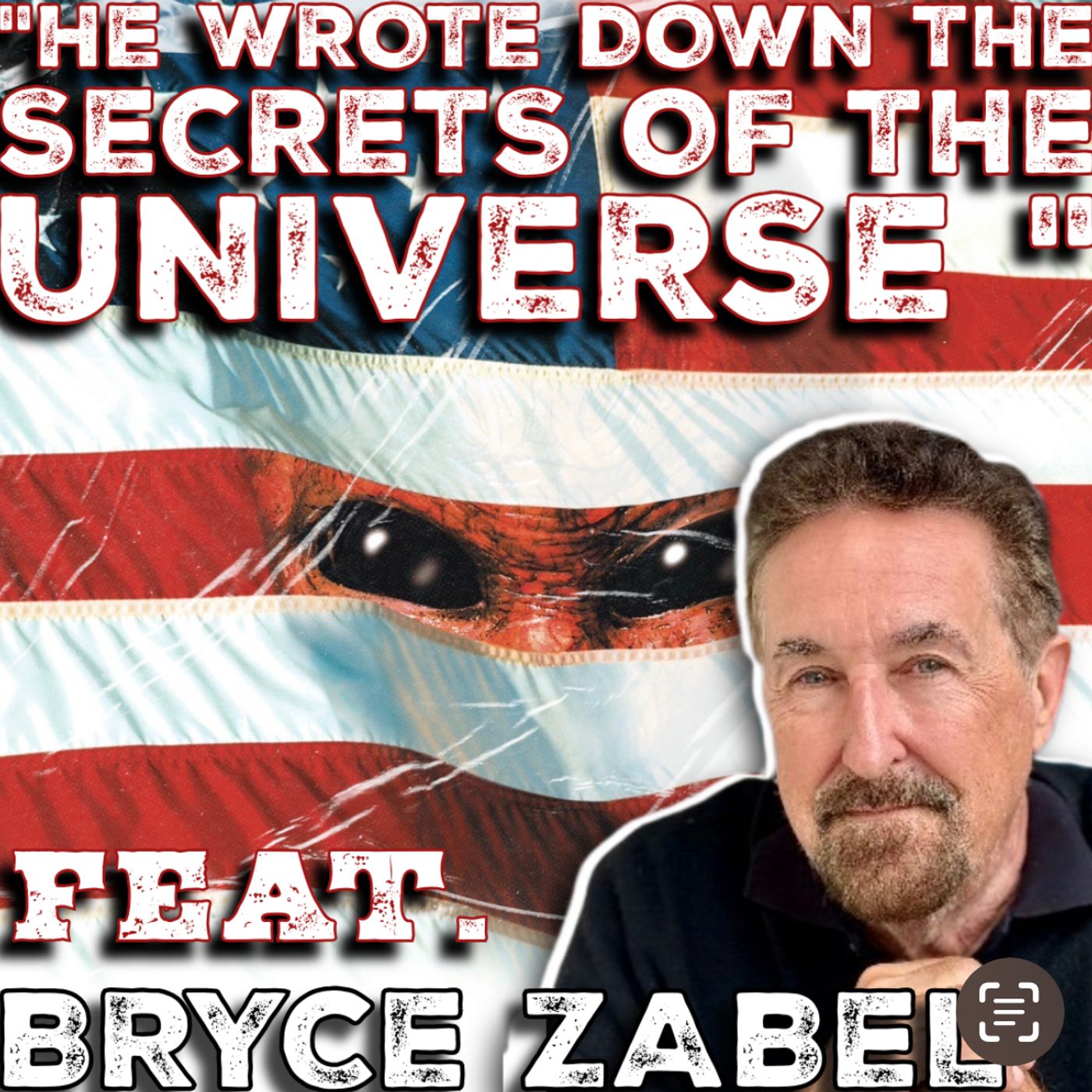
EXCLUSIVE: Bryce Zabel on UFO Secrets, After Disclosure & Ross Coulthart’s Next Move
Help Filming By Darrell Clulow
Editing by Kari Lindsay-www.X.com/firesoftruth
Filmed at Contact In The Desert--www.contactinthedesert.com
Subscribe to the channel on YouTube: www.youtube.com/@totaldisclosure/subscribe
Support TDP directly: https://www.paypal.me/TDPstudios767?locale.x=en_US
Be A Member On The Audio Feed (Limited Perks: Early Access/Ad Free Content) https://www.spreaker.com/podcast/total-disclosure-ufos-coverups-conspiracy--5975113/support
YOUTUBE MEMBER; https://www.youtube.com/@TotalDisclosure/join
PATREON MEMBER; https://www.patreon.com/Total_Disclosure?fan_landing=true&view_as=public
GET YOUR TOTAL DISCLOSURE: UFO/ALIEN INSPIRED MERCH, OR A GIFT FOR YOUR FAMILY MEMBER, FRIEND, OR TREAT YOURSELF! : https://pop-culture-corner-store.creator-spring.com/?
Follow Us On Twitter: Www.Twitter.com/DisclosurePod
Follow Us On Instagram: www.Instagram.com/Total.Disclosure
CONTACT TDP DIRECTLY For Collaboration, Use of Segments/clips, or any other media produced by “TDP” —[email protected]
USE OUR CODE AND SIGN UP FOR TUBE-BUDDY TO START UTILIZING THEIR AMAZING TOOLS, LET TUBE BUDDY DO THE WORK FOR YOU!-——https://www.tubebuddy.com/POP
Sign Up for VIDIQ and Get Tons of Creator Content Tools, SEO Boosts, Keyword Scores, Title Suggestions, & So much MORE! VIDIQ can be integrated seamlessly into your Browser and Youtube Channel, Start utilizing this tool now, Sign up with TDP’s—— Link-www.VIDIQ.com/TotalDisclosure <br...
Speaker 1: Yeah, all your breaks.
Speaker 2: Where you ready because it's not a plant from you. Love Paris brings you here.
Speaker 1: So you know your lash screen carey.
Speaker 3: You are municipal tables.
Speaker 4: So when it's the dead shot center, that's what I w we are like right here, the wonder will say, you know.
Speaker 2: Watch or shoot now?
Speaker 3: So you ready?
Speaker 2: All right?
Speaker 3: So thank you for recording.
Speaker 2: Welcome back to Total.
Speaker 4: Disclosures coverage at Contact in the Desert. I am super thrilled to be here, especially right now. I'm joined today by one of my personal idols, and not just you know that you have world, but also in the hollyworld world where I came from Emmy winning writer, producer in the creative mind behind the cold classic series Dark Skies. He's also the co host of Me to Know podcast, where he dives deep with Ross coltheart into the UFO phenomena, with ease and what seems to be an uber professionalism. It's been such an inspiration for not only me, put so many in the field.
Speaker 1: You bring such credibility.
Speaker 2: So I just want to say thank you guys.
Speaker 1: For being here with a with an intro like that, I'm a little intimidated, but that's plowed forward.
Speaker 2: Yeah, Well it's honestly, it's an honor and I've waited for this moment. You know.
Speaker 4: It's it's weird when you go from watching these things on TV, and you know, watching these people on television talk about the phenomenon, and then you're in the same room and you're the one interviewing them.
Speaker 3: Well, I mean, that's reality.
Speaker 1: The one thing I've learned in Hollywood is anybody who you consider al isn't in their own home or in their.
Speaker 2: Own minds, and they're just human.
Speaker 4: Yeah right, Yeah, So I wanted to start off because Dark Skies for me was the first time I think I told you the story.
Speaker 2: While we were walking around Dark Skies was the first time that my two worlds met. And that's when my because I knew I wanted to be a filmmaker from the first movie I saw, it elicited that visceral reaction in me where I never wanted to be an astronaut, a whistleblower. I never wanted to be any of those things. I wanted to be a filmmaker.
Speaker 4: Because of how I could generate these emotional feelings in people, whether it's sad and it's comedy, A drama. You know, it was able to do things to me that I didn't think were possible. So when I saw Dark Skies, that combined my love for the unknown and the world of Hollywood.
Speaker 2: So that premiered in the nineties, way ahead of its time.
Speaker 4: What inspired this series and how much of it was based on real research.
Speaker 1: That's a really great question. Well, the truth is, I've always in Hollywood looked for a good story. So it doesn't mean that you start with the research and then say, now, let me find.
Speaker 3: The story for it to sort of find the story and then you try to research around it.
Speaker 1: But certainly Dark Skys had its I guess its creation was trying to find a unified field theory for conspiracy. And when my co creator Brent Friedman and I were kicking it around, we were trying to develop a series, and we thought, well, what are the two greatest conspiracies of all time? And it's really no context. I mean, it's really JFK and the UFOs. So we thought, what if we stick them in this attic proctor, what will we get? And that's what we got. We've got Dark Skuys. We're in the pilot. It's literally taking place during the JFK's administration.
Speaker 1: The New Frontier. The very first days is when the main character goes to Washington, d C. He's an idealistic young management many people were during the JFK period, and he gets assigned by the congressman he's working for to go find something that they can cut from the budget, with the idea being Project Bluebook. And he does his job too well and he ends up getting himself recruited into Majestic twelve. He finds a piece of the Roswell Craft and in the pilot he gets that piece to JFK, and in the final scene of the pilot, JFK is killed.
Speaker 3: So it's pretty radical stuff. In fact, it's funny.
Speaker 1: When this first came out, one of the reviews called it the most subversive show on television, and in reality, it was pretty subversive if you think about that.
Speaker 3: And what's interesting is when Brand and I were putting.
Speaker 1: This together, you know, there wasn't an Internet that you could go to to say, you know, you couldn't put in keywords JFK UFOs and see what came up. There was no chat GPT write me some dialogue about JFK no, and.
Speaker 3: We haven't read anything about jfk at UFOs, but if you go on the End.
Speaker 1: Network now when we read a lot about it, and you know, even Jesse Michaels recently interviewing Harold and Alven Group basically said what we presupposed in Dark Skys was true. So I'm not sure I Brandy passed your question, which is what was the conception of it?
Speaker 2: Is that the so you know, like you answer it is based on real research.
Speaker 1: Well, okay, let me just put it this way. So one of the things we thought is we had a plan.
Speaker 3: It was a five year plane.
Speaker 1: Frankly, we were optimistic, you know, let's get this thing on what will the first five seasons be? And the reason we were very detailed we knew that if we were trying to sell it to a network that the idea were you know, kind of pitch was so shocking that they'd say.
Speaker 3: Okay, but where is this show go?
Speaker 1: So we came up with a timeline that took us from sixty five million DC to twenty fifty and laid out all this world because we thought we needed to be I was going to use the word bulletproof. That's probably wrong with jfk Assent we wanted to sort of just tell this story and what we ended up doing this was the most fascinating.
Speaker 3: Creative experience of my career. We made a timeline where we took three columns.
Speaker 1: Column one was historical events, and I had a collection.
Speaker 3: Of Time and Newsweek. It's just something I've always collected, and we went through Time.
Speaker 1: And Newsweek from the sixties and stuck all those dates into column one. Then we went to our UFO collections. I had about one hundred and fifty books at the time, and Brent had a lot himself, and we had got our assistance to work on it too, and everybody was going through these books and we'd find UFO events and we'd stick them into the time and whenever they matched on then that went into column three, where we said that to an empisode.
Speaker 3: Just one example of it for you would be.
Speaker 1: That the knight that Dorothy had kill Gallon, a famous journalist who was killed, was also the night of the New York power Line, and there were rumors of the UFOs being seen over power stations at the time of that, and Dorothy Kilgallen had been writing about not only JFK and Jack Ruby, but she'd also been writing about UFOs. So for us, we went like, hell, louyah, there's an episode turned out to be episode.
Speaker 3: Seventeen, But that's when we found all that stuff.
Speaker 1: So the answer to your question is we took it seriously to be honest and authentic about news events and UFO events, but we then applied dramatic license on compic.
Speaker 2: But I think what.
Speaker 1: People have liked about it, and I think maybe what even you liked about it is as you watched this thing, it is interesting to see these things lining up and to see UFO events seen in a context of historical events. And the reason I like that today here in twenty twenty five is that it.
Speaker 3: Seems very very clear to me.
Speaker 1: That we are on the cusp when we admit that we're not alone, and we've known that for a long time. There's a lot of history books that have been written that are going to need to have addendums to them or be entirely rewritten because things were going on at the time where we didn't know about it, and now we're going to have to admit it.
Speaker 4: Yeah, and that's it kind of brings me to the next question, is you know, did you guys encounter any pushback from network or even government insiders, you know, while you were making your excise I know you have the story about the guy that came up to you at the party.
Speaker 3: Sure, that's pretty fascinating.
Speaker 2: By the way, did you find that nugain?
Speaker 3: We did you find it happened?
Speaker 1: Well, let's back up so everybody can get into this. But the answer to your question, though, is we encountered nothing but obstruction during this thing. Whether it was some of it was from the government, some of them was from other sources. We really it was not an easy show to get on the air. It was not an easy show to keep on the air what you're referring to, though, And we could do ten shows on the Dark Skuyt thing, which we're not going to. We're going to keep this into the short zone. But what happened is in a nutshell, on the night of our premiere party for Dark Skies, which was on believe September twenty first of nineteen ninety six, two hundred people coming to my backyard to party and watch the show in real time on televisions.
Speaker 1: Haven't he had seen it yet? And I knew I knew these people because they were either actors, directors, studio executives, networking. I knew everybody, but there was one guy that and I didn't know that. A producer brought to me and I didn't know who this guy was. He introduced himself and he said he'd been sent by his employers to offer us, to make us an offer of cooperation, and he said, we like what you've done.
Speaker 3: You got a lot right, and we want to help you do more.
Speaker 1: And he later told us he was from the Office of Naval Intelligence. And what you're referring to the napkin as I said, it wasn't it turns out it wasn't.
Speaker 3: Exactly a napkin.
Speaker 1: What happened is that the I threw the guy out. I said, basically, after I talked to this is fascinating, but I have a real job to do, right And frankly, I didn't invite you to this party.
Speaker 3: I said, you weren't invited. I don't know who you are. You're in my house.
Speaker 1: You need to leave. So I told him to leave, and he looked at us and he said, that's fair. I understand that.
Speaker 3: Does anybody have a piece.
Speaker 1: Of paper and a pencil or a pen and my co creator's wife had.
Speaker 3: A bank deposits that she pulled out of her purse and gave it to him, and the guy basically did this. He takes his pen, it.
Speaker 1: Takes this thing and it's writing for about thirty seconds. We're all watching this, and he hands it back to us and says, you should put this in a safety bus a box for ten or fifteen years. It'll make a lot more sensitive than maybe. And we look at this thing. I call it the picture. It had symbols in it, and really it is. I have it now and you'll see it later sudden, okay later.
Speaker 3: But we said what is it? And he said Secrets of the Universe, Sound, light and frequency.
Speaker 2: And which I reference it in an interview like earlier.
Speaker 4: And I mean, isn't it fascinating that fifteen years later here you are, yeah, all right, and sound and sound, light.
Speaker 2: And frequency are at the forefront.
Speaker 4: I mean, we're talking about psionics now, we're talking about all these things.
Speaker 2: That you know once once around. The real fringes of the community are now coming to.
Speaker 4: To fruition and to be more openly discussed. So do you think you might have been right?
Speaker 1: Well, Tesla thought so I didn't know this at the time, of course, because again no Internet. I started looking into things and I you know, googling and searching and all that. And apparently in nineteen oh four it if Tesla said, if you want to know the secrets of the universe, think of energy, vibration and frequency, which which basically is satellite in frequence.
Speaker 2: As I say, it boils down to the same thing.
Speaker 4: And right not to mention how quick the FBI raided Tesla's hotel went after he passed.
Speaker 1: You got to work.
Speaker 4: I mean, there's so many things, right, so many avenues when you go there.
Speaker 3: But listen.
Speaker 1: So there's that aspect that and I'm not going to go into all the details of that now because again that's the part of the particular.
Speaker 3: But it wasn't just that one off.
Speaker 1: You later brought someone to the office. They later made another offer, and ultimately my partner and I said.
Speaker 3: We did not go to take any deal from these.
Speaker 1: Guys because we really didn't feel we needed help. We felt like we were capable of writing a show.
Speaker 3: And I didn't know.
Speaker 1: Who these people were, and I suspected it was possibly a big hoax, So I thought, I don't have time to investigate whether it's a big hoax, and.
Speaker 3: So we passed.
Speaker 2: Now, I wonder, you know, I'm sure you've heard this, but have you the Robert Emmenegger story, right, so about how there was almost a willingness to cooperate and promise of material to be given, to be included to.
Speaker 4: Kind of warm the public up to I mean, do you ever wish you could go back and maybe take them up on the office.
Speaker 3: Well, it's very interesting that you say that.
Speaker 1: Of course, Brent and I over the years will often get together and we'll just kind of laugh and say, we'd have had a real series, wouldn't we if we took the deal?
Speaker 3: In fact, that we'd.
Speaker 1: Almost be the characters in that series, you know, two hapless Hollywood producers, you know, take make a deal with the government to help them get the truth out about UFOs. It's a good story, but you know, the real thing it raises, though, is if some well, first of all, we don't we don't know for.
Speaker 3: Sure if this person was who we said he was.
Speaker 1: But if he was and they came to us and offered us a deal and we said no, do you think they stopped and said, well, Zabel and Friedman don't want to do this.
Speaker 3: Better not talk to anybody else.
Speaker 1: Ever, Again, we doubt that, so probably other people have been taught Stielberg.
Speaker 3: Well that is the rumor, ye s.
Speaker 1: Fielberg also has a place in the Dark Sky's history and that our show was being produced at the same time as Men in Black and that didn't make him very happy.
Speaker 3: But that's another story. We're not going to get into that one right now. Any time that later.
Speaker 4: Well, you've said we are not alone, We've never been alone.
Speaker 2: Do you think we are finally? And I know this question gives us a lot and it's kind of redundant, but I mean, in reality, do you think that we are nearing some sort of official, official disclosure like you wrote about in your great book Ad After Disclosure.
Speaker 3: Yes, yes, yes, I think we are.
Speaker 1: I wrote Ad After Disclosure with Richard Dolan, there's a great historian, and we had a wonderful year throwing ideas back and forth with each other about well, what do you think about this? How only go down? What do we think is going on? And the very first thing we came up with is sort of a tagline for disclosure that it was impossible, but inevitable. And that is the dichonomy of disclosure. Now, there are different kinds of disclosure. Frankly, if we were to ask everybody in your audience right now what they think UFO disclosure is, they probably have a slightly different opinion of everybody.
Speaker 3: So for the sake of our.
Speaker 1: Argument right now, let's just say disclosure is when somebody official says yep, not alone.
Speaker 3: Now.
Speaker 1: That can happen a couple of different ways.
Speaker 3: The one way it could happen is, yeah, the President.
Speaker 1: Comes out in the east room and stands at the podium and says, I got an announcement to.
Speaker 3: Make We're not alone.
Speaker 1: And for all you reporters there, here's a hard driver, three terabytes of video and photos and knock yourselves out and okay, we're done here. That's not likely to happen now, I think what Clearly, the people who have had the secret all these years and have refused to show their work are not about to do it without something else causing it down.
Speaker 3: So my take has evolved.
Speaker 1: I do think we are close to something, but I don't think it's going to be some kind of voluntary thing. I think somebody or something is going to happen that is going to cause the leadership of the world to have to sort of get on board and acknowledge it.
Speaker 4: Yeah, it's and I think it's that's a great way to put it. Is the pressure is going to have to mount to an insurmountable point.
Speaker 1: But the pressure is mounting. It is sort of, It's not it's not insurmountable at this point. But if you if you think of pressure as the public speaking out or challenging assumptions on a very basic that's pressure. Then pressure is mounted. Do we know how much pressure it is providing and how much pressure is necessary.
Speaker 3: To push people over the edge? No, we don't.
Speaker 1: You know, this is an equation we've never solved before, and there are a lot of.
Speaker 3: Variables in it.
Speaker 1: But you know, quite honestly, I look at you know, I'm not the youngest guy in the room anymore. I've lived a long life and a good one. But as I look back over all those years, most of the years of my life have been living in a world where if even if you thought UFOs were real, you that was pretty much your opinion that you kept in yourself, you didn't tell people a lot about it.
Speaker 3: And even if you did, nobody believed.
Speaker 1: You, where they made fun of you, and so I never had a feeling in my life that we would get to the place where this would actually happen until more recently.
Speaker 3: Since since around since around the turn.
Speaker 1: Of the century, I think things have been picking up in speed, you know, from nine.
Speaker 3: To eleven on onward.
Speaker 1: Yeah, the instability of the world, well, Richard Dolan, I'll always used to say that instability is what will probably push disclosure for it. And you could argue we have some instability in the world right now.
Speaker 2: Yeah, I mean, you know, you look around and there's just a lot it seems the world's on fire.
Speaker 3: Yeah, and I wish it wasn't.
Speaker 1: But I'm not going I'm not naive to say that the world is going to feel like a safer, a better place where we have some ignition. Admission of disclosure, by the way, different words since since the days when we did ad after disclosure. Disclosure is a word, like I said, nobody can quite figure out, right, and everybody's got a different opinion. So I've been thinking about it for years and saying, what is a better for how we can look at this, And I look at it as confirmation. Confirmation is what would work for everybody.
Speaker 1: I don't expect my government to tell me everything, and in fact, some of the things they probably shouldn't tell me. In a dangerous world, maybe there are reasons for some secrets, but the actual confirmation that we're not alone shouldn't be a secret. The details around it, some of them may indeed need to be secret, but the idea, the simple acknowledgement that, by the way, we have fairly definitive proof that we're not alone, ought.
Speaker 3: To be set.
Speaker 4: And look at the nuclear issue, right, yeah, so nuclear technology. I mean, you can't have a nuclear reactor, but we know they exist. It's that same you know, Okay, we know that we can't have one.
Speaker 2: We can't give everyone.
Speaker 4: The keys to the nuclear the arsenal, but you know we all know it exists, right right, And it's it's classifying a whole realm of reality. And I don't think that's a fair and it's it's it's it's you know, it's relative or or indicative of a long systemic issue of still piping the.
Speaker 2: Or the whitewashing of history and the control of the narrative.
Speaker 1: Right you are, however, the one thing that's interesting is we've come to the point where, for the for the majority of my years on this planet, the US government in particular, that all governments mostly have not acknowledged it and have actually participated in a sense of denial and ridicule for people that want to believe in it.
Speaker 3: That's true anymore. The US government has actually.
Speaker 1: Admitted that UAP or UFOs are real. And people ask me this all the time, and I'm sure it happens to you and many of the people in your audience. People say, do you believe in UFOs? And I say, well, of course I believe in UFOs. They're unidentified, they fly their own Okay.
Speaker 3: So since we have UFOs acknowledged by the government, that is progress, That is confirmation that they exist.
Speaker 1: So what a lot of people mean when they ask that question is are they aliens? Well, nobody's even saying that anymore. We're just saying, look, something is not quite right, that the nature of how we perceive reality is incomplete.
Speaker 3: And and what frustrates.
Speaker 1: Me is a citizen as a human being, is that I know there are people out there who billions of dollars to study this, and they have better theories than I do. They may even have facts that I would blow my mind, but they don't share them. So what's happened happening since twenty seventeen with the New York Times article was first written until now, that's going to be eight years this December, Okay, and a lot has happened.
Speaker 3: I mean a lot has happened in eight years.
Speaker 1: A that admission from the government that these things are real and we just.
Speaker 3: Don't know what they are.
Speaker 1: But also we've had congressional hearings, we've had reports, We've had pilots and witnesses come out, we've had whistleblowers. This is not the same world in twenty twenty five than it was in twenty seventeen. And it's definitively not the world when I was doing Dark Skys in ninety six. I think that's what made Dark Skuys, by the way, the most subversive show on television, because not only did it say JFK was killed in a conspiracy, but it said that UFOs were connected to them.
Speaker 3: Was subversive in that regard.
Speaker 1: It's a little less subversive because because both of those have radically shifted. Most people now were pretty well in the opinion that UFK probably was killed in the conspiracy. Uh. And again it's the same problem with the UFOs. We know he was killed in the conspiracy, we don't know exactly who conspired with whom to do what.
Speaker 3: But okay, and with.
Speaker 1: UFOs, we certainly know that they're real, but we don't all agree on who they are or what.
Speaker 4: They want what they were, right, right, So with whistle blowers in mind, what do you think I mean, you guys, you and ross On need to know. I believe it was two episodes ago spoke about how you know, the Matthew Browns coming out the NASA whistleblower came out, which was actually what we did.
Speaker 3: Yes, so it was a little applause here.
Speaker 2: Yeah, it was really fun to hear you guys say.
Speaker 3: I was like, yes, very I mean, udos, thank you.
Speaker 4: And so do you think that I mean with the allegation, not the allegations, but you know, the with the mounting amount or I keep saying mounting with the abundance of these whistleblowers? Do you think that this I mean, we keep hearing this twenty twenty seven date.
Speaker 2: Yeah, I don't like dates, no, but it does seem like we are coming to some sort.
Speaker 1: Of boiling point. I'm very skeptical of dates though, because again I've been in journalism for a long time, and you know, listen, I've seen doomsday cult after Doom's Day cult say the worlds can end up a certain date. We just lived through twenty twelve, that's supposed to be the end of the world as we know it. Yeah, I just think you have to bring an extreme amount of skepticism to a date, because history tell us is most of the people that predict dates are wrong, right, because but everything they say the world is going to end, and then it doesn't end, and they go, oh, well, oh.
Speaker 4: Yeah, I didn't carry the zero here. It's actually next twenty years from now.
Speaker 1: But having said that, it doesn't mean that there might not be a date. It's just that I don't find the sources for argument there's a date certain for something. But you know, listen, we're rational people. Well, would you think the powers that be would do if they knew, for example, in twenty twenty seven, there was going to be an extra solar event that would affect us or something.
Speaker 3: You know, if you don't know what to do about that, you can't affect it. Maybe you would keep that a.
Speaker 4: Secret, right, rather than cause a mass panic of epic proportions.
Speaker 2: Right.
Speaker 3: But although you know, I have to say, though we should something else that hasn't panned out is the idea of mass panic.
Speaker 1: Now, I do admit that I would assume that on the day that somebody says just some you know, the day a president looks in the camera and says, by the way, I'm confirming that we're not alone, a lot of people are going to buy a toilet bay ye okay, we know this.
Speaker 3: Is that mass panic or is that just you know, we'll get through it.
Speaker 1: Yeah, Okay, we're going to have a run on toilet paper at Costco. We know that that will be happening, but that happens for almost anything. Will there be disruption? Of course, Dolan and I went on after disclosure, We're just thinking to ourselves, Okay, let's say in today's interconnected world that there's a confirmation and ten percent of the people don't handle it, well, okay, and ten percent of those people are interstate truckers who don't go to work all right, Well, is that going to cost supplotline and the supply chain issues?
Speaker 1: Yeah, and when those supply chain issues are reported in the news. Is that going to increase the panic into a cycle?
Speaker 3: Probably?
Speaker 1: So we always looked at it as AD plus you know, AD plus one day will look like this, AD plus one month will look like that, AD plus one year plus ten years and at a certain point, and we could argue about it, maybe it's a year, maybe it's ten years, maybe it's twenty five years, but at some point some kind of stasis is achieved and you'll move forward. I mean, the bill, the bill still come due, people still have to go to work. And you know, it's the one I've always loved is for people that have seen Doctor Strangelove.
Speaker 1: There's a character Buck Turbinson, and he's the general who's talking about nuclear war and its survivability, and he says to the President.
Speaker 3: I ain't saying we're not going to get our hair missed, right, And I've.
Speaker 1: Always thought thought that is kind of a charmingly appropriate way to look at it. Yeah, our hair is going to get must when we finally get around to doing this, because it's taken so long to get here, there's going to be a lot of buried secrets and possibly murders that were committed certainly violations of some civil rights and things like that. All of this is going to have to be handled. One of the things that I think we can pretty well see possibly in the future would be some kind of truth and reconciliation commissions.
Speaker 4: And I was going to say, we're going to have to meet them halfway in some sort of amnesty program. But I have two hard questions. Yeah, and we can edit one of them out.
Speaker 3: If you want.
Speaker 2: I want to start with the do we you're close to Ross?
Speaker 4: Ross has broken some of the biggest UFO related stories period?
Speaker 3: Yes? Yes.
Speaker 4: Does it ever concern you that these whistleblowers are coming through a d O D pre publication or are they unwittingly controlled disclosure?
Speaker 3: Is it?
Speaker 2: Have you ever had that conversation with him? And you know, whether these guys are you know, they don't have to be, you know, willingly doing it, but.
Speaker 1: Is the d O D?
Speaker 2: You know, I mean they're going and asking for approval, right right? So does that not make that I mean.
Speaker 1: That's not really a whill Listen, I totally get it. It's a legitimate concern. Does it bother me? Does it bother me? It is what it is. I you know, Obviously we're talking about people like louel Azando and David Rush and even j Stratton, who's going to have hit you know, they.
Speaker 3: Take you know, both Lou and Jay have had books that are being gone over.
Speaker 1: But on the other hand, you could look at it and say, Okay, so I've read Blue als Onto's books and many of the people that are watching this have credit. You've read it, and it's pretty radical, you know, and some of the things that it says.
Speaker 3: And that was improved by the government to say.
Speaker 1: So are we in a slow controlled disclosure, Whether somebody is planning it that way or not, we are in that. I mean, so, so does it bother me? Reality doesn't bother me? You know, reality accepting reality is what life is about. You know, if you get a cancer diagnosis, it doesn't do you any good to say I don't have cancer.
Speaker 3: You know.
Speaker 1: The better thing to do would be, okay, I have cancer. What am I going to do about? What's next?
Speaker 3: Right? So I'm not bothered by it, In fact, I kind of I just think that in specific reference.
Speaker 1: To whistleblowers and where they come from, there are going to be because it's.
Speaker 3: Been a governmental program.
Speaker 1: Many of the whistle blowers are going to be governmental, but at the same time, let's not be that's not mince words. There are people in the aerospace industry, private industry who have been part of this as well.
Speaker 3: That's not the government.
Speaker 1: Some of those people are probably going to have to be drag kicking and screaming out before Congress eventually, but some of them may come forward on their own.
Speaker 4: No, and.
Speaker 2: Very well said, very well said, and that I mean that really answers that. Here the next one a little dicey. Yeah, right, so I like this, Okay, you come from the world of entertainment.
Speaker 4: We understand now we look at guys like Jeffrey Epstein, and we look at guys like Shawncolm's p ditty and what's been going on? Do you think that there's a chance that the same people who are controlling the strings and honey potting and you know, doing whatever is going on there are the same people that are ultimately hiding this nullifying technology that is off world and in essence, maybe a breakaway civilization, call what you want, the cabal, the deep state, whatever, But it seems like someone's pulling the strings.
Speaker 4: And I don't think that's just in terms of the UFO stuff, but also the darker, darker stuff.
Speaker 3: Yeah, and is what's the question?
Speaker 4: Do you think it is possible that the same people that are pulling the strings on this side pulling the strings on.
Speaker 1: It's with any society at any time, the elites no more than the people who are the grunts.
Speaker 3: And that's that's obviously going on.
Speaker 1: Here, and it wouldn't you know, I don't think it's even much.
Speaker 3: Of an issue.
Speaker 1: Of course, there are different elements to control, and you know, I'm not I'm not wildly and I'm not an anarchist saying burn down the you know, the mission here. We just have to accept that there are some things that are behind a curtain. And sometimes I suppose the curtain has been good on a short term. I would put that probably if you think about Roswell as a case, at the very beginning, we had no idea what that was all about. It was scary as hell. We'd just come out of World War two and we weren't.
Speaker 1: We thought we need some time studying this. So was that curtain? Okay at the beginning. You know, I'm not really going to excuse it, but but I'm.
Speaker 3: Going to say I understand it. Understand it right? Is it okay? Eighty years later?
Speaker 1: No, So somewhere on that SAT lies where we need to be and where we need to be right now, because it's like, it's such like the pressure is building and has been, and we have to relieve the pressure, right And that's why I'm trying to push people to consider this more as confirmation than disclosure, because we have to liken our load of how we're going to do it. If we say it's got to be all accomplished at once and everything, you know, there are people that say you've got to put it all out at once.
Speaker 3: You know. Maybe, but again I'm not on the inside. I don't know. Maybe there are you're talking about dark dark docs.
Speaker 1: Well, maybe there's some really dark stuff about the UFO issue that people.
Speaker 3: Legitimately have said. That's going to be very disconcerting when people here about production.
Speaker 1: Yeah, yeah, these you know, to the extent that there is knowledge about that and whatever really represents maybe there are stages to it.
Speaker 3: I guess what I've always been.
Speaker 1: Saying is, you know, if there's if you're part of this government, great folks and you're watching this right now, I want you to think about just confirming it. Just start with confirmation, and look, whether we put people in prison over this thing or whether we give amnesty as a political issue, and that's why we have the institutions we have. It doesn't mean you shouldn't do it. We still got to do something. So, yeah, there's darkness, There's always been darkness in the There'll be darkness after we confirm and disclose.
Speaker 1: But it doesn't mean you don't start at some point. You just you got to rip the band aid off. And I think, although when I say that, I mean it's slightly different. I mean rip the band aid off on the confirmation. I don't mean rip the band aid off and tell everybody everything all at once. And even people who use this phrase catastrophic disclosure, I don't even like that because you know it's such a majority of catastrophic.
Speaker 3: What does that even mean?
Speaker 4: It implies that we would lose our minds, well, always our minds.
Speaker 1: I think again, it's disruptive, there's no question. But here's what.
Speaker 1: I was elected chairman of the TV again days before nine to eleven, and the Emmys were days ahead of them, just days, and so the very first thing we had to do is like, what do people want us to It was a crisis, and it was for me a lesson in crisis management.
Speaker 5: I think all our days began either turning on the TV or listening to the radio or someone we know us and saying, have you seen what's happening, and then trying to find out what the town thought was appropriate to do about the situation. And that's really been the defining moment for us.
Speaker 1: And the one thing I learned almost immediately from them is that people just wanted authenticity and they wanted honesty, and so I started using just total transparency with the media. So whatever they'd ask me, even if the answer was one I didn't like to give, I would give it right and I would And if somebody said something asked something that I didn't know the answer to, I would say, I don't know the answer to that, but I'll.
Speaker 3: Get back to you.
Speaker 1: And remember when nine to eleven happened, we said that everything change, but it really didn't.
Speaker 3: It did for a while, but we sort of hold to.
Speaker 1: Life as a way of hanging back to you.
Speaker 3: So I know it's going to be difficult.
Speaker 1: I'm not actually looking forward to the disruption that's coming that part I could do with them, but I understand and accept it's going to happen anyway. And I understand, you know, I have three children, have a grandchildren, right, and I understand that my granddad is going to live and grow up in a very difficult world than I did.
Speaker 3: We each had our problems.
Speaker 1: I grew up where the Cold War could blow up, and I was hiding under a school disc thinking that would protect me from a nuclear bomb, which it wouldn't, right, And that very lie drove a dagger into all of us.
Speaker 3: Right, They're going to grow up in a world.
Speaker 1: Where there may be some darkness involved in what the actual secret is.
Speaker 3: But they're also going to grow up in a world where.
Speaker 1: This young girl, my grandchild, is going to grow up in a world where she looks up and says, wow,
Speaker 1: there there's stuff all over out there, right, and it's not going She's not going to be made to feel little or small for for thinking that.
Speaker 3: Right, And that's a pause.
Speaker 2: That is and that that that notion.
Speaker 4: That means we've you know, that that shows how far we've gone.
Speaker 2: That you know, I mean, look at all the normal people that here, just they want to be a part of the community. So I guess, you know, we'll round this off because.
Speaker 4: I know you're a busy, busy man, and we're going to get We're going to bring you to the studio of Boston.
Speaker 2: So I can't wait for that.
Speaker 4: But what case out of you know, what, what's what's your if I had if I had a gone to your head, which I went into, of course, and you had to pick one case two uh put in front of court right to deem disclosure, was was if it was all real?
Speaker 2: What case is it?
Speaker 1: Well, that would be the question first, which is are you picking a case that will disclose what's actually happening or a case that just would convince somebody over there who's never given any unis okay? I think you know, we've already sort of got that case and it's been done to death, and that would be the NIMENS case is a very strong case because it has different sources of data collection, right, and so as a consequence, that's been the go to case for a couple of reasons, because of the different data counction and because of the recency, you know, the recent.
Speaker 3: Nature of it.
Speaker 1: So of course that's a good one. And I think anybody that really studies that one at all comes away and says there's something very mysterious going now that doesn't necessarily the NIMENS case by itself doesn't tell.
Speaker 3: You that we're not alone.
Speaker 1: And I don't know personally right now of the case that I think would convince a jury that there's non human intelligence. I think you could convince any jury with a multiplicity of cases, that something that does.
Speaker 3: Not appear to be us is out there.
Speaker 1: But then remember the idea of the court case is beyond a reasonable doubt, so well I could I think we could convince any jury that there's something that doesn't appear to be ours out there. I don't think you could go beyond reasonable doubt right now with any case that makes them go, oh, it's aliens, because even the people who are at this conference that we're at right now all disagree radically. There's people out there that think it's aliens. There's people that think it's time travelers from the future.
Speaker 1: There's people that think it's interdimensional. There's people who think it's all about consciousness. There's people who think we're in the simulation.
Speaker 3: They're not.
Speaker 2: These didn't breakawayanization.
Speaker 1: There's all kinds of that stuff. Now I have my own It's just like other people have their own opinions. So the answer to your question is no. The only way that let me put it this way, if I was a lawyer trying to make a case that non human intelligence is interacting with us, the only way that case could be one would be the power of subpoena to go get evidence that I don't have access to currently. And if you've told me I can have access to anything that the government has, if there was a discovery where I could literally get my hands on anything the government's got, yeah, then I can win that case.
Speaker 2: All right, ros I just called you.
Speaker 3: You know what, call me Bruce, tell me Bryce. I don't know, just you know what spell my name.
Speaker 2: I had the next question and I promised that was.
Speaker 3: Okay.
Speaker 1: No, I really love stuff.
Speaker 4: I really love what you've been able to do with Ross with me to know you're doing your kind of developing something new. So I want you to be able to talk about that because you just released a new episode Chrissy, and you're doing the this is a book club book club, so can you just tell people about that?
Speaker 3: Well, let me differentiate.
Speaker 1: Look, there's there's a in nineteen ninety six, I did art Bell on Coast to coast and everybody seemed to see it or hear it, because.
Speaker 3: That's how you talked about UFOs back.
Speaker 1: Now we're in twenty twenty five and there's you know, I got a podcast, You got a podcast. Everybody's got a podcast. Who doesn't have the podcast? So I think what I'm trying to do is figure out ways to stand out from from the crowd on the subject to Need to Know.
Speaker 3: That's hosted by Ross Coltheart and myself, and Ross is, as.
Speaker 1: You said, one of the ultimate best investigative reporting sources on this topic. He's, you know, he's not perfect. He's going to make mistakes, just like everybody does. But he's the best I've seen, and I put him up there with George Napp and two of them. I'm very in a of And so what we try to do on Need to Know is not interview the same people over and over again, because we think that there's got to be an audience out there that says I'm interested in what's going on. I'm a busy person, don't waste my time.
Speaker 1: So what Ross and I try to do with Need to Know is to say we respect you, we respect your time. You give us forty five minutes to an hour, we'll give you the world. We'll tell you what's going on, and we'll cut the bullshit out and we'll just try to get to the point and give you to me. We'll make it lively and we'll make it listenable. But if you want interviews, well means go now. I've just started something that you pointed out with Christy Newton, which is fun. We're just doing it because it's called Project book Club.
Speaker 1: And the idea of Project book Club is just that we all I bet you have it yourself. We all have UFO book players like you. And if you go ask everybody who's got fifty or one hundred UFO books how many they've read cover to cover, it's not all of them, okay, And I admit that myself. I've got two hundred UFO books. I've read fifty cover to cover. So what Christy and I were talking.
Speaker 3: About is like, why don't we read a book, tell people what we're reading, and then discuss it.
Speaker 1: And then when the people who want to have read the same book and hear us discuss it, we all we all rease our Yeah, we increase our knowledge. And the reason I wanted to do this, quite frankly, is that there's a tendency to live in the moment because it's news, right, So you always got to go, well, what do we know of what's coming from Congress today?
Speaker 3: Or what did Luna say yesterday? You know that kind of thing.
Speaker 1: And the book thing gives you a chance to talk about about history and history is important, you know, So I want to be able to tell everybody we're going to read Whitley's Readers Communion this month, So go get your copy and read it and then read about.
Speaker 3: And tell them what it's about.
Speaker 2: And it's timeless because I could read a book a year after you got the episode, and I can go back in that yat most.
Speaker 1: Yeah, that's the shelf life of most podcasts is about a week a week, Okay, what we think with a Project book Club, the shelf life of each episode maybe ten years longer than that.
Speaker 2: You know.
Speaker 3: So that's our take.
Speaker 1: I don't know if it'll work, but it was fun to do it because with the I'll give you the answer need to know requires a lot of prep.
Speaker 3: Yes, you know, Ross is so.
Speaker 1: Good that for me to keep up with them, I got to really buckle down prep with the Project Book Club. All Christy and I have to do is read the book and show up, and that's easier.
Speaker 2: And then conversations are organic, right, and.
Speaker 3: Yet it's just as valuable.
Speaker 1: The first one we can was The Believer by Ralph blumenth All, about the life of John mac. A lot of people have heard of John, but they don't know anything really about him, right, They don't know that Harford put him on trial basically want.
Speaker 4: Yeah, almost ruined his career, and yet he won, and yet he won, you know, and then he didn't win.
Speaker 1: Right Well yeah, so well the ultimately didn't win because we stepped in front of this drunken driver.
Speaker 3: But so you're right.
Speaker 1: Anyway, I think there's room for a lot of different things out there, and we've got to hit this on a multi factorial basis. We gotta got to hit him high, we got to hit him low. You know, in everything, there's room for coast to coast, ancient aliens, there's room for the program, there's room for age of disclosure, there's room for all of these different methods that there's room for what you're doing right now, there's room for what I'm doing because there's a lot of curiosity out there in the world, because the more this has been discussed, the more people say, oh, what's going on again?
Speaker 1: And I think we are all part of answering that question. So, by the way, I commend you for what you're doing. You've done some really excellent work. And not only are you doing excellent work, but some of the work you're doing becomes the subject of things that I'm talking about, right, And I think that's a great credit to you, and I commend.
Speaker 3: You for it.
Speaker 4: Yeah, I really appreciate that, especially coming from someone like you. And listen, you know you bring with Ross with yourself, you know, the more people that are talking about this, but also you know, you have a whole life that you know, Ross has a whole life that he lived before the UFO topic. You do as well, and all your resumes. You know, people can look at that and go, I can believe in that guy, right, I can believe when he's saying.
Speaker 2: He seems like a straight shooter.
Speaker 3: He see.
Speaker 2: You know, you don't get to these places, you don't run these things or when these awards because you're just running the running you.
Speaker 1: Know the other thing you have to do and you do it yourself. We're all fallible, we're all human. We're going to make mistakes. So do you spend all your time not making mistakes so that you're overly cautious or do you plow ahead and if you make one, do you just own it? And so our take is we might make mistakes and if we do, we'll own it and were correct it. And so what we kind of look at our episodes as is to continue.
Speaker 3: There may be times where we're going to have to issue with correction. New York Times issues corrections. Why can't we right?
Speaker 1: And I think that a lot of times we record these things and they exist in a vacuum and once you've said it, it's often the ether and you you know, but we have to be accountable. Accountability is key going forward. Credibility is key. Authenticity is key.
Speaker 2: Well, my friend, you are one of the most authentic and genuine people that I think I've met at this conference. So I just want to thank you, thank you so much for doing the break.
Speaker 4: For anyone watching, there will be a QR code here that you can scan to bring you right to need to know his page and the link will be in the description below. For anyone watching on a podcast listening on a podcast platform, leave a rating.
Speaker 1: It's free.
Speaker 2: It takes two seconds and helps with that past the algorithm.
Speaker 4: Head out watch need to know and everything that Bryce is doing with with Ross with Chrissy with what is the the offshoots name again?
Speaker 1: Oh project project book Club is?
Speaker 3: Oh is that's the what are we asking about?
Speaker 2: The Stellar production?
Speaker 1: Stellar Productions is my production company, okay, which I created decades ago, and it produces these things quick and by the way, I think it was the luckiest and most pressy title.
Speaker 3: You know.
Speaker 1: At the time, I was just trying to create a corporation in California that I could do business with. And I like Stellar because I was interested in space. But now it's my favorite.
Speaker 3: I love it.
Speaker 2: The pat's get just to leave it off. The future affect the now just as much as the vast does, you know, It's.
Speaker 4: All I don't think we know time not linear, so I mean we're not the synchronicity in our world? Right So yeah, no, so definitely I think anyone who watches this interview right now will know who you are.
Speaker 2: But if anyone who doesn't guys check out need to know their producer is one of my great friends, uh Astrol from UFO X. So I want to say thank you to both of you guys for taking.
Speaker 3: Time to day.
Speaker 2: Thank you all right, my friend you soon I'm to recover. To give me here now
 Apple Podcasts
 Castbox
 Castro
 Goodpods
 Moon FM
 Overcast
 Pocket Casts
 Podbean
 Podcast Addict
 Podcast Republic
 Spotify