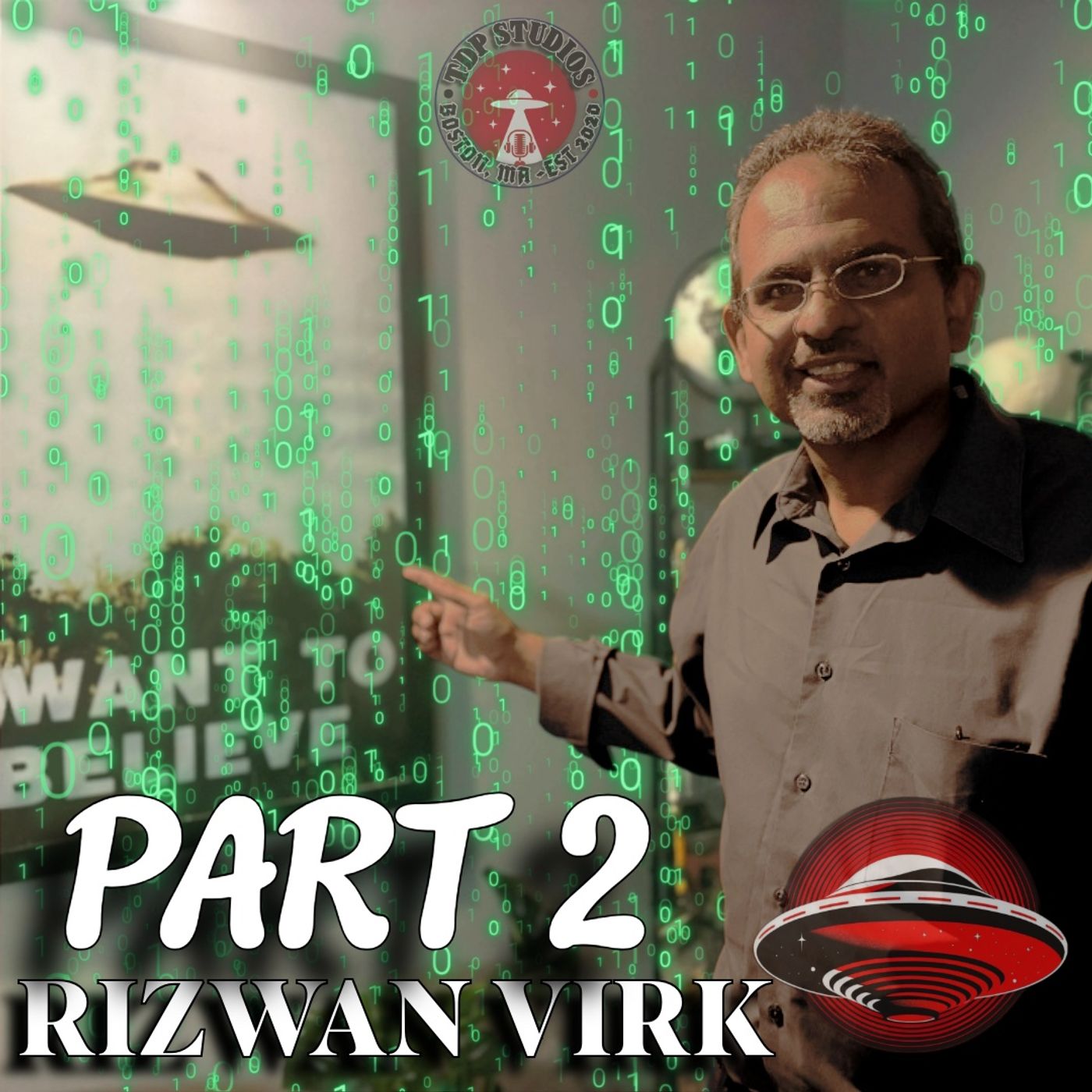
UFOs Glitches in the Simulation? Reality- Mandela Effect & The Nature of God (Ft. Rizwan Virk) PT. 2
Get ready to dive into fascinating topics like: The Mandela Effect and Déjà Vu as potential evidence of simulation resets. The mysteries of UFOs and what they signify in a simulated reality. The quest for a higher power—could there truly be a God, or merely a cosmic coder?
What does this all mean for humanity, free will, and the disclosure movement? This episode shatters conventional UFO discussions, intertwining science, philosophy, and spirituality into a revolutionary dialogue about the essence of reality.
📌 If you’ve ever pondered whether UFOs, reality shifts, or déjà vu hint at something grander, this episode is a must-watch!
Edited By Kari Lindsay
Become a supporter of this podcast: https://www.spreaker.com/podcast/total-disclosure-podcast--5975113/support.
CONTACT TDP DIRECTLY For Collaboration, Use of Segments/clips, or any other media produced by “TDP” —[email protected]
Special Thank you to all of our PODCAST/YouTube Channel Members for your continued support, and dedication to seeking the truth, together. We can’t do this WITHOUT YOU!
-COPYRIGHT-2020-
Copyright Disclaimer: Under Section 107 of the Copyright Act 1976, allowance is made for "fair use" for purposes such as criticism, commenting, news reporting, teaching, scholarship, and research. Fair use is a use permitted by copyright statute that might otherwise be infringing. Non-profit, educational or personal use tips the balance in favor of fair use. Total Disclosure Podcast Copyright 2020 and … segments, early access to interviews, and a yearly gift autographed by yours truly!thank you in advance now, Let's explore the unknown together!
Speaker 1: Welcome back to Total Disclosure. My name's Tye and I am the host of the show. Welcome to part two of our episode with riz Wan Verk. We have a wonderful conversation about simulation theory, and Part one has been out for a couple of weeks. This is part two. I do want to remind everyone that there is an issue with riz uh the microphone he was using was kind of off center. So instead of telling him to pull it up and put it right in his face, like uh say, Joe Rogan would do. It was my first and studio episode, I didn't do it.
Speaker 1: We also weren't wearing headphones. Terrible, terrible uh miss stake. And I've obviously just want to say, you know, I apologize for that. This is mainly audio podcast, so we need to be better about that. I have been doing better about that. I've made a lot of adjustments as well as other things to improve and kind of make sure and ensure that the audio is the best quality it can be for a podcast. So with that being said, Part two Rizwan Verk. This one opens where the last one set off, and it opens on pretty powerful moment for me, So I hope you guys Enjoy, make sure to like, share, subscribe, all that.
Speaker 1: If you're listening on one of the great podcast platforms.
Speaker 2: Please leave a review.
Speaker 1: It's so simple, it helps us so much. A favorable review, five star rating, and then follow the show. Guys enjoy, are we living in a simulation? I'm eleven, I have no idea what I'm looking at right. I run into the house and I told my mom like, what the fuck? I wasn't say fuck, but I was like, what did I just see?
Speaker 2: Like what was that?
Speaker 1: And she didn't try to like tell me I saw.
Speaker 3: Balloons or God or anything.
Speaker 2: She was like, you saw a UFO? And I'm like, what's a ufo?
Speaker 1: Then she so she instilled in me what she was in the house.
Speaker 2: She didn't see it though.
Speaker 1: But it ties back in later in life when she died. I was in the room. But so so she tells me from a young age, she lets me know that there's ship in the world that we don't understand, right.
Speaker 4: So, and and.
Speaker 1: That's how I went on. That's how that's how I I saw life going forward, was that there was mystery, right that there was It wasn't just black and white. There was some gray and you know, it came full circle because I was in this very toxic environment in Hollywood and filmmaking and just you know, we're around people I just that were so awful. And then I come home because she's dying and I'm in the room with her her final moments, and I can't really explain it without like crying or tear it up. But we make these micro decisions right, very very quick decisions on a consistent basis, going back to the simulation idea.
Speaker 1: But I looked down while her hand is in my hand.
Speaker 2: I look up.
Speaker 1: This is a millisecond by the time I came looked down and came up, this orb crossed my field of vision, just went out the window and up and I looked back and my mom was gone.
Speaker 3: So that was her?
Speaker 1: I don't or yes, because and it all was kept saying was she didn't want to be alone. She didn't want to be alone, she didn't want to be alone, she didn't want to die. And I mean she's she she died on four three two one. So yeah. So and that's at that moment that I saw that orb, all these memories start come flooding back. Now I'd known about my UFO siding, of course, but all these other memories start coming back about her, and and then I won't bog down too deep in it. But I started total disclosure the minute I saw that ORB, because I was like, I want answers.
Speaker 3: You know, that's interesting.
Speaker 4: It's almost like you're seeing the ORB was purposeful, what I mean, in a way to get you to go down this path.
Speaker 1: Yes, because then I and and yeah, oh yeah, oh yeah. Unapologetically, I've been in the right place at the right time far too many times. I was in the right place to bring Robert Tallis into Nancy Mace's office, allow him to brief her on the nineteen sixty seven melmstrip case, right place to see Danny she in, you know, And then I end up at Contact in the desert, and all these things have happened and led me to this moment right now, And I feel like it was all set in motion that day I saw the UFO and my mom told me that there was mystery.
Speaker 4: In the world.
Speaker 1: She let me know that we didn't understand everything right. And then she brought me to the library that she gave me communion by Whitley Streeber. She sent me down this path, and then she kept me when I diverted from the path. She knew I loved filmmaking and podcasting, and then she shows me this orb when she dies and sets me on this path. Total disclosure.
Speaker 4: That's really fascinating to me because you know, I have this theory that we we talked about the life review earlier, right, I believe we also have what's called a life preview, and that is, you know, before we're incarnate.
Speaker 3: So in a video game, you choose your character.
Speaker 4: Right, So like soul contract, like a soul contract, but also like you know, you choose attributes or you're like in a video game, you choose.
Speaker 1: Like Elf, Dwarf, you know, right, hobbit whatever, Right, you choose your race, circumstances, circumstances.
Speaker 4: Yeah, and you have different attributes right of that. You know, we used to play Dudgeons the Dragons and we threw I loved it. Yeah, And so you know you have strength, constitution, and I think we come in with a certain amount of each of these that is part of our character definition or our character sheet, if you will. But we also come in with a storyline. So it's related to this idea of so contract. But it's basically an overall storyline of things that we might want to accomplish in this life and that we still have the opportunity to change.
Speaker 4: And so there there's a guy who's work I'm a fan of a guy named doctor Michael nut.
Speaker 3: He wrote a book called Journey of Souls. I don't know if you're familiar, no, but he.
Speaker 4: Passed away a while ago, but in the nineties it came out. It was one of the best selling books about this subject. And he would hypnotize his patients and took them back for traumas or whatever reason he was doing, you know, the regression, and they would end up between lives like before they were born, but after the previous life, and.
Speaker 3: So they would describe to him what went on in what.
Speaker 4: The Tibetans would call the bardo, which Bardeau meets literally.
Speaker 1: In between the limbo, right, yeah, in between.
Speaker 3: So you know, we might even call it the afterlife for heaven, depending on you know, you look at it as a pre life or afterlife, right.
Speaker 4: And it was interesting because he said that they would see on what looked like a screen.
Speaker 3: So again we have to remember these are metaphors.
Speaker 4: It was like a screen with a machine that showed these lines of their life, but it also showed certain points where you could diverge depending on the choices that you would make at the pot. And so I see that as essential in the video game of life, if you will, we have a storyline, and these are the things that we're drawn back to again and again.
Speaker 3: We also have side quests, so we go off and we.
Speaker 4: Do other things, but keep getting drawn back to certain areas. Now, he also said he could zoom in on this timeline and see what might happen at that point in time.
Speaker 3: So we also had this preview capability.
Speaker 4: Which is we can look at what might happen if you do ex or y. Now, for example, if you hadn't seen that orb, would you have gone down this path?
Speaker 3: And so in a.
Speaker 4: Sense, it was almost as if, okay, if you were in a game, we need the character to do something, we need to show we in this case would be your writer's room, not necessarily the writer's room the whole world, right, it's the writer's room, which is you, the player, sitting there with perhaps a guide or a director or who knows who else is there with you, being of light whatever terminology.
Speaker 1: God, Yeah, whatever Jesus the name it.
Speaker 4: But but the point is, there's a part of you that knows this was your intention, and so how can we get you to move in a certain direction?
Speaker 3: And I think this by going.
Speaker 2: Forward with like nexus moments.
Speaker 4: Trying out what might happen if you didn't have that I'm trying. But now this ties right back to the Philip K.
Speaker 3: Dick speech.
Speaker 4: That's where he said, not only are we living in a computer program reality that the line everybody remembers, but that the only clue we have is when some alteration occurs in our reality. So he came to believe that people, some some beings were able to go back and change the timeline, but they would run the timeline forward to see what would happened, and then they would go back and change it.
Speaker 3: So he came to believe that the Man in the High Castle.
Speaker 2: You have great Amazon and Amazon based on a book from Philip K.
Speaker 4: Dick nineteen sixties, and I think it was his most well known work before Blade Runner, which happened just a few months after he died.
Speaker 2: But you even get to see the success.
Speaker 3: You didn't get see the success.
Speaker 4: But luckily you know, his whole life was a financial struggle made me because of the screenplay, and he bought a house for Tessa uh and her and their.
Speaker 2: Son, and so okay.
Speaker 4: She said that he came to believe that was a real timeline, that there was actually a timeline where Germany and Japan won the war, and that timeline was unwound and we are now on a different timeline. That that what that what he wrote in The Man in the High Castle, he said was from fragmentary memories, but then later he said he came to remember that entire timeline. So this gets us into a really weird aspect of time. In a simulated reality, you can run a process forward, but then you can change a variable and you can rerun it.
Speaker 4: Right now, we're on a timeline which is perhaps what he called the consensus gente of reality. Right, that is different from what he might remember or other people remember this, of course ties.
Speaker 3: But but before we get to the mental heal effect, I just want.
Speaker 4: To finish up this idea that he also said to Tessa, And she told me that these beings whoever they are, claim they prevented the jfk assassination in Dallas, but then he got assassinated in Orlando, and then in the next time and the next timeline he got assassinated somewhere else, or it led to a bad outcome like a nuclear war.
Speaker 1: So every time, every time they changed it, it would they could time was fighting back.
Speaker 4: Yeah, or not so much as fighting back. That sounds like the plot of that show based out of Stephen King novel. Oh right, right, yeah in three Yeah, yeah, it was that he was assassinated, but it was more like they tried it out and they didn't like the outcome, so they're like, Okay, let's go back and now let's go down this particular britage. And so is it possible this happened to me in my life as well? This is why I was keying into your point, not just that you'd seen the ORB, but I know you talk about your pot, but that that set you on a certain path.
Speaker 2: And diverted me completely.
Speaker 4: So I was at the height of my success in Silicon pality, and you know, I was running a startup program here at MIT or you just institution, and during that time I had a personal tragedy. It was I had to have heart surgery and I ended up going into just before I was supposed to finish this program and present.
Speaker 3: All these people.
Speaker 4: And as I was recovering, I had a series of visions, and the visions basically said to me, and just to go back, if you had asked me in high school what am I going to do in my life? I said, well, I'm going to be a software entrepreneur, that I'm going to be a writer. And I just had this knowing, like how did I know? That? That was just annoying, And so I got clearly as I was recovering from the surgery, which took me many months.
Speaker 1: By the way, yeah it's heart surgery. Is not thing you Just six years later and I'm still recovering, right, But.
Speaker 4: During that time, the message came back to me. I had a series of visions, and the message was very clear to me that, hey, you had a story. The first part of your story was you were going to be an entrepreneur, and the second part of your story is you're going to be a writer. But meanwhile, you're spending all your time in Silicon Valley trying to raise a big BC fund, going to the next billion dollar fund, trying to be the next market recent er whoever, and said, that's not your story. That's not why you're here.
Speaker 4: And then after when I was recovering, every time I tried to jump back into Silicon Valley and do a business, I would end up back in the hospital right right here in Cambridge, Massachusetts. And I ended up having additional stance, but that they helped you a while to recover. But I had just enough energy every day to take a cab to the local Starbucks at the Cambridge Eide Gallery and mall, and I would write for a couple hours each day. And I finished two books in the nine months that I was recovering.
Speaker 4: And one of the books that I wrote was the first edition of The Stimulationship Oficis, which went on to become a best selling book. And of course now I have the new addition out, which is all about AI. But I think the point that I'm trying to make is for me, there were multiple paths, and it was something that appeared to be your personal tragedy actually forced me onto another path. And that might have been the story along the path that I was meant to be on, but because my conscious self.
Speaker 2: Was trying to divert kept.
Speaker 4: Trying to get caught up. It was in what I call NPC mode and PC mode is when you're just based on your conditioning. You're reacting, and if you spend a lot of time in Silicon Valley, you get conditioned to think of.
Speaker 3: Now you made one million dollars and you have to make five.
Speaker 4: You made five, you have to make ten, you made ten. You have to start a company that sells for a million dollars.
Speaker 3: In Hollywood, I'm sure there's a similar conditioning.
Speaker 2: And then I left New York.
Speaker 4: That's why you left right in New York too. You see that with the finance.
Speaker 2: Industry that's too much.
Speaker 4: There's just a certain conditioning that happens. It happens to all of us in wherever we grow up religions. But but in this case, it was, you know, talking more about professional stuff, what do I do in my career and as opposed to what my soul wanted me to do, which I like to say was the storyline that I had laid out for myself. I was like, you've spent plenty of time on this part, and that's good. That was part of your storyline. It's not like that was a waste, but now you should be doing this.
Speaker 4: And that's when I switched my focus to being more of a writer, and I went back into.
Speaker 2: Academia and now the best selling you know, so it's.
Speaker 4: Probably what I'll be remembered for at this point, but it's self so brought together the.
Speaker 3: Rest of my life.
Speaker 4: So is it possible that some part of me saw what would happen if I went the other way versus this way, and said this way is important? And unfortunately, we're gonna have to do this thing that seems like a bad thing to you, which.
Speaker 1: Is a physical ailment that's going to require it's.
Speaker 4: Literally going to require and laying on a couch for months and months and months, but it's going to set you on the.
Speaker 1: Right path, which it did because you'll be thinking and you'll be thinking about existential stuff. I'm sure you know, because it's heart surgery. I'm sure there was some like this might not go right. Oh yeah, you know what I mean, like this.
Speaker 3: If I only have a few years left, what do you.
Speaker 2: Want to do?
Speaker 4: Books that I want?
Speaker 1: It's amazing and I had read some books before.
Speaker 2: Were you scared of death?
Speaker 3: Yeah?
Speaker 4: I'm sure you know. I didn't know how long I had, especially since after the surgery. The doctors couldn't explain to me what was wrong, because that's when it hurts. It hurts, fine, we don't know what's going on. I don't have any energy. Your hurt's fine, we don't know what's going on. So I had to go with alternative medicine. But at the same time, it did, you know, it got me in that mode where I had written two books in nine years. Here I wrote two books in nine bods book from the startup.
Speaker 3: But anyway, that I think is an interesting play on.
Speaker 4: This idea of the see relation in the video game, which is there's a purpose to the things that might happen to us.
Speaker 1: Again, Yeah, it circles back to what you know. The I think is the third question I asked is if we found out tomorrow it is a simulation.
Speaker 2: What what does it change?
Speaker 1: It doesn't and people are looking at it the wrong way, right because and in your case, in my case, you know, I think we're right where we're supposed to be, right where we were always determined to, like this was the road and and.
Speaker 3: If we were going to be on it, we might have needed.
Speaker 5: A correct It's kind of like in the hung Yeah, no one, no one has accused this world of being all joy, your ceaseless joy is not.
Speaker 3: The nature world. But in the under games when they were playing, they.
Speaker 4: Would send them something, right, a balloon or something I forget and it would drop down.
Speaker 3: And it's almost like part.
Speaker 4: Of us care package is sending us something that will set us in a different direction.
Speaker 2: It's amazing, amazing.
Speaker 1: I wanted to Obviously, this is total disclosure, right, so I don't think I can get a without asking about UFOs. Could UFOs or non human intelligences be trying to wake us up to the truth, nudging us to realize we're in something artificial or controlled.
Speaker 4: Itself.
Speaker 3: It's very complicated, as you know. I'm sure you've talked to.
Speaker 4: People who have experienced different aspects of and you know this goes from all the way from orbs, which often seem to have some type of spiritual proponent, to physical craft with physical beings on them that make them up to everything in between, which is what's interesting, right I was, you know, I spent some time with Jaques Ballet. He he wrote a nice hole for me for the French edition of this book in French, uh, and he's I'm thinking on the intersection of these two things, both both Jaques Ballet and Gary Nolan from Stanford and obvious too.
Speaker 3: You know I actually worked with the project.
Speaker 2: Yeah, all these very very.
Speaker 1: Like very very yeah, yeah, exactly, yeah, where Jacques is more into that, you know, he is bringing that, like you know, the technology element to it, but also like you know, the the stories and cultural elements. Yes, yes, exactly from the names only changed throughout time, right aliens are fairies were then?
Speaker 4: And yeah. So but he told me a story and you know, I talked about it a little bit on some podcasts, but not that much. But he told me a story where there was a UFO that supposedly landed in a clearing in the redwood trees in like northern California or maybe it was so then Oregon.
Speaker 3: It was up in the Pacific northwest.
Speaker 4: And he said that they said the UFO forty five angle and landed and left some marks, and so of course everybody was concerned about remember, but he stayed after all the other investigators had left.
Speaker 3: And if you know Jacques, he likes to spend some time with.
Speaker 4: The witnesses and really listen to them and get to know that as people as well. And he said afterwards he said, well, there's one thing I want to know. If it came down at a forty five degree angle, look at those big redwood trees, it would have had to cut through the streets. And they said, yeah, that's exactly what happened, but we didn't want to say that because will sound crazy. So theoretically it came down almost like a hologram.
Speaker 3: This is my language now, my interpretation.
Speaker 4: Jock didn't say this right, right, but then it came down and became physical. So that's when you render inside a video game. There's a resin process. Right, if you've ever played a video game and you're on a slow computer, you'll like as parts of the room and you can kind of walk through the walls and stuff. Right, it's there, you snap back, yeah. Yeah. And to me, it resembled as if someone was projecting this into this part of our reality. And there are aspects of UFO claims where the UFOs like I remember one guy was telling me he was out in Joshua tree.
Speaker 4: He's looking up, it's a bright blue day, there's nothing there, and then suddenly it's almost as if.
Speaker 3: The craft materialized.
Speaker 4: Okay, Now, one explanation is it was cloak and going science fiction.
Speaker 3: Another explanation is that it was being projected to this part of.
Speaker 1: The physical universe, right, And in.
Speaker 4: Video games we do that all the time. How do you get from point A to point B? You can walk, but oftentimes you just simply disappear and your portal and then you appear in the other scene. You give it the x Y coordin it's where you want to go exactly, and then your avatar and your sponds responds at that point in the in the physical world. Right, And so is it possible that the craft are being projected into this world. That's not to say they could also be extra trustrial, But there is an overlap between simulation theory and the UFO space.
Speaker 3: And it gets down to this idea that at what is.
Speaker 4: Physical then seems to become non physical, and then it becomes physical again. And and that's one one element.
Speaker 3: Of that, right of where the overlap is between us.
Speaker 2: Right, And so do you think that.
Speaker 1: Experiencers and abductees and contact these could be interacting with maybe the admin admin layer or developers in the simulation It could be or it could be even the interacting with others, or they could be simulation themselves in the simulation themselves.
Speaker 3: They could be projecting into.
Speaker 2: Our simulation, right or you know.
Speaker 4: We talked about Jock's theory about the different names of these beings over time. And in the Middle East, you know, they have these beings called the Gym.
Speaker 3: Yes, there's a lot of lore.
Speaker 4: Uh. And I was talking to a friend of mine who who went to Pakistan recently and the spooked to some Sufi mystic and he was asking about alien abductions, and he said, we have these beings. We have plenty of different beings that have been doing this kind of stuff for you know, thousands.
Speaker 3: Of years, right, right, So it's it's not.
Speaker 4: Even something surprising to them, whereas to modern science it's like what the guy came through a wall and he appeared as this little being. But you know, Gary Nolan made an interest in comment recently where he he said, are these beings avatars being controlled by beings that are in this case? I think he was talking about more from the term from the point of view of the movie Avatar, where you have a physical body that's being controlled by somebody else, right right, or it could be AI. But you can also think of that in a virtual sense.
Speaker 4: Yes, where it's you know, the avatar is being rendered and it's being controlled.
Speaker 1: From somewhere somewhere else outside of us.
Speaker 4: Could be outside of the similar, yes, could be from a different part of the yes.
Speaker 6: Uh.
Speaker 4: And so I'm very open to those ideas, especially because of the high strange in this element that accompanies these. Another thing that both Gary Nolan and Jack told me about where sightings where one person saw something and the person standing next to them saw something different.
Speaker 2: Yeah, that's bizarre.
Speaker 4: It's very bizarre, right, And if we think of UFO simply from the point of view of are the extraterrestrial physical objects that shouldn't happen one person, next person should see.
Speaker 1: It and no variation, maybe very like you know, I saw from this angle, this angle, but overall should line up.
Speaker 3: Should line up.
Speaker 4: But Gary, you know, talks about a case where one person, they were sitting in the car next to each other, one saw a cylinder and one saw.
Speaker 3: A circular object like enough of a different shape.
Speaker 4: And to me, that again sounds like if you're in a video game, what happens is that there is no shared rendering, each rendering on our computer.
Speaker 3: So if you and I are standing in the same field.
Speaker 4: And let's say you're you know, level thirty wizards, so you have very advanced skills, and on the level two, you know, neophyte, I'm just starting out as a nube. It's possible that you would see the dragon or the you have on your screen and say, there it is, and I wouldn't see it on mine.
Speaker 2: Why because we're at different levels.
Speaker 4: We're different levels. And also that's how the servers. The servers send down information based upon what they know about you. So they know your level two or level thirty and you have that spell and they're like, okay, we want you to see it.
Speaker 3: We don't want you to see.
Speaker 4: It right now. And so is there something going on that where we think we're in the same physical reality but we're actually each of us is rendering it on our own quote unquote computers. And I don't necessarily mean like a you know, a three computer. Yeah, by the laptop, right, we're talking about something much more.
Speaker 1: Comfortix right, you know, and maybe biologic.
Speaker 3: Where was the matrix render its being rendered inside.
Speaker 2: The break computer right right?
Speaker 4: It could be more of a quantum computer computer, which is a whole different type of computer.
Speaker 2: Yes, it's a whole other episode.
Speaker 4: There's there's some there's there's enough areas of overlap between simulations theory and UFOs when you think of UFOs not just in terms of are they extraterrestrial, but in terms of what does this reveal.
Speaker 3: About the nature?
Speaker 2: Right?
Speaker 1: And so I'm like really curious about this all of a sudden, Not all of a sudden, but in this context, why do you think that UFOs and nukes are connected? If it's if we are in a simulation, what's the connection there? That's an interest because what are what would the real implications of a nuke going off be if we're in a simulation.
Speaker 3: Well, okay, think of it again.
Speaker 4: Let's think of the same phenomenon that we talked about in our lives, right, right, you might go in this direction, but we don't want you to go in that direction.
Speaker 3: We want to go in this direction.
Speaker 4: So we're going to put something there to make you go in this direction. Similarly in my life now, think of it as societal. Okay, if at a societal level, the projection has been done forward to say, if you use these nukes, this is what's going to happen. Therefore, we want to tell you there are beings here that can turn them off. So this one and this is just a speculation, of course, of course, but I believe that the connection is they want to know how far along we've come, because this gets back to what is the purpose of the simulation overall?
Speaker 4: It gets back to why do you play video games?
Speaker 1: Right?
Speaker 4: We play video games to have fun, to have experiences that we might not have individually. Right, But then why do we run large scale computer simulations.
Speaker 1: That we do to see what was predictive outcomes?
Speaker 2: Yes, we want to.
Speaker 4: Predict what will happen if we keep on this road.
Speaker 3: But then let's change some variables, let's go down this other.
Speaker 4: Role, and what would happen? And now see some variables and go down this other road. And so it's possible. You know, Jacques mentioned this idea of.
Speaker 3: A control mechanism.
Speaker 4: Yes, are we being influenced at a societal level right now?
Speaker 3: It could be because they want to see what we're gonna blow ourselves up?
Speaker 4: You know.
Speaker 3: Part of the simulation could be to see if we learn to treat each.
Speaker 1: Other well right in spite of them, in spite of it, right, having them right there, but choosing this other path, like you know we're not going to go there, we're going and maybe that's the ultimate test, right, annihilation versus like chaos and love right.
Speaker 3: Right a filter.
Speaker 6: Hmm, this is great the way of saying it.
Speaker 2: Science fiction, science fiction, Yes.
Speaker 3: Especially like the prime directive in Star Trek.
Speaker 4: Yes, we're sort of pre warp. Civilization is what they've got in Star Treks and these other civilizations, whether it's physical civilizations or it's people watching us from the simulation on a screen saying Okay, we need to influence these guys, but not directly, right, So we're not allowed to directly interfere yet, but we want to nudge.
Speaker 3: Them along in a certain direction, right.
Speaker 4: And so there may be something going on, you know, at that that societal influence as well. I think I'm the only guy will say I don't know exactly what's going on. Everybody thinks they know.
Speaker 1: If if if someone is telling you they know what UFOs are, and and because usually that you know most of the time that's the case. If they have a PayPal link and they're telling you that they have the secrets of the universe, get get the hell out of there. That's my but okay, and funny enough, but I will say.
Speaker 4: I know what they're not, which is nothing, which is what the scientific community.
Speaker 1: Wants to right consensus reality between us all in mainstream science. They're so okay, this leads into this question, and we'll wrap up soon, of course, and I'm so thankful for your time. But do you think that there are people now now I'm talking about in simulation characters, right, characters like us who know the truth in government or the deep state, whoever it may be, who could be maybe talking to the simulator and setting up these conditions for the way that they need to be nudged.
Speaker 3: Okay, Well I'm gonna answer using science fiction.
Speaker 1: Okay, because again I find like three body problem problem.
Speaker 3: Yeah, I was going to go back to the thirteenth floor.
Speaker 1: Okay, Oh good one.
Speaker 2: Yeah, yeah, we had.
Speaker 3: Talked about it, yes, earlier.
Speaker 4: And so for those that haven't seen it, it starts off and then it was released in nineteen ninety nine, so it takes place in nineteen ninety nine, and they have built a simulation of nineteen thirties or forties Los Angeles, and they end up going back in and they end up inhabiting the bodies of the NPCs, so they have characters that are basically NBC's.
Speaker 3: Living their lives.
Speaker 4: They look like the main characters, but then there's lots of other people there and they take over that body, so they inhabit the avatar. Right now, we're somewhere in between the RPG and the NPC. Normally an NPC like the like the sims where they're just doing their things, but then the player in this case in habits putting in Like in the matrix, it says if Neil was there doing his thing, and then he plugs into the matrix, and now he takes over that body, and now he knows what's going on outside the simulation as well as inside the simulation.
Speaker 3: Now, I think that's possible. One of the things they did.
Speaker 4: In that film. I don't remember it was in the film, but it was in the book, the book that the film is based.
Speaker 1: On based on, Yeah, which a lot of people don't know that it's based on a book.
Speaker 4: In fact, one of the things that happens is there's a bartender there inside the nineteen thirties version of LA Right. First of all, he reads this note that wasn't meant for him, it was meant for another player, and he figures out that he's in the simulation.
Speaker 3: His first reaction is why would they do this to us?
Speaker 4: You know? But then eventually he tries to get out of the simulation. Yeah, yeah, yeah, but there were there were characters that knew they were in the simulation, and they were reporting back to the simulators what was happening. Now does that happening with UFOs? I think there's certainly people in government programs who know much more than the public, like they know at least that. For example, I'm ninety five percent sure there have been reverse engineering programs, right because I've talked to enough people that have said, you know, whether it's Lockheed Aerospace Corporate, one.
Speaker 1: Of these, Northrop eng all of.
Speaker 4: Them the standard names, and at least one of those I have, you know, some real company.
Speaker 1: Yeah me, yeah, me too, Yes, well not that far, but yeah.
Speaker 4: So, And I don't want to get too much into which one, but let's just say one of those definitely had.
Speaker 3: The question is what was it.
Speaker 2: That they were reverse engineering?
Speaker 4: First engineering? That is something that I think, you know, people have speculated on, and some people might think they know, but.
Speaker 3: Others don't know.
Speaker 4: That's the big mystery with the UFO phenomenon is right, what's going on exactly?
Speaker 3: What is this revealing to us about reality?
Speaker 4: The fact that we at these as spaceships, I think is a key part of where we are technological.
Speaker 1: I was gonna say, it's a reflection of if you go by Jacques what Jacques Lay is saying, it's kind of a reflection of your of what's right on the edge of the prefaces of your capability societally. So you know, fairies to god, Well, no, because that wouldn't really make sense.
Speaker 3: But airships, So if you look at.
Speaker 1: That, I wouldna say the airship sightings eighteens.
Speaker 4: Yeah, they were, you know, slightly more advanced than where we had gotten, right, and then we started to see not just orbs, we started to see these flying discs, yes, which is a different technology than we're using. Uh and you know, nurishing, tick tacks and other other types of things. So are they trying to nudge so long? But we're also interpreting it a certain way. It's kind of like in the nineteen fifties, right, if you look at both the science fiction and the narratives, what would they what do they say?
Speaker 4: Mars attacks? You know, right, they're from Mars, or they're from Venus. If you talk to like the contact Ease in the fifties, they.
Speaker 2: Were Georgia Damski.
Speaker 4: Yeah, all those guys, Right, they're literally being told they're from Venus.
Speaker 3: Now they're probably not from Venus now.
Speaker 2: Right, say it just would make no sense.
Speaker 4: Yeah, imagine you're the you're there, you're the not the contact d with the contact or you're the alien or the being that's trying to talk to somebody. In the fifties, they're asking you where you're from. What do you tell them?
Speaker 1: You can't say you're from an exoplanet that they don't know about.
Speaker 4: The exle planets, right, they can't say you're from another dimension. They have noise, they.
Speaker 2: Don't understand it.
Speaker 4: So those holy shit, we're from Mars. So now they'll say we're extraterrestrial. Because I call it the ten year old test. There's a certain amount of knowledge that passes the ten year old test. Now, if you go back to the eighteen hundreds, people didn't even know about other solar systems, let alone other planets. So but by nineteen thirty nine, where was Superman from? Right, we have a Superman movie out now Krypton wear a scripton Oh it's another planet in the galaxy. Even a ten year old would say, okay, I accept that, right because there was enough knowledge.
Speaker 4: You know, there's a there's a relationship between science and science fiction, which is why it's called science fiction. Yes, where it's trying to communicate these ideas, and when the ideas get out there enough, then you can have you know, interesting fiction that is accepted. You couldn't say that you know you're from another planet, you know, in sixteen hundreds, right, right.
Speaker 3: Say today, you could say it in the twentieth century.
Speaker 2: Right.
Speaker 3: And now the multiverse is the concept that enough people understand.
Speaker 1: The idea of the multi right multiverse, and.
Speaker 4: So therefore the superheroes are all you know, multiverse characters. What if the same thing is happening that the writer's room is saying, okay, we have to give these people something that they will accept and at least okay, most scientists today don't accept the reality of UFOs, but the ones that do, they tend to go towards the extraterrestrial hypothesis. Yeah, because that's at least still in our paradigm, right, right, they're here, but at least it's possible.
Speaker 3: They accept their there's life on other.
Speaker 1: Planets science statistically, I mean it's.
Speaker 4: And even most scientists who are against UFOs say yes, probably right. So therefore it's okay to say we're from one of those other planets.
Speaker 3: Whether they are or not is another question, is an open.
Speaker 2: Question, right.
Speaker 1: And then once you bring in like dimensional aspects of it, where most people are right now in the in the UFO community, not on the mainstream.
Speaker 4: I've written articles for NBC Views on UFOs and have tried to get art right articles for CNN and other places, and you know, there is very much a media filtering going on here where they're like, well, like I wrote an article for NBC News called the government takes UFO Seriously, why doesn't Silicon Valley or academia right? And my point was they should and I said, well, there are other possible explanations beyond it's nothing or it's alien, and they were like, no, no, cut that, we don't have a room for that.
Speaker 4: That's too complicated for people to understand. So they just they wanted you to say it's alien or it's you know, just a government program and there's nothing behind it. There's no nhi like that is something the public understands, right that if you if you look at the clips, the short clips on the CNN or Fox News, are they aliens or aren't they? That's as far as they're going to go covery now. And then you get the time travel hypothesis, which again is something we can understand because of.
Speaker 1: Science fiction, right right, So it's it's put again, it's putting it in a framework.
Speaker 2: Yeah, right, that's.
Speaker 3: The science fiction.
Speaker 4: Actually, the cultural elements popular culture restrict our thinking.
Speaker 3: So for example, Close Encounters that there's got third kind was a huge success.
Speaker 1: Right, communion was a huge success, huge.
Speaker 4: But you know when Shaq said, when he went and finally met Steven Spielberg, his one disagreement with him was that these were clearly aliens in the movie. And he still works it's too late to change that. It's too complicated to consider these other possibilities, right, right, And but then so I gave a speech on this at an academic screening of both Encounters. It was interesting because not a lot of people that even realized all the ufon narratives that.
Speaker 3: Were brought into this film that were based.
Speaker 1: On really right, it wasn't art influencing because most people think, oh, well we get the archetypal alien from.
Speaker 2: Close encounters, but close encounters referencing.
Speaker 1: The actual project blue book files. And he was consulting with Heinek.
Speaker 6: Himself, so and the French scientists was based on Vallet right, right, And you get.
Speaker 4: That element where there are all these threads of real world narratives inside closing out. But then it's.
Speaker 1: Almost like the most expensive documentary. Right, that's true.
Speaker 4: But then because it was so successful, it's now restricted. A lot of the mainstream thinking too, is it aliens or not aliens?
Speaker 3: And that's it?
Speaker 1: Right.
Speaker 4: Popular media, and not just science fiction, but popular media in general, prepares.
Speaker 3: People to think certain ways.
Speaker 1: I think you're on I think you're one hundred percent onto something there that I mean, I think a lot of people would say that, you know, pop culture is it's programming, right, it's conditioning.
Speaker 4: But it's also trying to then turn around, and it could be unintentional. I'm not saying that Spielberg wanted us to think it's only aliens. It's almost an unintentional level. There may be an intentional level as well. Right, would you get into the relationship between the CIA and Hollywood.
Speaker 6: That's oh yeah, oh yeah, So I very I encourage people to not only see your lectures that place the contact in the desert, but also, uh like just check you out and all.
Speaker 1: Your interviews because I think, uh, like I said, I think you're onto something. Everyone else, thank you. This has been total disclosure. Much more to come a vlobe next week, UH is going to be in the chair, so I'm looking forward to that. There's a new interstellar object that entered our our solar system. I wonder what that So these little nudges, right, I think, uh, something to do there, But everyone you know what it is. Leave are rating and a review. If you're listening on one of the great podcast platforms.
Speaker 1: If you're watching on YouTube like Share, subscribe, and if you.
Speaker 2: Want to join the membership do that. We'll see you next time.
Speaker 4: M M
Speaker 1: M
 Apple Podcasts
 Castbox
 Castro
 Goodpods
 Moon FM
 Overcast
 Pocket Casts
 Podbean
 Podcast Addict
 Podcast Republic
 Spotify